
- 06/17/2026
- Simba Infotech
- 0
Introduction: People Once Lost Their Minds Over Flower Bulb
Imagine waking up one morning and hearing that your neighbour has sold his land, borrowed money, and maybe even risked his future.
Why?
Because he wants to buy a flower bulb.
- Not gold.
- Not property.
- Not a business.
Just a flower bulb.
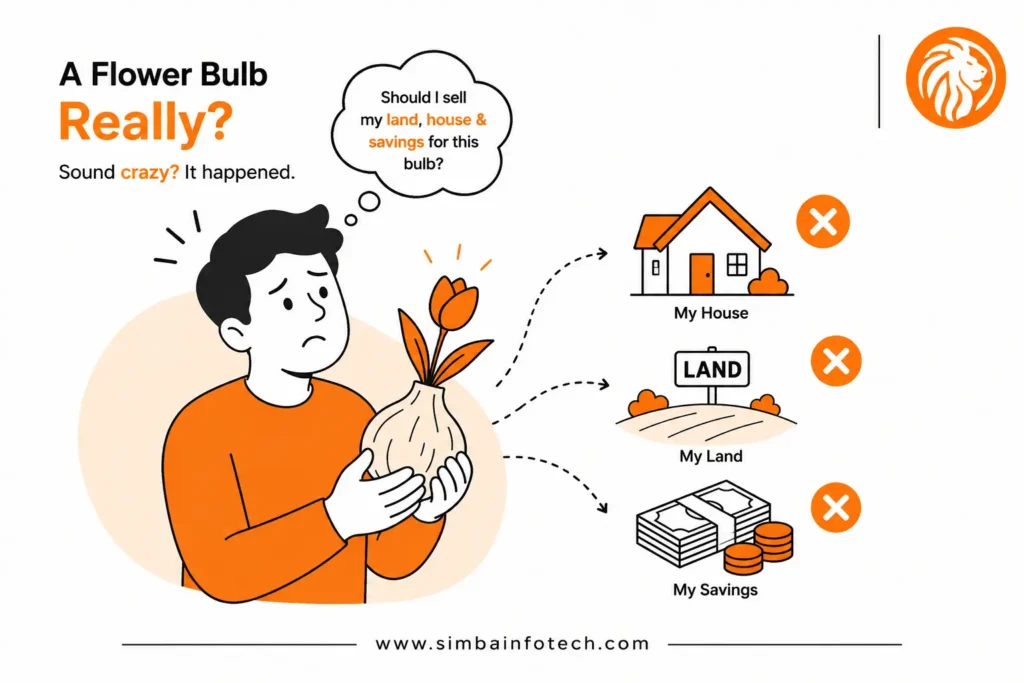
Sounds like a scene from a comedy movie, right? Like someone wrote the script after drinking too much tea. Or maybe not tea. Anyway, the point is, this actually happened.
In the 1600s, people in the Dutch Republic went crazy for tulips. This event is now known as Tulip Mania. Tulips became so popular that people started buying and selling tulip bulbs at very high prices. Some rare tulip bulbs were treated almost like luxury items.
People were not just buying flowers. They were buying status. They were buying excitement. They were buying the feeling that they were part of something big. Maybe they were trying to be the part of the trend.
And honestly, when we look at modern marketing, things are not very different.
Today, people may not be fighting over tulip bulbs, but they still run after viral products, trending brands, limited-time offers, influencer recommendations, “only a few left” deals, and social media hype.
One day, nobody knows a product. The next day, everyone wants it because it is suddenly everywhere.
Remember that scary little doll called Labubu? One moment, many people had no idea what it was. Then suddenly, everyone was talking about it, buying it, showing it, and acting like life was incomplete without one tiny monster-looking doll. That is not exactly Tulip Mania, but it does feel like its smaller, modern cousin.
This is why Tulip Mania is such an interesting lesson for any business, SEO company, content marketing team, social media marketing agency, Meta ads expert, or digital marketing agency in Ahmedabad.
It shows one simple thing: people do not always buy with logic. Many times, they buy because of feelings. They buy because something looks popular. They buy because others want it. They buy because they do not want to miss out.
But there is also a warning in this story.
Hype can make people notice you.
Real value makes them stay.
What Was Tulip Mania in Simple Words?
During the 1600 tulip mania was happened in the Dutch republic(Netherlands). At that time, tulips were not just normal flowers. They were new, colourful, and rare. Some tulips had unusual patterns, so rich people started liking them.
And once rich people start liking something, everyone else suddenly becomes interested too. That is not just history. That is still happening today, just with better cameras and more Instagram stories.
Slowly, tulips became more than flowers. They became a status symbol. If someone had a rare tulip, people did not just think, “Nice flower.” They probably thought, “Wow, this person has money, taste, and maybe too much free time.”
Then things became even more dramatic.
First, rich people wanted tulips. Then traders wanted tulips. Then normal people also started buying tulip bulbs because they believed the price would keep going up.
Many people were not buying tulips because they loved flowers. They were buying them because they thought someone else would buy the same bulb later at a higher price.
Basically, people looked at a flower bulb and thought, “Yes, this is my big financial plan.”
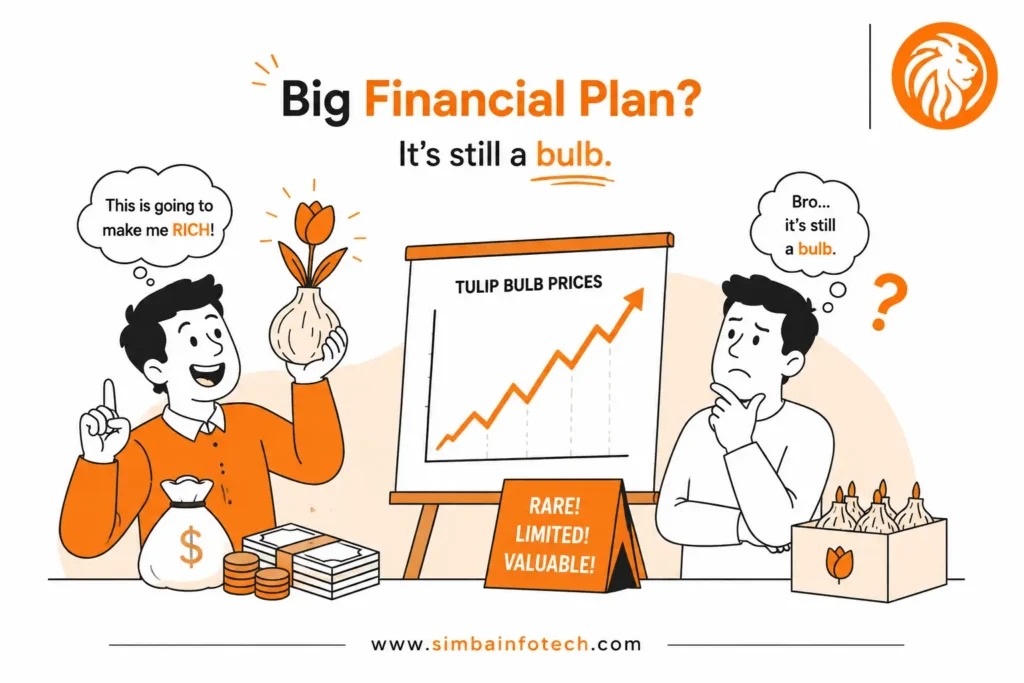
That is where the madness started.
The tulip bulb was still just a tulip bulb. It did not become gold. It did not become land. It did not become a business. It was still something you put in soil and hope it does not disappoint you.
But the story around it had changed. People started seeing it as rare, special, and expensive. The flower itself did not change much. The way people looked at it changed.
And that is why this story still feels interesting today, especially for anyone working in branding, content marketing, social media marketing, Meta ads, SEO, or a digital marketing agency in Ahmedabad. Because even now, people do not only look at what something is. They also look at how popular, rare, exciting, and valuable it feels.
Why Tulip Mania Still Feels Relevant in Digital Marketing
At first, Tulip Mania looks like some old-money drama from the 1600s. People in old clothes, old streets, old markets, and everyone getting too serious about flowers. Very historical. Very fancy. Very, “please open your history textbook.”
But if we remove the old clothes and replace the flower market with Instagram, YouTube, Google, Meta ads, influencer reels, LinkedIn posts, and viral campaigns, the whole thing starts looking very familiar.
People still run behind trends. They still trust what others are talking about. They still want things that look rare, popular, premium, or urgent. The tulip market is gone, but the human brain is still doing the same old drama.
Today, a product goes viral, and suddenly everyone wants it. A restaurant becomes famous on reels, and people stand in line for two hours like they are waiting for free property papers.
A course creator says, “Only 10 seats left,” and people start buying before even checking whether they need the course or just need sleep. A brand looks premium online, and customers start trusting it before they even try the product.
This does not mean customers are foolish. It means customers are human.
People notice stories. They notice popularity. They notice what others are buying. They notice things that feel limited. They notice brands that look confident and trustworthy. This is why digital marketing works. It not only shows a product. It changes how people feel about that product.
That is why Tulip Mania still matters for any SEO company, content marketing team, social media marketing agency, Meta ads expert, or digital marketing agency in Ahmedabad.
It shows that people do not only buy because of need. Many times, they buy because something feels important, exciting, trusted, or worth talking about.
But there is one thing brands should remember.
Creating attention is good. Creating fake hype is dangerous.
Because attention can bring people close, but trust is what makes them stay.
What a Digital Marketing Agency in Ahmedabad Can Learn About Hype and Value
Tulip Mania became huge because people believed tulip prices would keep going up. Everyone wanted to buy before prices became even higher. For some time, it looked like a smart move. Buy a bulb today, sell it later, become rich, and maybe act like a financial genius at family dinner.
But then people stopped believing.
Suddenly, the same tulip bulb that looked like a golden opportunity started looking like what it actually was: a flower bulb. Not land. Not gold. Not a business. Just a bulb sitting there quietly, probably also confused by all the attention.
And once people stopped believing, the excitement broke. Prices fell. The hype disappeared. The big dream became a very expensive gardening problem.

This kind of thing did not happen only with tulips. In different ways, it also happened during the 2008 real estate bubble in the U.S., when many people believed property prices would keep going up forever. And whenever humans start believing that something will “only go up,” history usually starts preparing popcorn.
The same problem can happen in digital marketing too.
A brand may run Meta ads and get many clicks. A reel may go viral. A social media marketing campaign may get likes, comments, and shares. A website may get traffic from SEO. Everyone may say, “Wow, what a campaign.”
But then what?
If the product is weak, the offer is confusing, the website is slow, the content does not answer customer questions, or the brand promise feels fake, all that attention will not turn into real growth.
This is where many businesses misunderstand marketing. They think marketing means making more noise. But noise is useful only when people like what they hear after they turn around.
A digital marketing agency in Ahmedabad can bring attention through SEO, content marketing, Meta ads, and social media marketing. But attention is only the first step. The business still needs a clear offer, real value, trust, and a good customer experience.
Because marketing can bring people to your door, but it cannot force them to enter if the room looks empty.
Hype opens the door.
Value makes people walk in.
Why Content Marketing Is About Meaning, Not Just Products
One funny thing about Tulip Mania is that the tulip bulb itself did not change much.
It did not wake up one morning and say, “From today, I am premium.”
It did not become gold. It did not become land. It did not come with a free house, free Wi-Fi, or lifetime customer support.
It was still a flower bulb.
The only thing that changed was how people looked at it. Earlier, it was just a beautiful flower. Later, it became a sign of money, taste, and status. People were not only buying the tulip. They were buying the feeling attached to it.
This is where Seth Godin’s cat food example makes a lot of sense.
Cat food brands do not only sell food to cats. They also sell a feeling to cat owners. The cat is not standing in the supermarket saying, “Hmm, I like this packaging. Very emotional. Very premium.” If cat food was really made for cats, it would probably come in mouse flavour, maybe with a free cardboard box. The cat probably just wants food and then wants to ignore everyone for the next four hours.
But the owner cares.
The owner looks at the packet and thinks, “This looks healthy. This looks safe. This looks like I am a good pet parent.” So the product is not only cat food. It is also care, love, responsibility, and a little bit of guilt management.
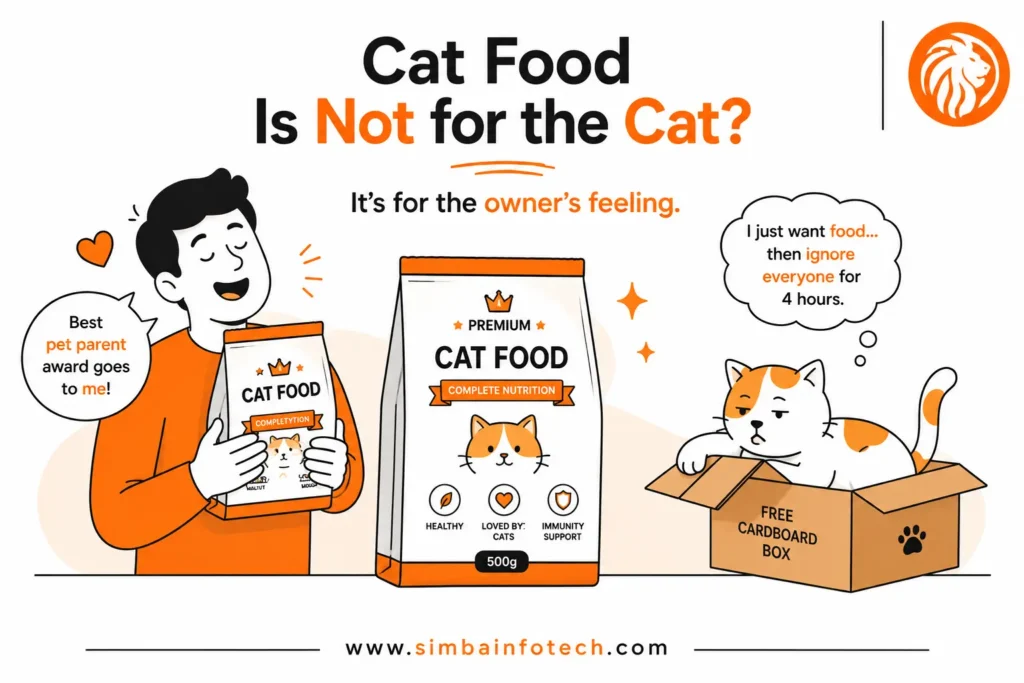
That is how marketing works.
People do not only buy the thing. They buy the meaning of the thing.
- A tulip was not just a tulip. It became status.
- Cat food is not just cat food. It becomes care.
- A phone is not just a phone. It becomes style.
A coffee is not just coffee. It becomes personality, mood, and sometimes the only reason someone is acting like a decent human being before 10 AM.
That is why the real product is not always the product. Many times, the real product is the story, the feeling, the trust, and the image inside the customer’s mind.
This is also why branding, content marketing, social media marketing, Meta ads, and SEO matter so much. Not because they magically change the product overnight, but because they help people understand what the product means and why it should matter to them.
Because people do not only buy what you sell.
They buy what they believe it says about them.
Why Scarcity Works in Digital Marketing, but Only When It Feels Honest
Tulip Mania was not only about beautiful flowers. It was also about scarcity.
Rare tulip bulbs became more desirable because not everyone could have them. And the moment people feel that something is hard to get, their brain starts acting differently.
Suddenly, the thing looks more valuable.
This is not new. This goes very deep into human behaviour. For a long time, humans learned that scarce things mattered. Food, water, shelter, safe places, good tools, trusted people if something important was limited, you had to notice it fast.
Our old brain was not sitting there making a PowerPoint presentation. It was simply thinking, “Less available? Better pay attention.”
That same old brain is still inside us today.

Only now, instead of worrying about berries and shelter, it gets excited because a website says, “Only 2 rooms left,” or “Offer ends tonight.” Very advanced civilization, same old panic.
This is also why Robert Cialdini identifies scarcity as one of the most powerful ideas in persuasion. The basic idea is simple: people often want something more when they feel they may lose the chance to get it.
A classic cookie-jar experiment by Worchel, Lee, and Adewole showed something similar. People rated cookies as more desirable when they came from a jar with only a few cookies, even when the cookies were not actually different. The cookie did not improve.
The jar just looked emptier, and the human brain said, “Interesting.”
Another great example is American Express and the way premium cards are often presented. The appeal is not only “this card helps you pay.” Any card can do that. The real feeling is closer to, “This card is not for everyone.”
And that one idea changes everything.
Now the card is not just plastic. It becomes a status symbol. It feels selective. It feels like entry into a special group. People are not only thinking about payments, rewards, or airport lounge access. They are also thinking, “What does this card say about me?”
That is scarcity working with identity.
The product becomes more attractive because it feels limited. Not everyone can have it. Not everyone is invited. Not everyone belongs.
And honestly, humans are funny. Tell us “this is available for everyone,” and we may ignore it. Tell us “this may not be for you,” and suddenly we stand straight like, “Excuse me, why not?”
Now come back to Tulip Mania.
A rare tulip bulb was not just a flower bulb anymore. It became “limited.” It became “special.” It became “not everyone can have this.” And once people started thinking like that, desire increased. Nobody wanted to be the person who missed the flower party. Honestly, imagine explaining that to your family: “Sorry, we missed the great bulb opportunity.” Very painful. Very dramatic. Very unnecessary.
Modern marketing uses scarcity all the time.
Limited seats. Offer ends tonight. Only a few slots left. Exclusive access. Early bird pricing. Premium batch. Invite-only community.
These lines work because people hate missing out. Nobody wants to feel like they arrived late to the party while everyone else is already eating the good snacks.
But here is the warning.
Scarcity works only when it feels honest.
If your offer “ends tonight” every night for six months, people will notice. If your “only 3 seats left” somehow becomes “only 3 seats left” again next week, next month, and probably after Diwali also, then it stops being urgency and starts becoming stand-up comedy.
A good digital marketing agency can use scarcity in Meta ads, landing pages, social media marketing, content marketing, and campaigns. But it should be real scarcity, not fake drama.
A service business can honestly say it takes limited clients every month because good work needs time. A workshop can honestly say seats are limited because the room has limited space. An agency can honestly say only a few project slots are open because strategy, SEO, content, and ad management cannot be done properly like mass-produced samosas.
Real scarcity builds trust.
Fake scarcity may bring quick clicks, but it also teaches people not to believe you next time.
How Social Proof Helps Digital Marketing Build Trust Faster
During Tulip Mania, people saw others buying tulips and thought, “There must be something special here.”
And that is how humans work.
If one person buys something, we may ignore it. If ten people buy it, we become curious. If everyone starts buying it, suddenly our brain enters panic mode and says, “Why are we not buying this? Are we poor, late, or just badly informed?”
That is social proof in simple words.
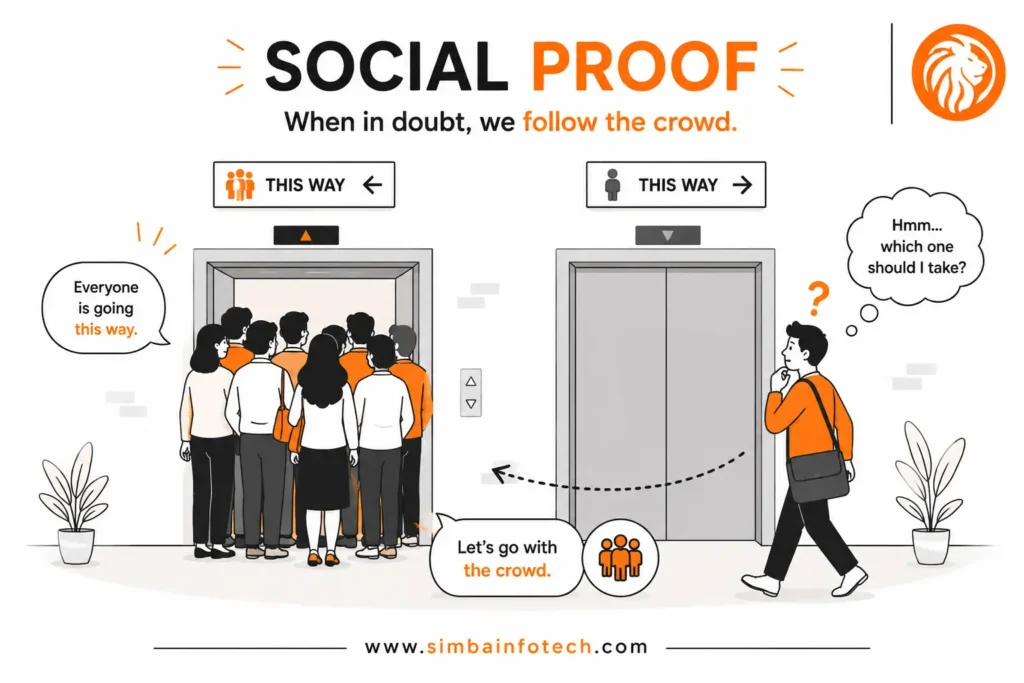
People look at other people before making decisions. We do it all the time. We check restaurant reviews before eating. We check ratings before ordering from Amazon. We check comments before trusting a reel. We check testimonials before hiring a company. Sometimes we even check what other people are checking, because apparently our brains like group projects.
The same thing happened with tulips. When people saw rich people, traders, and neighbours buying tulip bulbs, the bulbs started looking more valuable. Not because the flower suddenly became more useful.
It did not start doing accounting or solving family problems. It was still a flower. But because many people wanted it, others believed it must be worth something.
Digital marketing works in a similar way.
Reviews, testimonials, case studies, client logos, influencer mentions, Google ratings, social media engagement, and word-of-mouth all help people decide whether a brand feels trustworthy or not. Before a customer talks to your sales team, they have already started judging you.
They have checked your website, your Instagram, your Google reviews, your comments, your posts, and maybe even that one old photo you forgot to remove.
This is why social proof is not decoration. It is not something you add at the end of a website just to fill space. It is a trust signal.
For a digital marketing agency in Ahmedabad, social proof matters even more because local businesses usually want confidence before spending money. They want to know whether you understand their market, their customers, their budget, and their problems. They do not want only big promises. They want proof that you have done real work for real people.
A strong case study can explain what a sales pitch cannot. A genuine testimonial can reduce doubt. A good online presence can make the brand feel active and reliable. Even a simple Google review can make a customer think, “Okay, maybe these people are not just saying nice things about themselves.”
Because that is the problem with claims.
Every brand says it is the best. Every company says it gives quality. Every service provider says it understands customers. Even the most confused business on earth will still write “we are customer-focused” on its website.
But when other people say good things about you, it feels different.
That is why people trust people more than they trust promises.
Trends Are Useful, but Blindly Following Them Is Risky
Tulip Mania was also a trend. A very expensive, very dramatic, very flower-based trend. People joined because others were joining. The more attention tulips got, the more people wanted to be involved.
Today, trends move even faster. One week everyone is talking about a new AI tool. Next week everyone is copying a reel format. Then comes a new meme, a new platform update, a new ad strategy, a new content style, and suddenly every brand wants to jump in.
Trends are not bad. In fact, they can be very useful. A good trend can increase reach, make a brand feel current, and help businesses join conversations that people already care about.
But blindly following every trend can make a brand look confused.
A law firm does not need to dance on every reel trend. A hospital does not need to use every meme format. A serious B2B company does not need to sound like a teenager who discovered slang yesterday.
The question is not “Is this trend popular?”
The real question is “Does this trend fit our brand?”
Good social media marketing is not about copying what everyone else is doing. It is about understanding what your audience cares about and then using the right format to communicate your message.
Trends should support your positioning, not destroy your personality.
How Hype Marketing Can Make or Break a Business
Hype is not always bad.
Let us be fair to hype for a second. Poor thing gets blamed for everything. But hype is not the villain. Hype is just attention with extra drama.
When hype is connected to a good product, clear promise, and strong delivery, it can help a brand grow very fast. It can make people notice. It can make people talk. It can make a normal product feel like a cultural event. Suddenly, people are not just buying something. They are joining the conversation.
But when hype is bigger than the actual value, it becomes dangerous. Very dangerous. Like putting a big wedding invitation on Instagram when the venue is not booked, the food is not ready, and the groom is still confused.
That is where hype marketing can either make a business or break it.
A good example of hype done well is the Popeyes chicken sandwich launch in 2019. It was just a chicken sandwich. Not a spaceship. Not a cure for Monday morning. A sandwich. But the internet treated it like a national emergency.
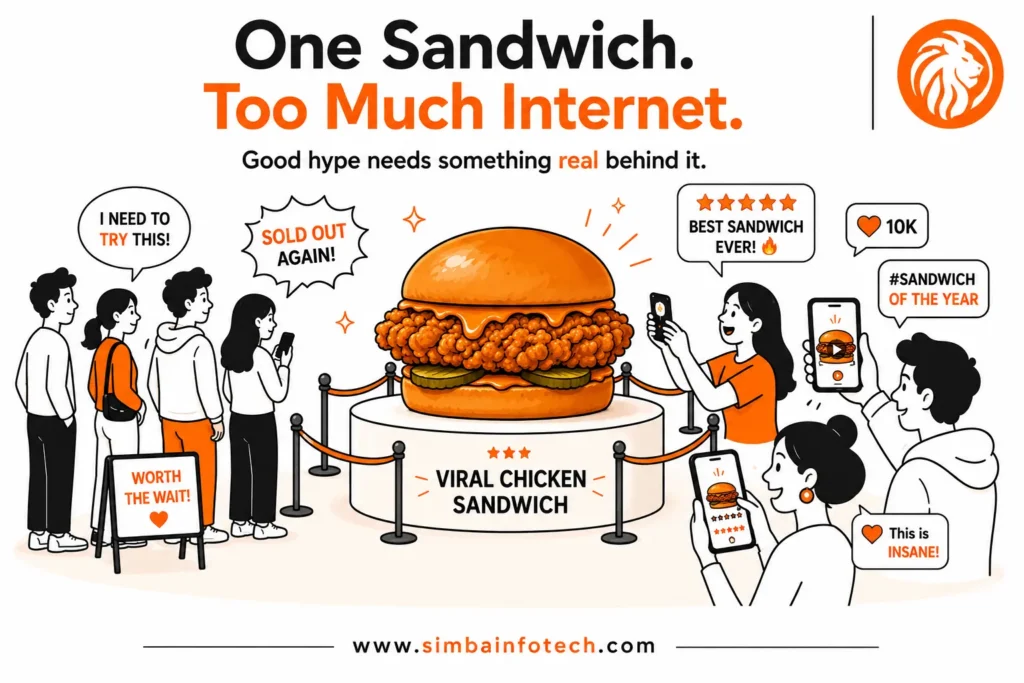
People were talking about it. Fast-food brands were replying to each other. Social media turned the sandwich into a full conversation. According to Axios, the campaign generated around $65 million in earned media value in just two weeks, and stores saw huge demand. Many locations sold out because people actually wanted to try the product, not just watch the drama online.
Now, why did this hype work?
Because the product was simple, easy to understand, and easy to talk about. Everyone knows what a chicken sandwich is. Nobody needed a 45-minute webinar to understand the offer. The promise was clear: here is a tasty chicken sandwich, try it and judge it yourself.
And most importantly, the product gave people something to experience. People could buy it, taste it, compare it, post about it, argue about it, and recommend it. The hype did not end at the ad. The product continued the conversation.
That is the good side of hype.
It creates attention, but the product gives that attention somewhere to land.
Now look at the other side.
Fyre Festival is one of the most famous examples of hype going completely wrong. It was promoted as a luxury music festival in the Bahamas. The marketing showed models, beaches, yachts, blue water, private-island vibes, and the kind of lifestyle that makes people look at their own room and suddenly feel poor.
The campaign created massive excitement. Influencers promoted it. The visuals looked expensive. The promise was powerful. People were not only buying festival tickets. They were buying status, exclusivity, and the feeling of being part of something special.
Very Tulip Mania behaviour, just with better video editing.
But when people arrived, the real experience did not match the promise. The luxury festival became famous for poor planning, bad accommodation, weak food arrangements, and a complete gap between marketing and reality.
Digital Marketing Institute described Fyre Festival as a strong example of what happens when brands fail to deliver on their marketing promises.
That is the dangerous side of hype.
The marketing made people believe.
The experience made people regret.
And once people regret, they do not stay quiet. Especially not now. Earlier, an angry customer could complain to five people. Today, one angry customer can complain to the whole internet before breakfast.
This is why hype marketing needs real support behind it.
If your social media marketing creates curiosity, the product should be worth the curiosity. If your Meta ads promise fast results, the offer should be clear and believable. If your SEO brings people to your website, the content should actually help them.
If your brand looks premium online, the customer experience should not feel like it was assembled in panic five minutes before delivery.
Otherwise, marketing becomes a dangerous spotlight. It does not hide the weakness. It shows the weakness to more people.
That is why a digital marketing agency in Ahmedabad should not only ask, “How do we get attention?” It should also ask, “What happens after people give us attention?”
Because attention is not the final result. Attention is the beginning.
- After attention comes trust.
- After trust comes action.
- After action comes experience.
- And after experience comes either loyalty or public embarrassment.
Popeyes shows what happens when hype meets a product people actually want.
Fyre Festival shows what happens when hype writes a cheque that reality cannot cash.
So the real question is not, “Should a business use hype?”
Of course it can.
The real question is, “Can the business handle the attention once it arrives?”
Because hype can bring the crowd.
But only value can stop the crowd from leaving angry reviews.
So, What Was the Point of All This Flower Nonsense?
After all this flower madness, one thing becomes clear: hype is powerful, but it is not enough by itself. Tulip Mania became huge because people were excited, curious, and scared of missing out. But when people stopped believing in the value, the excitement disappeared very quickly.
The same thing can happen in digital marketing. A brand can get views, likes, clicks, shares, and comments, but if there is no real value behind the attention, the whole thing becomes weak.
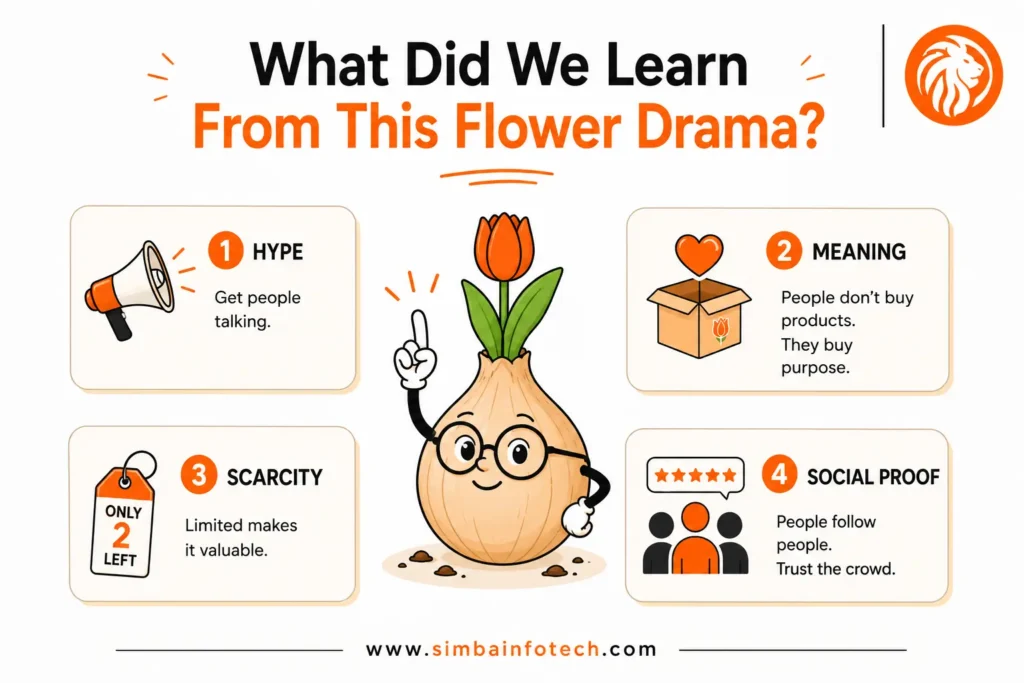
The first lesson is simple. Hype can bring people closer, but value has to do the real work. A reel can go viral. Meta ads can bring traffic. Social media marketing can make people talk. But after that, the product, offer, service, website, and customer experience must make sense. Otherwise, marketing becomes like inviting people to a grand dinner and then serving them one sad papad on a huge plate.
The second lesson is that people do not only buy products. They buy meaning. A tulip was not just a tulip during Tulip Mania. It became status. Cat food is not just cat food for the owner.
It becomes care, love, and proof that they are a responsible pet parent. In the same way, customers do not only buy what a business sells. They buy what it means for them. They buy trust, comfort, confidence, speed, safety, status, or relief.
The third lesson is about scarcity. Scarcity works because humans hate missing out. Rare tulips became more attractive because not everyone could have them. Even today, “limited seats,” “only a few slots left,” and “offer ends tonight” can push people to act faster.
But scarcity should be honest. If the same offer “ends tonight” every night, people will notice. Then it stops looking urgent and starts looking like a daily soap with too many episodes.
The fourth lesson is social proof. During Tulip Mania, people saw others buying tulips and thought there must be a reason. Today, customers do the same thing with reviews, testimonials, case studies, Google ratings, influencer mentions, and social media engagement. People trust other people faster than they trust brand promises. That is why proof matters so much.
So the real lesson is not “never create hype.” Hype is useful. It can create attention. It can make people curious. It can help a brand enter the conversation. But hype should never be the whole strategy.
A smart digital marketing agency in Ahmedabad should use SEO, content marketing, Meta ads, and social media marketing to make real value easier to see, not to cover up the absence of value.
Because if the brand has real value, marketing can make it shine.
But if the brand has nothing real behind it, marketing only makes the emptiness more visible.
Conclusion
So, after all this drama, what do we know?
People once lost their minds over flower bulbs. Not gold. Not land. Not a business. Flower bulbs. Somewhere in history, one tulip bulb probably sat in the soil thinking, “Why is everyone treating me like I own property?”
But honestly, we cannot laugh too much at them.
Because we still do the same thing today. We just have better lighting, faster internet, and more confidence while making questionable decisions.
We see something going viral, and suddenly we want it. We see “only 3 left,” and our brain starts panicking like survival depends on buying it. We see others talking about a product, and suddenly it feels important. We see a brand looking premium online, and before checking anything properly, we start thinking, “Hmm, maybe they are the real deal.”
That is the funny and slightly embarrassing thing about humans.
- We like stories.
- We like status.
- We like rare things.
- We like what other people like.
And sometimes, we like things more simply because someone told us we might not get them.
Marketing understands this. A smart digital marketing agency in Ahmedabad can use SEO, content marketing, Meta ads, and social media marketing to create attention, build trust, and make a brand easier to remember.
But here is the important part.
Do not use marketing only to create empty hype. Because empty hype is like wearing sunglasses indoors. For a few seconds, people may notice you. After that, they just start worrying about you.
If your brand has real value, marketing can make it louder, clearer, and more visible.
But if your brand has no real value, marketing will not save it. It will only put a spotlight on the problem and invite more people to watch the disaster in HD.
So yes, create curiosity. Build excitement. Make people talk. Use trends when they make sense. Use scarcity when it is real. Use social proof when it is honest. Tell better stories.
But please, for everyone’s mental peace, do not become the next tulip bubble.
Because hype may make people look at you once.
Value makes them come back without needing a flower emergency.
Frequently Asked Questions
What does Tulip Mania teach us about digital marketing?
Tulip Mania teaches us that people do not always buy because of logic. Many times, they buy because of hype, status, scarcity, social proof, and fear of missing out. In digital marketing, these same emotions still affect how customers choose brands, products, and services.
Why is hype important in digital marketing?
Hype is important because it helps a brand get attention quickly. It can make people curious, start conversations, and bring more traffic to a product or service. But hype alone is not enough. If the product, offer, or customer experience is weak, people may notice the brand once and then never come back.
How can a digital marketing agency in Ahmedabad use hype the right way?
A digital marketing agency in Ahmedabad can use hype by creating honest campaigns around real value. This can include strong storytelling, useful content marketing, smart Meta ads, social media marketing, SEO, and genuine social proof. The goal should not be fake excitement. The goal should be to make real value more visible.
Why do scarcity and social proof work in marketing?
Scarcity works because people want things more when they feel those things are limited. Social proof works because people trust what others are buying, using, or recommending. Reviews, testimonials, case studies, influencer mentions, and Google ratings help customers feel more confident before making a decision.
What is the biggest mistake businesses make with hype marketing?
The biggest mistake is creating more attention than the business can handle. If marketing promises something big but the product or service does not deliver, customers lose trust quickly. Hype should support real value, not cover the lack of it.