
- 06/25/2026
- Simba Infotech
- 0
Introduction about storytelling marketing
Everyone in marketing keeps saying, “Tell a story.”
But what does that even mean?
Are we supposed to sell SEO services by saying, “Once upon a time, there was a lonely keyword living on page five of Google, waiting for someone to rescue it”?
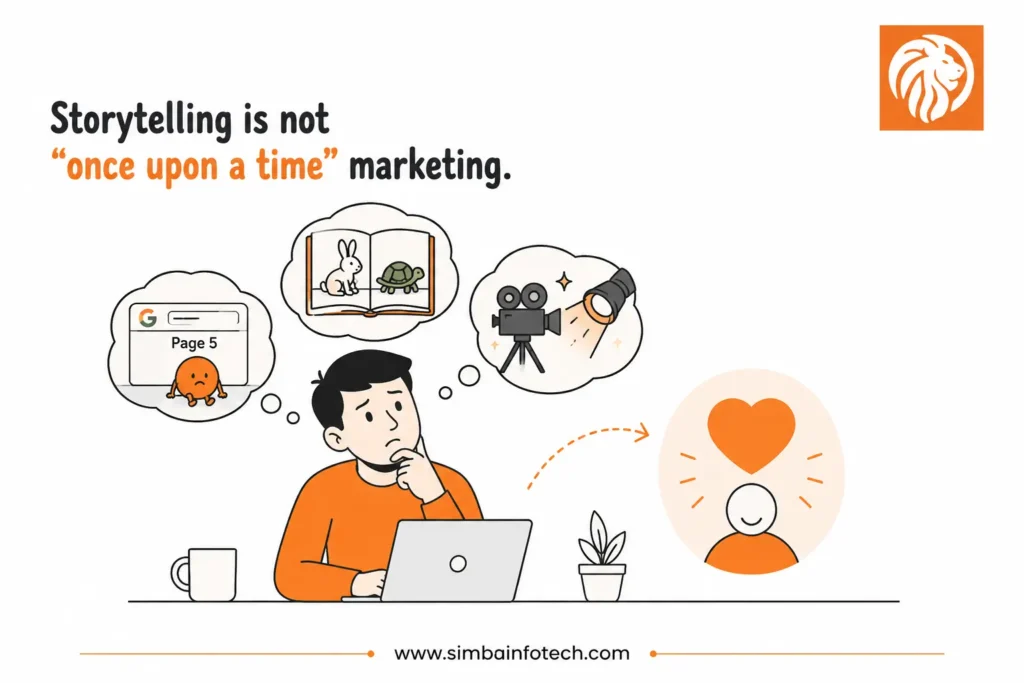
Are we supposed to explain social media marketing with a rabbit and turtle story?
Are we supposed to turn every business into a Netflix documentary with emotional background music, slow-motion shots, and one founder staring seriously outside a window?
Because honestly, when people hear the word storytelling, many imagine fairy tales, childhood moral stories, motivational speeches, or those dramatic brand videos where someone says, “We started with nothing but one dream.”
And yes, sometimes storytelling can look like that.
But most of the time, storytelling in marketing is much simpler.
Storytelling is not about adding “once upon a time” to your brand message. It is not about making your product sound like it fought in a war and came back stronger. It is not about forcing emotions into everything until even a toothpaste ad starts feeling like a breakup scene.
Storytelling in marketing simply means making people care.
That’s it.
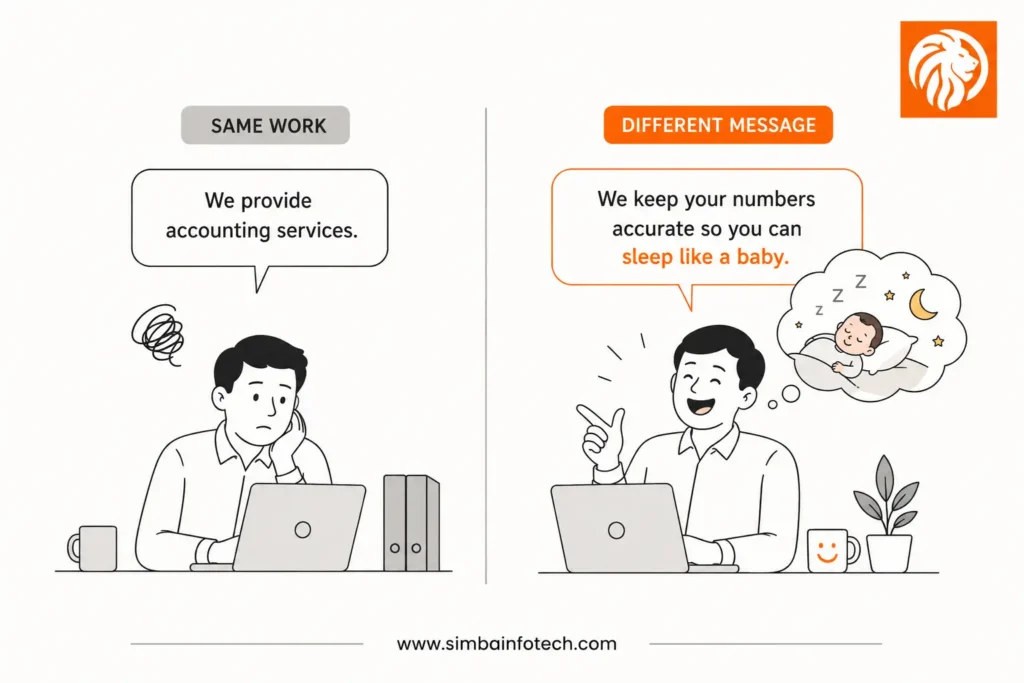
A business can say, “We provide digital marketing services.”
Fine. Good. Very normal. Very forgettable.
But when a digital marketing agency says, “Many businesses are posting regularly, spending on ads, and still wondering why leads are not coming. The problem is not always effort. Sometimes, the problem is that your message is not making people stop, trust, and take action.”
Now that feels different.
The service is the same. The meaning has changed.
That is storytelling.
So, What Is Storytelling in Marketing Really?
Let’s clear one thing up. Storytelling in marketing is not about making things dramatic for no reason. Your digital marketing agency does not need to act like it survived three storms, two betrayals, and one life-changing train journey just to sell SEO.
That is not storytelling. That is overacting. The real purpose of storytelling is much simpler. It gives your message a shape.
It takes random information and turns it into something the human brain can actually follow. Because let’s be honest, most business communication looks like this:
“We offer SEO, social media marketing, paid ads, and branding services.”
That is fine.
Technically correct.
But it feels like reading the ingredients on the back of a biscuit packet. Useful, but nobody is emotionally invested.
Nobody reads that and thinks, “Wow, this changed my life.” It is just information And information alone is rarely enough. This is where storytelling changes everything. Storytelling gives your message a flow, A direction, A reason for the customer to keep reading.
It usually follows a simple pattern:
Here is the problem.
Here is why it is happening.
Here is what changes when you fix it.
That’s it.
No dragons. No plot twists. No sad piano music.
Just structure.
And structure matters because people naturally pay attention to change.
If everything is flat, the brain gets bored But when there is a problem, tension, and a possible solution, the brain leans in. It wants to know what happens next. That is why stories work. Not because humans are obsessed with fairy tales But because humans are obsessed with solving problems.
For example, instead of saying: “We help businesses grow online.” A digital marketing agency can say:
“Many businesses are getting traffic but not sales. They are posting content, running ads, and trying everything, but customers still leave without taking action. The problem is not always traffic. Sometimes the problem is trust.”
See the difference?
The second message works because it creates movement. It starts with a familiar situation, shows the frustration, builds a little tension, and then reveals the deeper problem. The reader is no longer just reading about a service.
They are seeing their own business struggle inside the message. And the moment someone thinks, “Wait… that sounds like my business,” you have their attention.
That attention matters because it comes before everything else. Before trust, before clicks, before leads, before sales, people first need to stop and
care. That is what storytelling does. It turns a flat message into something people can follow. It makes your customer feel understood before you try to sell them anything. And in digital marketing, whether it is content marketing, social media, SEO, paid ads, or branding, the businesses that communicate clearly and emotionally usually win. Not because they are louder, but because they are easier to understand and harder to ignore.
Why Do Humans Love Stories So Much?
Humans love stories because stories make life easier to understand.
In his book The Storytelling Animal: How Stories Make Us Human, Jonathan Gottschall explains that stories help humans deal with complex social problems. In simple words, stories are like practice grounds for life. Just like pilots use flight simulators before handling real danger in the sky, humans use stories to understand people, choices, problems, emotions, and consequences.
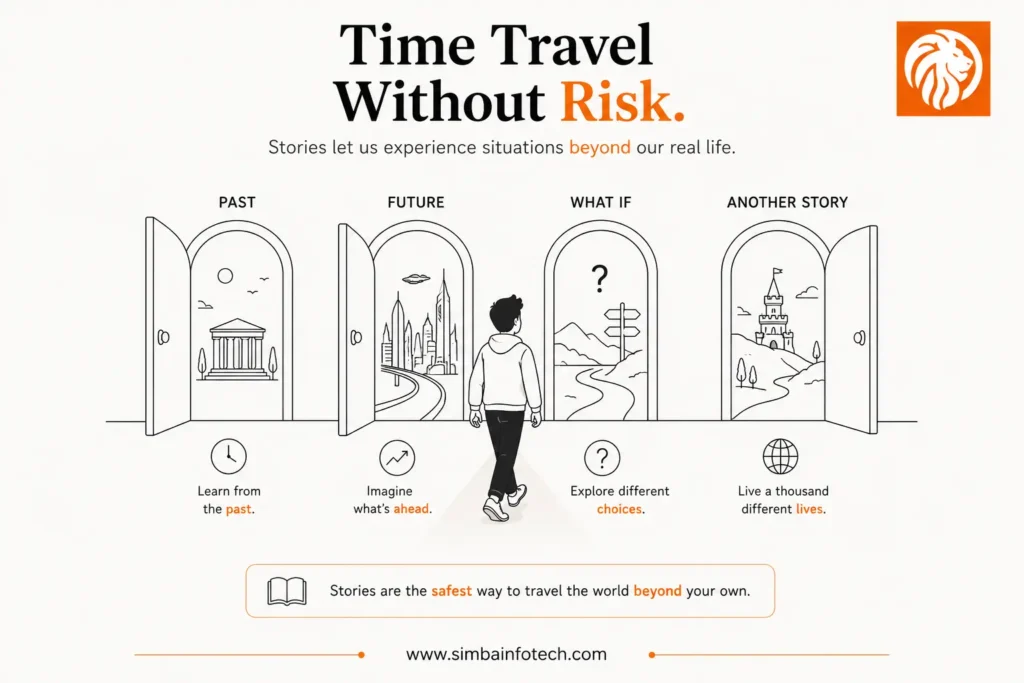
That is why we do not only find stories in books and movies. We find them everywhere.
A cricket match becomes a story. One team is struggling. One player makes a comeback. Suddenly, it is not just bat and ball. It is pressure, hope, failure, revenge, and “bro, this is cinema.”
A business journey becomes a story. A founder starts small, faces problems, makes mistakes, learns something, and slowly builds trust.
Even a customer complaint becomes a story. Someone expected one thing, experienced another thing, got frustrated, and now wants a solution before their patience leaves the group chat.
This is why storytelling works so well in marketing.
Because customers are not robots sitting with a spreadsheet, calmly comparing every feature like they are judging a science project. They are humans. They have doubts, desires, fears, confusion, ego, urgency, and approximately 47 tabs open in their brain.
A plain message gives them information.
A story gives them context.
And context is what helps people understand why something matters’
Why Most Businesses Sound Boring Online
Most businesses do not sound boring because their work is boring. Even some business with boring product sounds fabulous.
Let’s be honest, very few businesses are actually boring.
A café is not boring. A clothing brand is not boring. A real estate company is not boring. Even a plumbing business is not boring when your bathroom suddenly decides to become a swimming pool at 2 a.m.
The work itself usually has real problems, real people, real pressure, and real stories. But somehow, the moment businesses start marketing themselves, all of that disappears. It is like they take something alive and turn it into a PowerPoint presentation.
Why?
Because most marketing removes all the human parts.
- The struggle is removed.
- The emotion is removed.
- The customer’s problem is removed.
- The urgency is removed.
The reason to care is removed.
And what is left?
“Best quality services.”
“Affordable solutions.”
“Customer satisfaction.”
“Helping businesses grow.”
“Your trusted partner for success.”
These lines are everywhere.
And that is exactly the problem.
They are so common that they have become invisible.
At this point, these phrases are like wallpaper. They exist, but nobody notices them. Like the background music in a shopping mall or the “terms and conditions” checkbox nobody reads.
Businesses keep repeating them because they sound professional But professional does not always mean memorable And memorable is what actually matters. Think about it. If ten different businesses in the same industry all say: “We provide high-quality services with customer satisfaction.”
How is a customer supposed to tell them apart? It is like ten people showing up to a party wearing the exact same black t-shirt and all introducing themselves as “the best.” Cool. Very helpful.
A business may proudly write:
“We are the best digital marketing agency in Ahmedabad.”
But the customer reads that and thinks:
“Okay… according to who?”
Because everyone says they are the best.
Every agency is “result-driven.”
Every agency is “innovative.”
Every agency is “creative.”
Every agency is “passionate.”
At this point, if passion alone could generate leads, half the internet would be billionaires. The problem is not that businesses do not have value. Most businesses do. The problem is that they explain their value in a way that sounds exactly like everyone else. And when you sound like everyone else, people stop listening.
Not because they hate you.
But because their brain has heard this exact thing a thousand times before.
The human brain is built to ignore repetition.
It looks for something different.
Something specific.
Something real.
That is where storytelling changes everything.
Storytelling does not start with:
“We are the best.”
Because honestly, nobody wakes up caring about your company first.
Customers wake up caring about their own problems.
- Their own stress.
- Their own goals.
- Their own confusion.
That is where your marketing should begin. Maybe they are spending money on ads and getting leads that disappear faster than motivation after Monday morning. Maybe their website looks good, but nobody is converting. Maybe their competitors are growing, and they have no idea why.
These are real situations , and when your marketing speaks directly to these situations, people pay attention. Because now the message feels personal.
Not fake personal like:
“Dear valued customer, your satisfaction is our priority.”
That person feels like it was written by a robot that has never felt satisfaction.
Real person sounds like:
“We know how frustrating it feels to spend time and money on marketing and still wonder if any of it is working.”
That hits differently.
Because now the customer feels seen.
They feel understood.
And that feeling is powerful.
Because before someone trusts your business, they need to believe you understand their problem.
That is the first step.
Not your awards.
Not your office photos.
Not your “10 years of excellence.”
Understanding.
That is the difference between boring marketing and storytelling. Boring marketing says:
“Look at us.”
Storytelling says:
“We understand you.”
And in a world where everyone is shouting for attention online, the businesses that make people feel understood usually win.
Not because they are louder.
But because they feel more human.
How to Do Amazing Storytelling in Marketing
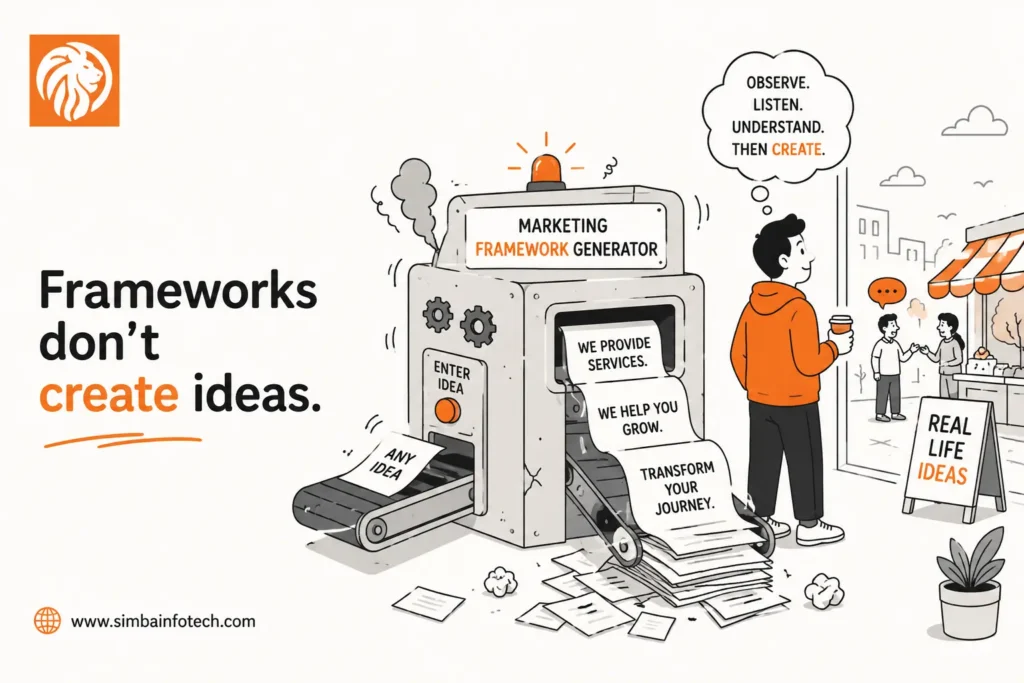
Please do not tell me about a framework that promises to help everyone come up with ideas in five minutes. If frameworks worked like magic, every brand on the internet would sound like a genius. Instead, half of them still sound like they were assembled from leftover LinkedIn captions and brochure lines.
A framework can help you arrange a thought, but it cannot give you a powerful thought.
That part comes from observation.
The first lesson is to stop making your product the hero.
This is where many businesses mess up. They think storytelling means talking more beautifully about their product. So they take a normal service and start decorating it like a wedding stage.
“Our SEO services are designed to transform your digital journey with excellence and innovation.”
Calm down.
The customer does not care about your “digital journey” yet. They care about their own struggle.
The best stories usually do not make the product the main character. They make the customer’s effort, fear, desire, frustration, or ambition the main character. The product simply becomes the thing that helps them move forward.
That is a big difference.
A digital marketing agency should not make SEO sound like the hero. The hero is the business owner who is tired of seeing competitors appear first on Google. Social media is not the hero. The hero is the brand trying to be remembered in a feed where everyone is dancing, pointing at text, and pretending that one trending audio will solve business growth. Paid ads are not the hero. The hero is the person who wants leads without feeling like they are throwing money into a very stylish dustbin.
When your customer becomes the hero, your marketing starts feeling human.
The second lesson is to find the belief your audience is tired of.
Great storytelling often works because it challenges something people already feel but may not say out loud.
Maybe your customer is tired of believing that marketing only works for big brands. Maybe they are tired of hearing that they must post every single day or become invisible forever. Maybe they are tired of agencies making everything sound complicated just so the invoice feels heavier. Maybe they are tired of thinking that if their business is not growing online, something is wrong with them.
That belief is where the story lives.
Because people do not only respond to information. They respond when a message says something they have been feeling quietly.
For example, a weak marketing message says:
“We provide social media marketing services.”
A stronger storytelling message says:
“You do not need to post every day just to prove your business exists. You need content that makes people understand why they should trust you.”
That line works better because it challenges a belief. It says, “Maybe the problem is not that you are not doing enough. Maybe the problem is that your message is not clear enough.”
That kind of message gives people relief.
And relief is powerful.
The third lesson is to reveal the hidden problem. Sometimes people know something is wrong, but they do not know what exactly is wrong.
They may say, “We need more traffic.”
But the hidden problem may be that their website does not build trust.
They may say, “We need more followers.”
But the hidden problem may be that nobody remembers what the brand actually stands for.
They may say, “Our ads are not working.”
But the hidden problem may be that the landing page is confusing, the offer is weak, or the message is attracting the wrong people.
Good storytelling helps people notice what they were missing. It does not just repeat the obvious problem. It goes one layer deeper.
That is why “We help you get leads” is not very interesting. Everyone says that. Even people who have never generated a lead in their life say that with full confidence.
But saying, “Your ads may be getting clicks, but if the message after the click does not build trust, people will leave without taking action,” is stronger.
Now the customer understands the problem differently. They came thinking they had a traffic issue. Now they realise they may have a trust issue.
That shift is storytelling.
The fourth lesson is to make people feel something before asking them to do something.
This does not mean every brand has to become emotional like a reality show contestant talking about their journey.
Emotion can be simple.
It can be motivation.
It can be relief.
It can be urgency.
It can be curiosity.
It can be confidence.
It can be the feeling of “finally, someone gets it.”
Before people click, enquire, call, buy, or trust you, they first need to feel that your message matters to them.
A website is not just a website. It is often the first moment where a stranger decides whether your business looks trustworthy or suspicious.
SEO is not just ranking. It is the difference between being found and being forgotten.
Branding is not just a logo. It is the reason people remember you when they have ten other options.
Content is not just posting. It is how your business keeps showing up in someone’s mind before they are ready to buy.
That is why storytelling matters because It connects the service to a human outcome And that is what most boring marketing misses.
Boring marketing explains what the service is.
Storytelling explains why the service matters.
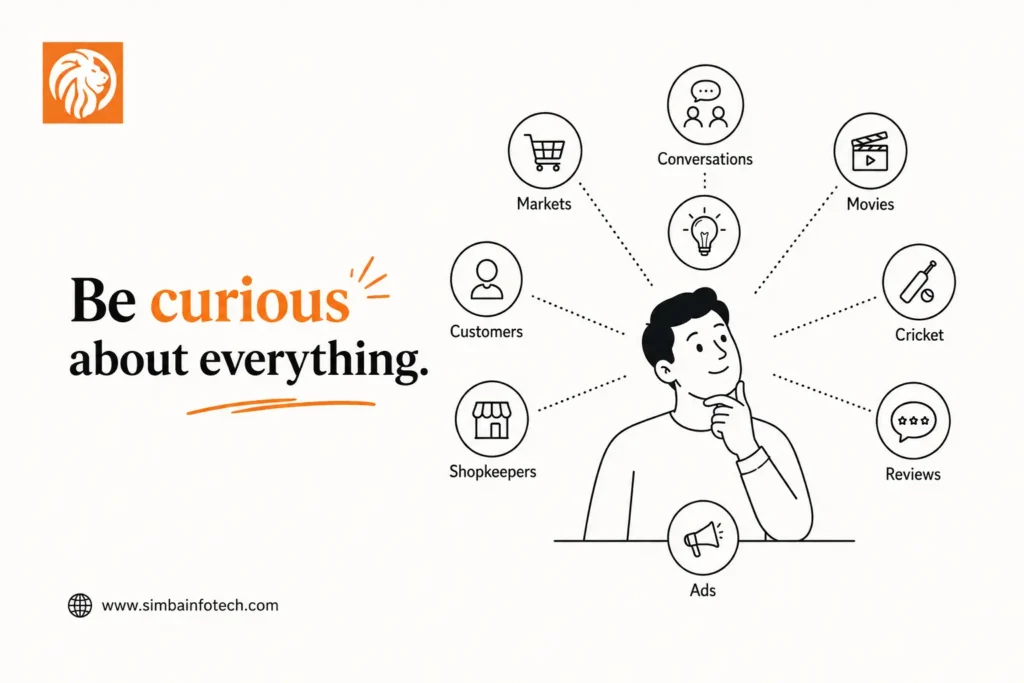
And one last personal advice: be curious about everything.
Seriously.
Be curious about why people buy things they do not need. Be curious about why one ad makes people stop and another gets ignored. Be curious about why a customer delays a decision, why a brand feels trustworthy, why a simple line sounds powerful, why people follow trends, why they believe reviews, why they remember one business and forget another.
Good storytelling does not come from sitting in front of a blank screen and begging your brain to become creative.
It comes from noticing life.
Watch people. Watch markets. Watch conversations. Watch movies. Watch cricket. Watch how shopkeepers sell. Watch how customers complain. Watch how brands behave when nobody is clapping for them.
The more curious you are, the more stories you find.
And once you start finding stories everywhere, marketing becomes much easier to understand.
A Few Stories I Personally Enjoyed
Before we end, here are a few stories I personally enjoyed.
Not because they are perfect. Not because every business needs to copy them. And definitely not because we all need to sit in a dark room and analyse ads like cinema critics with marketing degrees.
I enjoyed them because they made me feel something first and understand the message after.
That is what good storytelling does.
Sometimes it motivates you. Sometimes it makes you question something. Sometimes it reveals a problem you were not paying attention to. And sometimes it simply makes you sit there for a second and think, “Okay, that was smart.”
So instead of explaining too much, I will let the stories do their job.
Story No. 1 Sandy Hook Promise
This is not from any brand but made by an organisation; anyway, very thought-provoking. Watch it
2 Cadbury Dairy Milk
I like this Cadbury Dairy Milk ad because it takes a very simple human moment and makes it feel warm. It is not trying to over-explain the chocolate or list product features like “smooth texture” and “rich taste” as if we are attending a chocolate seminar.
Instead, it shows how sharing someone else’s happiness can create a small but beautiful connection. That is good storytelling. The product quietly becomes part of the emotion instead of shouting for attention.
3 Dove real beauty Sketch
I like this Dove Real Beauty Sketches ad because it shows a very simple truth: people often see themselves more harshly than others see them.
The ad does not scream about the product or force a sales pitch into the moment. It quietly touches an insecurity many people understand but rarely talk about. That is why the story works. It makes you feel something first, and only after that do you remember the brand.
Conclusion
So, what is storytelling in marketing?
It is not fairy tales. It is not overacting. It is not forcing your brand to sound like it has a tragic backstory and a motivational soundtrack.
Storytelling is simply the art of making people care.
It helps your customer see their own problem clearly. It gives your message shape, emotion, and meaning. It turns boring lines like “we provide digital marketing services” into something people can actually relate to, remember, and trust.
And that matters because people do not connect with plain information alone. They connect with problems, emotions, beliefs, tension, curiosity, and outcomes. They connect when a business makes them feel understood.
That is why storytelling is important for every business, whether you are building a brand, writing website content, running ads, creating social media posts, or working with a digital marketing agency in Ahmedabad to grow online.
At the end of the day, good marketing is not only about being visible.
It is about being meaningful.
Because anyone can shout online.
But the brands that tell better stories are the ones people stop for, remember, and trust.
FAQs
1. What is storytelling in marketing?
Storytelling in marketing means presenting your brand message in a way that people can understand, feel, and remember. It is not always about telling a literal story. It is about showing the customer’s problem, emotion, desire, and the change your product or service can create.
2. Why is storytelling important in digital marketing?
Storytelling is important in digital marketing because people do not connect with plain information alone. Whether it is SEO, social media marketing, paid ads, website content, or branding, storytelling helps businesses build attention, trust, and emotional connection with their audience.
3. How can businesses use storytelling in marketing?
Businesses can use storytelling by starting with the customer’s problem instead of only talking about their services. For example, instead of saying “we provide digital marketing services,” a business can explain the real struggle customers face, why it matters, and how the right solution can help.
4. What is brand storytelling?
Brand storytelling is the way a business communicates its values, purpose, customer problems, and emotional meaning through content, visuals, ads, website copy, and social media. It helps people understand what the brand stands for and why they should trust it.
5. How can a digital marketing agency help with storytelling?
A digital marketing agency can help businesses turn boring service-based messages into clear, relatable, and engaging communication. From content marketing and SEO blogs to social media posts, ads, and website copy, a good agency uses storytelling to make the brand easier to understand and harder to ignore.