- 08/08/2026
- Simba Infotech
- 0
Introduction
In today’s digital landscape, social media marketing has become one of the most effective ways for businesses to connect with customers, increase brand awareness, and drive growth. With billions of people actively using social media platforms every day, businesses of all sizes have unprecedented opportunities to reach their target audience, build meaningful relationships, and generate valuable leads.
While creating social media accounts is an important first step, consistent, well-planned content is essential for achieving meaningful results. To achieve sustainable business growth, companies need a strategic approach that combines consistency, audience engagement, quality content, and data-driven decision-making. Understanding and implementing social media marketing best practices can help businesses maximize their online presence and achieve measurable results.
This guide explores the most effective social media marketing best practices that can help businesses strengthen their digital presence and accelerate growth.
The Benefits of Social Media Marketing for Business Development.
Social media has revolutionized the way businesses connect and engage with their customers. Whether it’s increasing brand visibility, generating leads, or improving customer service, social media offers numerous benefits.
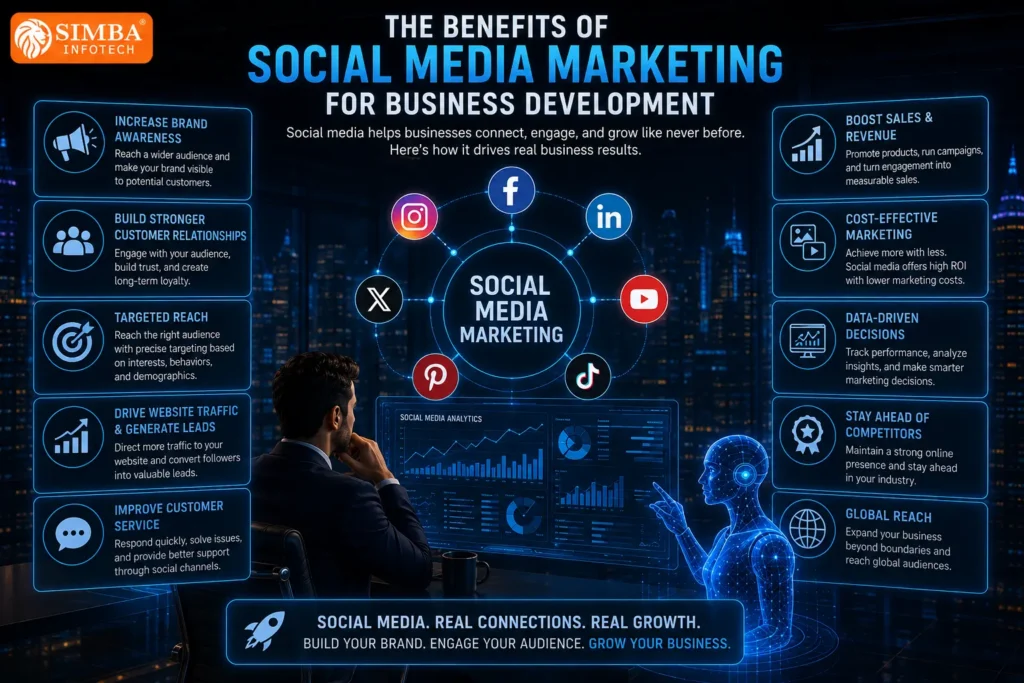
Some key advantages include:
- Increased brand awareness
- Better customer engagement
- Higher website traffic
- Improved customer loyalty
- Cost-effective marketing opportunities
- Enhanced lead generation
- Better understanding of customer preferences
- When implemented correctly, social media marketing becomes a powerful tool that supports both short-term objectives and long-term business growth.
1. Define Clear Social Media Goals
One of the most important best practices is establishing clear and measurable goals before launching any social media campaign.
Common social media marketing goals include:
- Increasing brand awareness
- Driving website traffic
- Generating leads
- Boosting sales
- Growing followers
- Improving customer engagement
- Building a community around the brand
Having specific goals allows businesses to create focused strategies and measure success effectively.
Key Takeaway
Clear objectives provide direction for every social media activity and help determine whether marketing efforts are delivering desired results
2. Understand Your Target Audience
Successful social media marketing begins with understanding who your audience is and what they want.
Businesses should analyze factors such as:
- Age groups
- Gender
- Location
- Interests
- Online behavior
- Purchasing habits
- Preferred social platforms
Creating audience personas helps marketers develop content that aligns with the interests and needs of their target customers.
Key Takeaway
A strong understanding of your target audience leads to more personalized and impactful content.
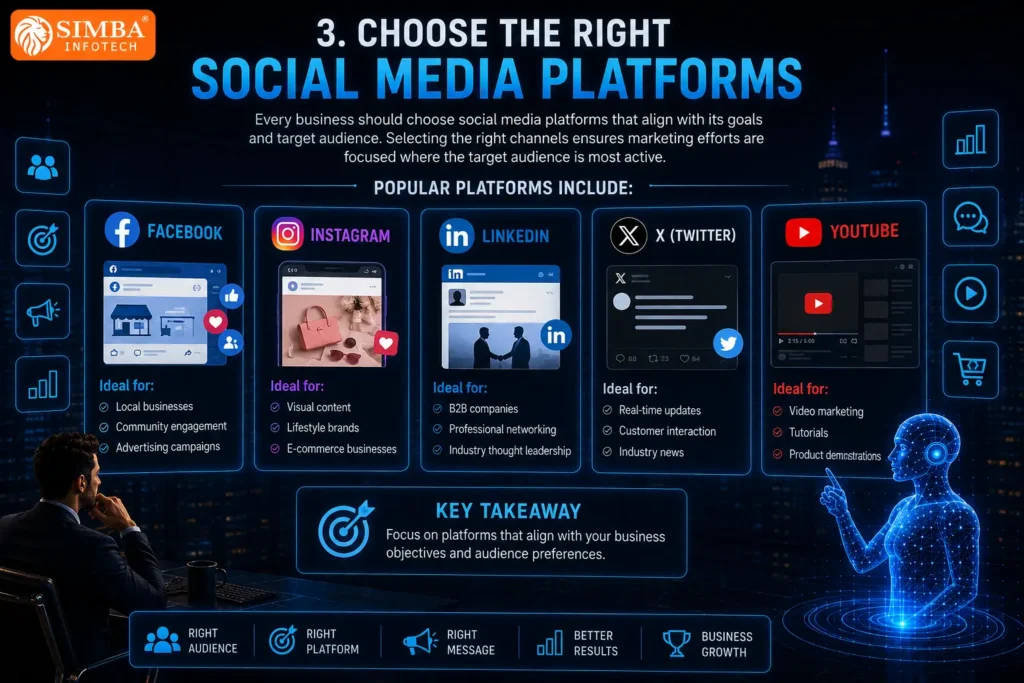
3. Choose the Right Social Media Platforms
Every business should choose social media platforms that align with its goals and target audience. Selecting the right channels ensures marketing efforts are focused where the target audience is most active.
Popular platforms include:
Ideal for:
Local businesses
Community engagement
Advertising campaigns
Ideal for:
Visual content
Lifestyle brands
E-commerce businesses
Ideal for:
B2B companies
Professional networking
Industry thought leadership
X (Twitter)
Ideal for:
Real-time updates
Customer interaction
Industry news
YouTube
Ideal for:
Video marketing
Tutorials
Product demonstrations
Key Takeaway
Focus on platforms that align with your business objectives and audience preferences.
4. Create High-Quality and Valuable Content
High-quality content continues to be the cornerstone of effective social media marketing.
Businesses should create content that:
- Educates
- Entertains
- Inspires
- Solves problems
- Builds trust
Examples of effective content include:
- Educational posts
- Industry insights
- Behind-the-scenes content
- Customer testimonials
- Product demonstrations
- Infographics
- Videos
- Case studies
Quality content encourages users to engage, share, and interact with your brand.
Key Takeaway
Valuable content builds credibility and strengthens customer relationships.
5. Maintain a Consistent Posting Schedule
Consistency helps businesses stay visible and relevant.
Creating a content calendar can help organize posts and maintain regular activity across platforms.
Benefits of consistent posting include:
- Increased engagement
- Better audience retention
- Improved brand recognition
- Stronger algorithm performance
Businesses should prioritize quality over quantity while maintaining a reliable posting frequency.
Key Takeaway
Consistent activity keeps your brand top-of-mind for potential customers.
6. Engage With Your Audience
Social media encourages two-way communication rather than one-way messaging.
Businesses should actively:
- Reply to comments
- Respond to messages
- Answer questions
- Participate in discussions
- Thank followers for support
Meaningful interactions with customers demonstrate a brand’s commitment to its audience and foster long-term relationships.
Key Takeaway
Meaningful interactions help build trust and increase customer loyalty.
7. Leverage Video Content
Video content continues to generate the highest levels of engagement across most social media platforms.
Popular video formats include:
- Reels
- Short-form videos
- Tutorials
- Product showcases
- Customer stories
- Live streams
Videos often generate higher reach and engagement compared to static content.
Key Takeaway
Video marketing can significantly increase visibility and audience interaction.

8. Use Social Media Advertising Strategically
Since organic reach is often limited, paid advertising has become an essential part of an effective social media marketing strategy.
Effective advertising strategies include:
- Audience targeting
- Retargeting campaigns
- Lead generation ads
- Conversion-focused campaigns
- Brand awareness campaigns
Paid social media advertising allows businesses to reach highly specific audiences and achieve faster results.
Key Takeaway
A balanced combination of organic and paid strategies can maximize business growth.
9. Monitor Performance and Analytics
Tracking performance helps businesses understand what works and what needs improvement.
Important metrics include:
- Reach
- Impressions
- Engagement rate
- Click-through rate
- Conversion rate
- Follower growth
- Website traffic
Regular analysis enables marketers to make informed decisions and optimize future campaigns.
Key Takeaway
Data-driven strategies lead to better marketing outcomes.
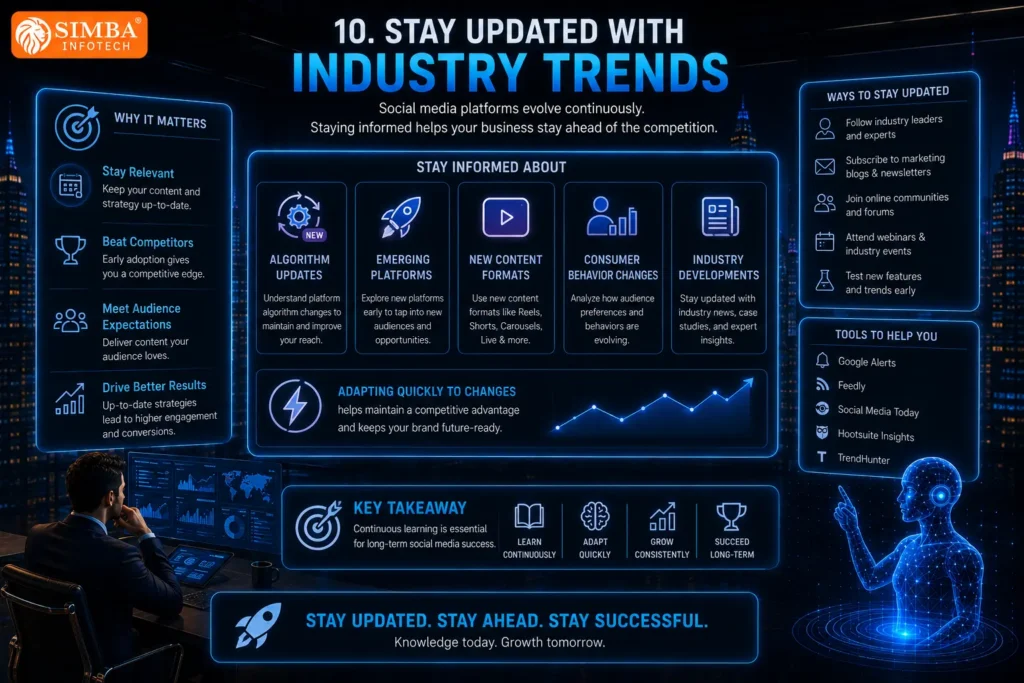
10. Stay Updated With Industry Trends
Social media platforms evolve continuously.
Businesses should stay informed about:
- Algorithm updates
- Emerging platforms
- New content formats
- Consumer behavior changes
- Industry developments
Adapting quickly to changes helps maintain a competitive advantage.
Key Takeaway
Continuous learning is essential for long-term social media success.
Conclusion
Social media marketing has become a vital part of modern business growth and success.When approached strategically, it can help businesses increase brand awareness, attract new customers, strengthen relationships, and drive revenue growth.
Successful businesses recognize that social media marketing goes beyond posting content. It focuses on building meaningful relationships, providing value to audiences, and refining strategies through performance analysis. By implementing these social media marketing best practices, businesses can build a strong online presence and position themselves for sustainable long-term growth in an increasingly competitive digital marketplace.
Frequently Asked Questions (FAQs)
1. Why is social media marketing important for business growth?
Social media marketing helps businesses increase brand visibility, engage with customers, generate leads, drive website traffic, and improve overall business performance.
2. Which social media platform is best for business marketing?
The ideal platform varies depending on your target audience and overall business objectives. Instagram is effective for visual brands, LinkedIn works well for B2B businesses, while Facebook remains valuable for community engagement and advertising.
3. How often should companies share content on their social media platforms?
Posting frequency varies by platform and audience. However, maintaining a consistent schedule with high-quality content is generally more important than posting excessively.
4. How can businesses improve engagement on social media?
Businesses can improve engagement by creating valuable content, responding to comments, using interactive formats, posting videos, and actively participating in conversations.
5. What metrics should businesses track in social media marketing?
Important metrics include reach, impressions, engagement rate, click-through rate, conversions, website traffic, and follower growth.
6. Is paid social media advertising necessary?
While organic marketing is valuable, paid advertising can help businesses reach larger audiences, generate leads faster, and improve overall campaign performance.
7. How does video content help social media marketing?
Video content often receives higher engagement, increased visibility, and better audience retention compared to many other content formats.
8. How much time does it take for social media marketing to produce measurable results?
Results depend on factors such as strategy, consistency, industry competition, and business goals. Many businesses begin seeing measurable improvements within a few months of consistent effort.
Key Takeaways
- Define clear and measurable social media goals.
- Understand your target audience thoroughly.
- Choose and focus on the platforms where your audience is most active and engaged.
- Create valuable and engaging content consistently.
- Maintain a regular posting schedule.
- Prioritize audience engagement and relationship building.
- Invest in video content for higher reach and interaction.
- Utilize paid advertising strategically.
- Monitor analytics and optimize campaigns regularly.
- Stay updated with changing social media trends.