

- 08/24/2026
- Simba Infotech
- 0
Introduction
In today’s competitive market, every business needs a strong digital presence to attract customers, build trust, and grow online. Whether you are a startup, small business, or established company, choosing between a business website and a mobile app can be challenging. Both play an important role in improving customer experience and supporting your Digital marketing efforts, but they serve different business goals.
The best choice depends on your business objectives, target audience, available budget, required features, and long-term growth strategy. Making the wrong decision can lead to unnecessary expenses and missed opportunities.
This guide will help you understand:
- The key differences between a mobile app and a website.
- The benefits and limitations of each option.
- Which solution best fits your business goals, budget, and target audience?
- How the right choice can improve your digital marketing strategy and drive long-term business growth.
The Difference Between a Business Website and a Mobile App
Before deciding whether your business needs a website or a mobile app, it’s important to understand what each one offers.While both a website and a mobile app contribute to business growth, strengthen your online presence, and support digital marketing strategies, each is designed to achieve different business objectives. The right choice depends on your business goals, target audience, and the type of experience you want to provide to your customers.
What Is a Website?
A website is a collection of web pages that users can access through an internet browser, such as Chrome, Safari, or Edge, without installing anything. It serves as your business’s online identity, allowing potential customers to learn about your products, services, pricing, and contact information anytime.
A business website is ideal for:
- Helping your business rank higher on Google through effective SEO practices.
- Generating quality leads and customer inquiries.
- Showcasing products, services, and company information.
- Supporting content marketing through blogs and landing pages.
- Building trust and credibility with potential customers.
What Is a Mobile App?
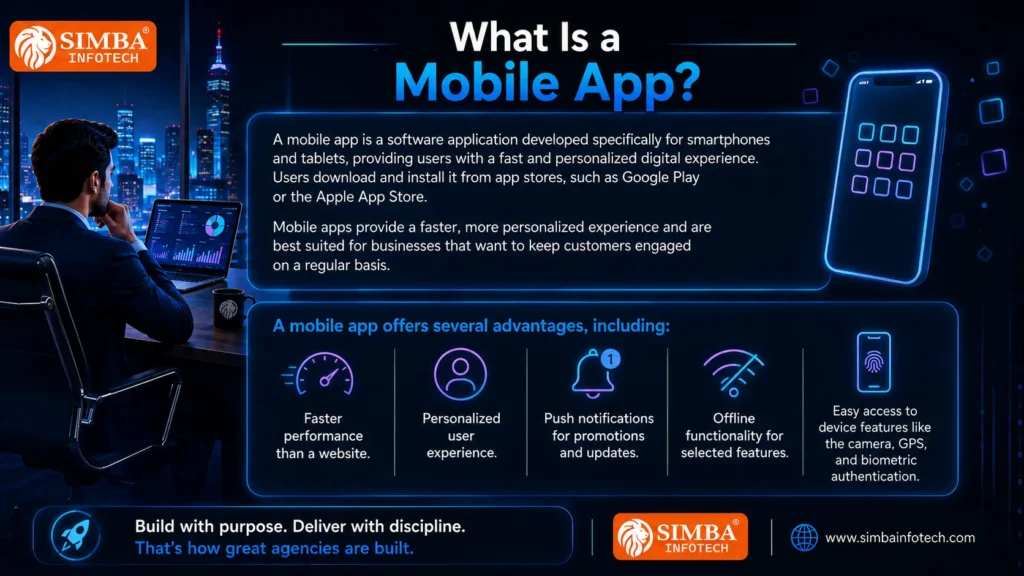
A mobile app is a software application developed specifically for smartphones and tablets, providing users with a fast and personalized digital experience. Users download and install it from app stores, such as Google Play or the Apple App Store. Mobile apps provide a faster, more personalized experience and are best suited for businesses that want to keep customers engaged on a regular basis.
A mobile app offers several advantages, including:
- Faster performance than a website.
- Personalized user experience.
- Push notifications for promotions and updates.
- Offline functionality for selected features.
- Easy access to device features like the camera, GPS, and biometric authentication.
How Do They Work Differently?
Although a website and a mobile app both help businesses establish a strong online presence, they are built to achieve different objectives. A website is primarily designed to make your business visible to potential customers who are searching for products or services online. Through SEO (Search Engine Optimization), content marketing, and other digital marketing strategies, a website can attract organic traffic from search engines like Google.
Since a website is accessible through any web browser without requiring installation, it enables businesses to reach a broader audience, attract qualified leads, and effectively showcase their products, services, and brand identity.
In contrast, a mobile app, on the other hand, is focused on delivering a personalized and engaging experience to existing customers. Unlike a website, an app must be downloaded and installed on a smartphone or tablet. Once installed, it provides faster navigation, better performance, and convenient access to features such as push notifications, offline functionality, GPS, camera integration, and secure biometric login.
In many cases, businesses achieve the best results by using both a website and a mobile app, allowing them to attract new customers while keeping existing ones engaged for long-term business growth.
Mobile App vs Website: Key Differences
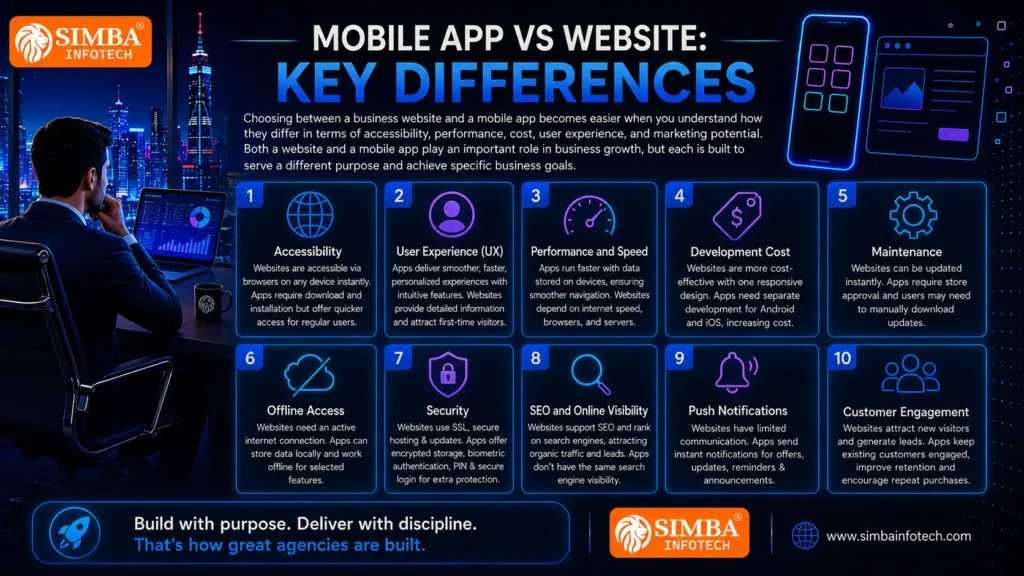
Choosing between a business website and a mobile app becomes easier when you understand how they differ in terms of accessibility, performance, cost, user experience, and marketing potential. Both a website and a mobile app play an important role in business growth, but each is built to serve a different purpose and achieve specific business goals.
1. Accessibility
A website is accessible through any web browser, allowing users to visit it instantly without downloading or installing anything. Whether someone is using a desktop, laptop, tablet, or smartphone, they can simply enter the website URL and start browsing. Unlike a website, a mobile app needs to be downloaded and installed on a user’s device before it can be used. Although this requires an extra step, apps provide quicker access for regular users.
2. User Experience (UX)
Mobile apps are designed to deliver a smoother, faster, and more personalized user experience. They offer intuitive navigation, customized content, and interactive features that make everyday tasks easier. Websites are designed to provide detailed business information and work seamlessly across desktops, tablets, and smartphones, making them ideal for attracting first-time visitors and potential customers.
3. Performance and Speed
Mobile apps generally perform faster because much of their data is stored directly on the device. As a result, users enjoy faster loading speeds, smoother navigation, and a more responsive overall experience. Websites depend on internet speed, browser performance, and server response time, which may occasionally affect their speed.
4. Development Cost
For businesses with a limited budget, a website is often the most cost-effective digital solution. It requires a single responsive design that works across multiple devices. A mobile app, however, often requires separate development for Android and iOS platforms, increasing the overall development time and investment.
5. Maintenance
Both websites and mobile apps require regular maintenance to remain secure and functional. Websites can be updated instantly, allowing every visitor to access the latest version immediately. Mobile apps, on the other hand, require updates to be submitted to app stores, and users may need to download the latest version manually.
6. Offline Access
Most websites require an active internet connection to display content and perform functions. Mobile apps can store selected data locally, allowing users to access certain features even when they are offline. This makes apps more convenient for businesses whose customers frequently use their services on the go.
7. Security
Security is important for both platforms, but they protect user data in different ways. Websites rely on SSL certificates, secure hosting, and regular software updates to keep information safe. Mobile apps can provide additional protection through encrypted storage, biometric authentication, PIN verification, and secure login methods, offering an extra layer of security for sensitive information.
8. SEO and Online Visibility
One of the biggest advantages of a website is its ability to support Search Engine Optimization (SEO). An SEO-friendly website can rank on Google and other search engines, helping businesses attract organic traffic and generate quality leads. Websites also play a crucial role in digital marketing, supporting content marketing, Google Ads, and local SEO campaigns. Mobile apps, while excellent for user engagement, do not provide the same level of search engine visibility.
9. Push Notifications
Websites have limited communication capabilities, whereas mobile apps allow businesses to send instant push notifications directly to users’ devices. These notifications can be used to share promotions, special offers, order updates, reminders, and important announcements, helping businesses stay connected with their customers.
10. Customer Engagement
Websites are highly effective for attracting new visitors, educating potential customers, and generating leads. Mobile apps, however, are designed to keep existing customers engaged through personalized experiences, loyalty programs, exclusive offers, and regular interactions. As a result, apps often improve customer retention and encourage repeat purchases, making them a valuable long-term investment for growing businesses.
Benefits of Having a Business Website
A professional business website is one of the most valuable digital assets for any company. Whether you are a startup, small business, or established brand, a website helps you build a strong online presence, reach more customers, and support your overall digital marketing strategy. It acts as your business’s online storefront, allowing potential customers to discover your products or services anytime and from anywhere.
1. Easy to Find on Google
An SEO-friendly website can rank on search engines like Google, making it easier for potential customers to find your business when searching for relevant products or services. By optimizing your website with quality content and the right keywords, you can attract organic traffic and increase brand visibility without relying entirely on paid advertising.
2. Builds Credibility
A professionally designed website creates a positive first impression and helps establish trust with your audience. Customers are more likely to choose a business that has a modern, informative, and secure website. Features such as customer testimonials, service pages, contact information, and an SSL certificate further enhance your business’s credibility.
3. Generates Quality Leads
A website works as a 24/7 lead generation tool. Contact forms, inquiry pages, live chat, and clear call-to-action buttons encourage visitors to connect with your business, helping you convert website traffic into valuable leads and potential customers.
4. Accessible on Every Device
Modern websites are built using responsive design, ensuring they work smoothly across desktops, laptops, tablets, and smartphones. This allows users to access your website anytime, regardless of the device they use.
5. Lower Development Cost
Compared to developing a mobile app, creating a business website is generally more affordable and requires less maintenance. It provides an excellent return on investment, especially for businesses looking to increase online visibility, generate leads, and grow through SEO and digital marketing.
Benefits of Developing a Mobile App
A mobile app offers businesses an effective way to deliver a seamless, personalized, and engaging experience to their customers. As smartphone usage continues to grow, investing in mobile app development can help businesses strengthen customer relationships, improve brand loyalty, and support long-term business growth. While a website is essential for attracting new visitors, a mobile app is designed to keep existing customers connected and encourage repeat interactions.
1. Personalized User Experience
One of the biggest advantages of a mobile app is its ability to provide a personalized experience. Apps can remember user preferences, purchase history, and browsing behavior, allowing businesses to recommend relevant products, services, and offers. This level of personalization improves customer satisfaction and creates a more engaging user journey.
2. Faster Performance
Unlike websites that rely on browsers and internet speed, mobile apps are built specifically for smartphones and tablets. Since many resources are stored directly on the device, apps load faster, respond quickly, and provide smoother navigation, resulting in a better overall user experience.
3. Better Customer Retention
A mobile app encourages users to interact with your business more frequently. Features such as loyalty programs, personalized recommendations, exclusive offers, and easy account access help improve customer retention and increase repeat purchases. This makes mobile apps a valuable tool for businesses that rely on long-term customer relationships.
4. Push Notifications
Push notifications enable businesses to communicate directly with customers in real time. You can instantly share promotional offers, order updates, reminders, new product launches, and important announcements, helping increase engagement and drive more conversions.
5. Offline Functionality
Many mobile apps allow users to access selected features even without an internet connection. This provides added convenience and ensures a smoother experience, especially for users who travel frequently or have limited network access.
6. Access to Phone Features
Mobile apps can seamlessly integrate with smartphone features such as the camera, GPS, microphone, biometric authentication (fingerprint or Face ID), contacts, and file storage. These capabilities make it possible to deliver advanced functionality, improve security, and create a more interactive user experience that is difficult to achieve through a standard website.
When Does Your Business Need a Website?
A business website is the ideal choice for companies that want to establish a strong online presence, attract new customers, and grow through SEO and digital marketing. It serves as your digital storefront, making it easier for potential customers to find your products or services, learn about your business, and contact you anytime. If your goal is to increase online visibility, generate leads, and build trust, investing in a professional website is often the first and most important step.
1. New Businesses
If you’re launching a new business, a website should be your first digital investment. It introduces your brand, highlights your products or services, shares important business information, and helps potential customers discover you through Google search. A professional website also creates credibility and gives your business a competitive advantage from day one.
2. Local Service Providers
Businesses such as plumbers, electricians, interior designers, digital marketing agencies, consultants, clinics, salons, and repair services benefit greatly from having a website. With Local SEO, your business can appear in location-based search results, helping nearby customers find your services quickly. A website also allows customers to contact you, request quotes, or book appointments online.
3. B2B Companies
For B2B (Business-to-Business) companies, a website acts as a powerful marketing and lead generation tool. It showcases your expertise, services, client success stories, certifications, and company information, making it easier for potential clients to evaluate your business before making contact. A well-designed website helps build trust and supports long-term business relationships.
4. Portfolio Websites
Professionals such as photographers, graphic designers, architects, software developers, freelancers, and creative agencies can use a portfolio website to display their previous work and achievements. An impressive portfolio helps demonstrate skills, attract potential clients, and increase business opportunities without relying solely on social media platforms.
5. Businesses Focused on SEO and Lead Generation
If your primary objective is to attract organic traffic and generate consistent leads, a website is the best solution. An SEO-friendly website allows you to publish blogs, create landing pages, target high-value keywords, and rank higher in search engine results. Combined with a strong digital marketing strategy, your website can continuously bring qualified visitors, generate inquiries, and support sustainable business growth.
When Should Your Business Invest in a Mobile App?
While a business website is essential for building online visibility and attracting new customers, there are situations where investing in a mobile app becomes the smarter choice. If your business relies on frequent customer interactions, personalized services, or repeat purchases, a mobile app can significantly improve user experience and customer loyalty. Mobile apps provide faster performance, seamless navigation, push notifications, and access to smartphone features, making them a valuable investment for businesses looking to strengthen customer engagement and long-term growth.
1. E-commerce Businesses
Online stores can greatly benefit from a mobile app by offering faster shopping experiences, personalized product recommendations, secure payment options, and instant order tracking. Mobile apps also encourage repeat purchases through loyalty programs and exclusive in-app offers.
2. Food Delivery Services
Restaurants and food delivery businesses can simplify the ordering process with a dedicated mobile app. Customers can browse menus, place orders, make secure payments, track deliveries in real time, and receive promotional offers through push notifications, creating a more convenient experience.
3. Healthcare Industry
Hospitals, clinics, diagnostic centers, and healthcare providers can use mobile apps to allow patients to book appointments, access medical records, consult doctors online, receive medication reminders, and manage their healthcare from anywhere.
4. Education Platforms
Schools, colleges, coaching institutes, and e-learning platforms can improve learning experiences through mobile apps. Students can access study materials, watch video lectures, complete assignments, attend live classes, and receive important notifications directly on their smartphones.
5. Finance and Banking
Banks, fintech companies, and financial service providers rely on mobile apps to offer secure banking, digital payments, investment tracking, account management, and instant transaction alerts. Features like biometric authentication and encrypted data make financial apps both convenient and secure.
6. Businesses with Repeat Customers
Businesses such as retail stores, salons, fitness centers, grocery stores, travel agencies, and service providers that interact with customers regularly can benefit from a mobile app. It helps increase customer retention by offering personalized recommendations, loyalty rewards, appointment scheduling, and exclusive member benefits.
7. Subscription-Based Services
Businesses offering subscription-based products or services, including streaming platforms, online courses, software solutions, fitness memberships, and digital publications, can use mobile apps to deliver a seamless user experience. Apps make it easy for customers to manage subscriptions, access premium content, receive renewal reminders, and stay engaged with your brand.
Investing in a mobile app is the right decision when your goal is to provide a better customer experience, encourage repeat business, and build lasting customer relationships. When combined with a professional website and a strong digital marketing strategy, a mobile app can become a powerful tool for accelerating business growth and increasing customer satisfaction.
Can Your Business Benefit from Both?
The simple answer is yes. In today’s competitive digital landscape, many successful businesses choose to invest in both a website and a mobile app instead of relying on just one platform. While each serves a different purpose, they work together to create a complete digital ecosystem that helps businesses attract new customers, improve customer engagement, and achieve long-term growth.
Why Many Successful Businesses Use Both
Many successful businesses invest in both a website and a mobile app because each platform serves a different purpose. A website helps businesses reach new customers through SEO, search engines, and digital marketing, while a mobile app strengthens relationships with existing customers through personalized experiences and convenient features. Instead of choosing one over the other, businesses use both to maximize their online presence, improve customer satisfaction, and drive long-term growth.
Benefits of using both include:
- Reach a wider audience across multiple platforms.
- Improve online visibility through SEO.
- Increase customer engagement and retention.
- Generate more qualified leads and conversions.
- Strengthen your overall digital marketing strategy.
Website for Visibility
A business website is the foundation of your online presence. It helps potential customers discover your business when searching on Google and provides detailed information about your products, services, pricing, and contact details. A well-optimized website also supports content marketing, local SEO, and paid advertising, making it easier to attract new visitors and convert them into customers.
A website helps your business:
- Rank higher on Google with SEO.
- Build trust and business credibility.
- Generate leads through inquiry forms.
- Reach customers on any device.
- Support digital marketing campaigns.
Mobile App for Engagement and Retention
A mobile app is designed to keep customers connected with your business after their first interaction. It offers a faster, more personalized experience and encourages users to engage with your brand regularly. Features such as push notifications, loyalty programs, personalized recommendations, and offline access help businesses improve customer satisfaction and increase repeat purchases.
A mobile app helps businesses:
- Increase customer retention.
- Deliver personalized user experiences.
- Send instant push notifications.
- Improve customer loyalty.
- Encourage repeat business.
How Both Work Together
A website and a mobile app work best when used together as part of a complete digital marketing strategy. The website attracts new customers through Google searches, blogs, and online advertising, while the mobile app keeps those customers engaged with personalized features and ongoing communication. Together, they create a seamless customer journey that improves brand awareness, increases conversions, and supports sustainable business growth.
How they complement each other:
- Websites attract new visitors through SEO.
- Mobile apps enhance the customer experience.
- The website generates leads and inquiries.
- Mobile apps build long-term customer relationships.
- Together, they maximize business growth and online success.
Factors to Consider Before Choosing
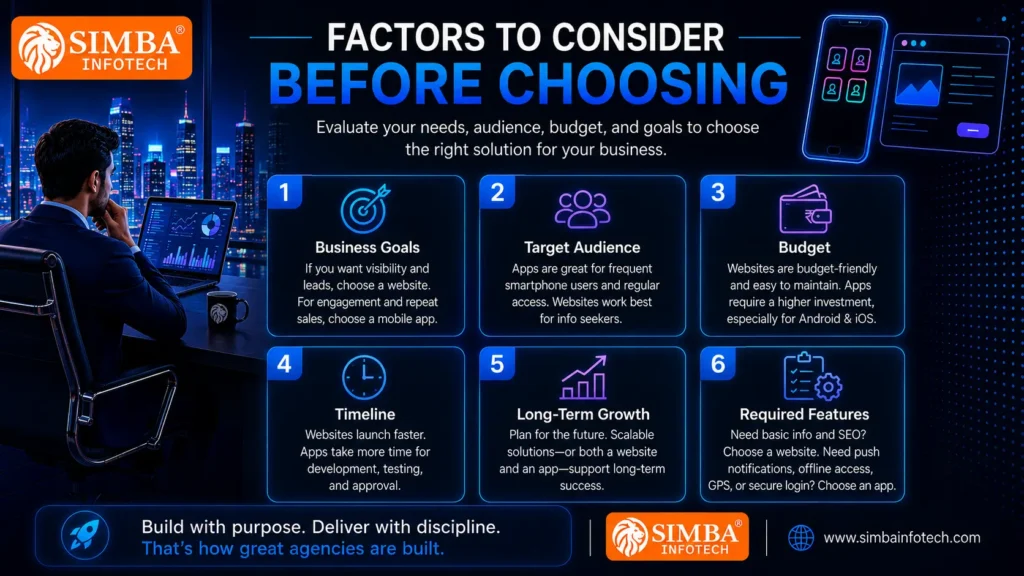
Choosing between a business website and a mobile app is an important decision that can impact your business growth and digital marketing success. Before making an investment, it’s essential to evaluate your business needs, customer expectations, budget, and long-term objectives. By considering the following factors, you can select the solution that delivers the greatest value for your business.
1. Business Goals
Start by identifying what you want to achieve. If your goal is to increase online visibility, generate leads, and attract new customers, a website is usually the best option. However, if your focus is on improving customer engagement, encouraging repeat purchases, and providing personalized services, investing in a mobile app may be the right choice.
2. Target Audience
Understanding your target audience is crucial. Consider how your customers interact with your business and which platform they prefer. If they frequently use smartphones and require regular access to your services, a mobile app can provide a better experience. If they mainly search for information online before making a decision, a website will be more effective.
3. Budget
Your available budget plays a significant role in the decision-making process. A business website is generally more affordable to develop and maintain, making it an ideal choice for startups and small businesses. Mobile app development usually requires a larger investment, especially if you need separate applications for Android and iOS.
4. Timeline
Consider how quickly you want to launch your digital platform. Websites are typically faster to design, develop, and publish, while mobile apps often require more time for development, testing, and approval before they become available to users.
5. Long-Term Growth
Think beyond your current needs and consider your future business plans. If you expect your business to grow rapidly, expand your customer base, or introduce advanced digital services, choosing a scalable solution—or eventually investing in both a website and a mobile app—can support long-term success.
6. Required Features
List the features your business requires before making a decision. If you only need to showcase services, publish blogs, collect inquiries, and improve SEO, a website is sufficient. However, if your business depends on push notifications, offline access, GPS tracking, online booking, secure login, or personalized user experiences, a mobile app will provide greater value.
Conclusion
Choosing between a mobile app and a website depends on your business goals, audience, and growth plans. A business website is ideal for improving SEO, increasing online visibility, and generating leads through search engines. It gives your brand a professional online presence and helps customers learn about your products or services with ease.
A mobile app is better for businesses that want stronger customer engagement, faster access, and personalized experiences. It supports repeat purchases, loyalty, push notifications, and convenient mobile interactions.
For many businesses, the best approach is to use both. A website attracts new visitors, while a mobile app keeps existing customers connected and engaged. Together, they create a stronger digital presence and support long-term growth. If you are unsure which option suits your business best, consult a trusted website and mobile app development company to choose the right solution based on your needs and budget with confidence.
Key Takeaways
- A website is best for improving SEO, online visibility, and lead generation.
- A mobile app delivers a faster, more personalized user experience.
- Websites are more affordable and easier to launch than mobile apps.
- Mobile apps help increase customer engagement, loyalty, and repeat purchases.
- Choose a website if your goal is to attract new customers through digital marketing.
- Choose a mobile app if your business relies on frequent customer interactions.
- Many businesses achieve the best results by using both a website and a mobile app.
- Select the right platform based on your business goals, target audience, budget, and long-term growth strategy.
Frequently Asked Questions (FAQs)
1. Which is better for a business: a website or a mobile app?
It depends on your business goals. A website is best for SEO and lead generation, while a mobile app is ideal for customer engagement and retention.
2. Should a small business build a website or a mobile app first?
Most small businesses should start with a website because it is more affordable and helps attract customers through Google
3. Is a website more affordable than a mobile app?
Yes. A website generally costs less to develop and maintain than a mobile app.
4. Can a business have both a website and a mobile app?
Yes. Using both helps attract new customers while keeping existing customers engaged.
5. Which option is better for SEO?
A website is better for SEO because it can rank on search engines and generate organic traffic.
6. Which businesses should invest in a mobile app?
Businesses with repeat customers, such as e-commerce, food delivery, healthcare, education, and finance, benefit most from a mobile app.
7. Can a mobile app work offline?
Yes. Many mobile apps offer offline access to selected features and cont
8. How do I choose between a website and a mobile app?
Consider your business goals, target audience, budget, and required features before making a decision.