
- 06/30/2026
- Simba Infotech
- 0
Introduction
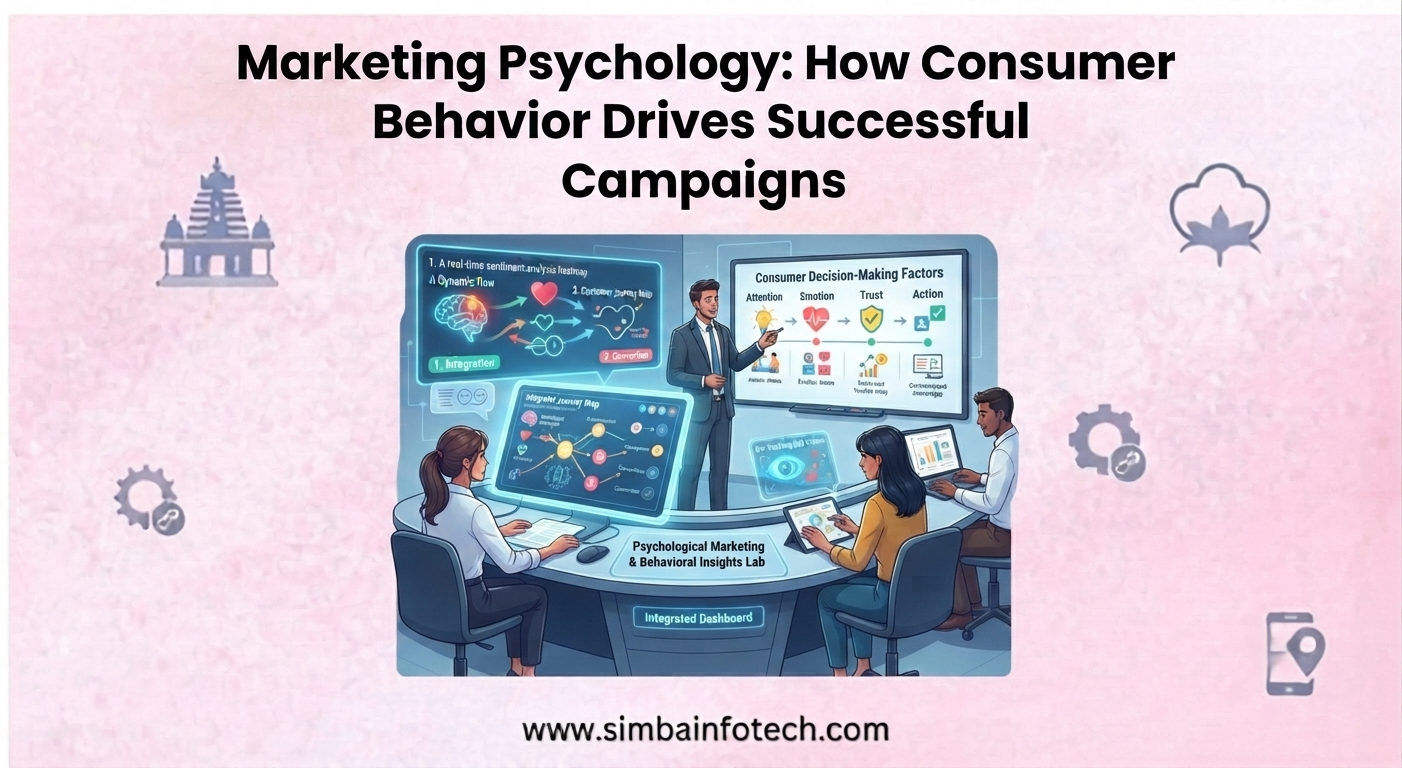
Have you ever wondered why some marketing campaigns succeed while others fail, even when they promote similar products or services? The answer often lies in Marketing Psychology. Marketing is not just about selling products; it is about understanding how people think, what influences their decisions, and why they choose one brand over another. Businesses that understand these factors can create campaigns that connect better with customers and drive results.
In today’s digital landscape, consumers have access to countless products, services, and information sources, allowing them to thoroughly research and compare options before making a purchasing decision. At this stage, Digital marketing helps businesses connect with potential customers by delivering relevant content and personalized experiences. By studying customer behavior and personalizing experiences, businesses can create campaigns that increase engagement and conversions.
In This Guide, You Will Learn:
- What Marketing Psychology is and why it matters
- How consumer behavior influences purchasing decisions
- The psychological triggers that encourage customers to take action
- Why emotions play a major role in successful marketing campaigns
- How businesses use consumer insights to improve marketing results
- Common Consumer Behavior Triggers Used in Marketing
- Real-Life Example: How You Can Implement Marketing Psychology
- Key Takeaways
By the end of this guide, you will understand how marketing psychology works and how to use these principles to create more effective campaigns that connect with your audience and deliver better results.
What Is Marketing Psychology?
Marketing Psychology is the study of how psychological factors influence customer decisions. It combines concepts from psychology, behavioral science, and marketing to understand why people buy products or services.
Instead of focusing only on products, marketing psychology focuses on people.
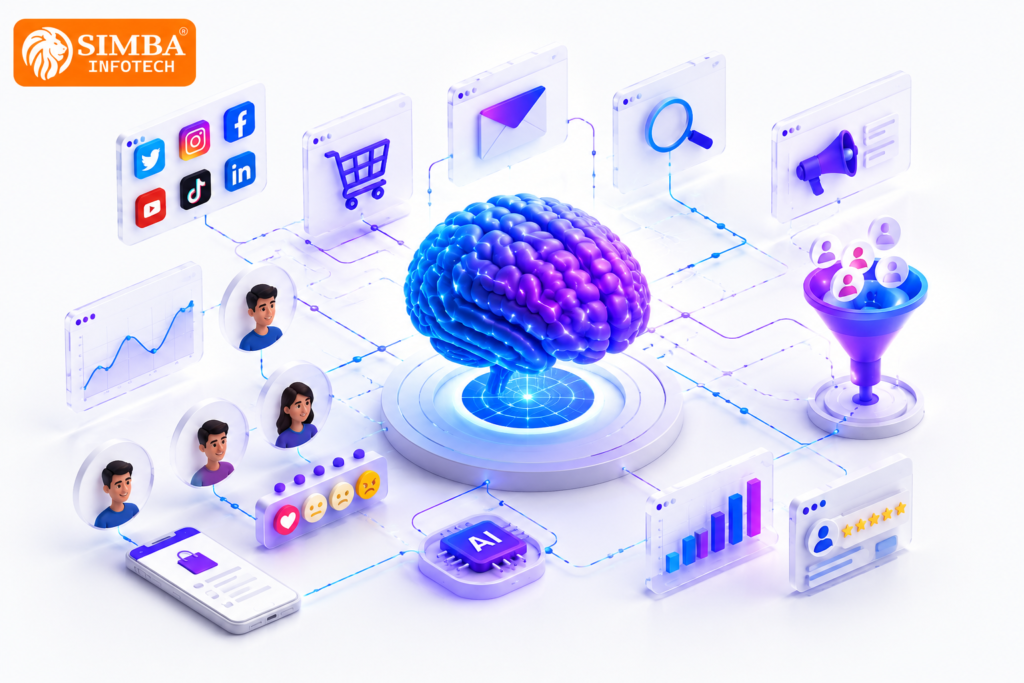
It helps businesses answer questions like:
- Why do customers trust certain brands?
- Why do some advertisements attract attention instantly?
- Why do customers buy impulsively?
- Why do reviews influence purchasing decisions?
- Why do limited-time offers increase sales?
Understanding these answers helps businesses create better campaigns and stronger customer relationships. Marketing psychology uses principles such as social proof, reciprocity, scarcity, anchoring, and emotional influence to shape customer decisions.
Today, Digital marketing professionals use psychology to improve websites, advertisements, email campaigns, landing pages, and social media content.
Understanding Consumer Behavior
Consumer behavior refers to the way people think, feel, and act when making purchasing decisions. It involves studying the entire decision-making process that customers go through before, during, and after buying a product or service. Understanding consumer behavior helps businesses identify what motivates customers, what influences their choices, and how they interact with brands throughout their buying journey.
In today’s competitive business environment, understanding consumer behavior is essential because customers no longer make purchasing decisions based solely on product features or pricing. Their choices are often influenced by emotions, personal experiences, online reviews, recommendations, brand reputation, and many other factors. By analyzing these behaviors, businesses can create more effective marketing strategies that better align with customer needs and expectations.
Consumer Behavior Includes:
- What customers buy
- Why they buy
- When they buy
- How they buy
- Where they buy
- What influences their purchasing decisions
What Customers Buy
The products or services customers choose reveal a great deal about their needs, preferences, lifestyles, and priorities. Some customers focus on quality, while others prioritize affordability, convenience, or brand reputation. Understanding what customers purchase helps businesses identify market demand and develop products or services that better meet consumer expectations.
Why Customers Buy
Understanding why customers make a purchase is one of the most important aspects of consumer behavior. Customers typically buy products or services to solve a problem, fulfill a need, achieve a goal, or satisfy an emotional desire. For example, someone may purchase a fitness membership to improve their health, while another customer may buy a luxury product to enhance their social status or confidence.
When Customers Buy
The timing of a purchase can be influenced by various factors such as seasonal trends, special occasions, promotions, personal circumstances, or urgent needs. Understanding when customers are most likely to make purchasing decisions allows businesses to plan marketing campaigns more effectively and reach their audience at the right moment.
How Customers Buy
Modern consumers have multiple purchasing options available to them. Some prefer shopping online, while others prefer visiting physical stores. Customers may also compare products, read reviews, watch videos, or seek recommendations before making a decision. Understanding how customers buy helps businesses optimize their sales process and improve the overall customer experience.
Where Customers Buy
Consumers can purchase products and services through websites, e-commerce platforms, social media channels, mobile applications, physical stores, or online marketplaces. Knowing where customers prefer to shop helps businesses focus their marketing efforts on the platforms that generate the best results.
What Influences Their Decisions
Customer decisions are rarely influenced by a single factor. Instead, multiple elements work together to shape purchasing behavior. These influences often determine whether a customer chooses one brand over another.
Common Factors That Influence Consumer Behavior:
- Emotions and feelings
- Personal preferences
- Family and friends
- Online reviews and ratings
- Social media influence
- Cultural background
- Lifestyle and values
- Brand reputation
- Previous experiences
- Price and perceived value
Each of these factors can affect how customers evaluate products and make purchasing decisions. For example, a positive review may build trust, while a negative experience with a brand may discourage future purchases.
Why Consumer Behavior Matters in Marketing
Understanding consumer behavior is one of the most important aspects of successful marketing. When you understand your audience’s behavior, preferences, and motivations, you can create marketing campaigns that are more relevant, engaging, and effective. This not only improves customer satisfaction but also helps businesses achieve better results from their marketing efforts.
Benefits of Understanding Consumer Behavior:
1. Better Targeting
By analyzing consumer behavior, businesses can better understand their ideal customers and create marketing strategies that align with their interests and expectations. By understanding their interests, needs, and online habits, you can deliver the right message to the right audience at the right time. This makes your marketing campaigns more relevant and increases the chances of attracting potential customers.
2. Higher Conversion Rates
When you know what motivates customers to take action, you can create content, offers, and marketing messages that directly address their needs. Understanding customer pain points and desires allows you to guide them more effectively through the buying journey, resulting in higher conversion rates and more sales.
3. Stronger Brand Loyalty
Customers are more likely to remain loyal to brands that understand their needs and consistently provide value. When your marketing messages feel personalized and relevant, customers develop trust and a stronger emotional connection with your brand. When customers consistently receive positive experiences, they are more likely to return for future purchases and develop a long-term connection with the brand.
4. Improved Customer Experience
Consumer behavior insights help businesses create experiences that match customer expectations. From website design and product recommendations to customer support and communication, understanding what customers want allows you to provide a smoother and more satisfying experience at every stage of their journey.
5. Better Return on Investment (ROI)
Marketing budgets are often limited, making it important to use resources wisely. By understanding consumer behavior, businesses can focus their efforts on strategies that are more likely to generate results. By focusing on customers who are genuinely interested in a product or service, businesses can improve campaign performance and make better use of their Digital marketing budget.
6. Competitive Advantage
Businesses that understand their customers better than their competitors can create more effective marketing strategies. Consumer behavior insights help you identify market trends, customer preferences, and emerging opportunities, allowing you to stay ahead of the competition and adapt to changing customer expectations more quickly.
By understanding consumer behavior, businesses can make smarter marketing decisions, build stronger relationships with customers, and create campaigns that deliver measurable results. This is why consumer behavior remains a key foundation of successful marketing and Digital marketing strategies.
The Psychology Behind Customer Decisions
Many people believe customers make logical buying decisions.
However, research suggests that emotions and subconscious influences play a significant role in purchasing behavior. Consumer neuroscience studies show that emotional and cognitive responses strongly affect buying decisions.
Let’s explore the most important psychological principles.
1. Social Proof
People naturally look to others when making decisions, especially when they are uncertain about a product or service. In consumer psychology, this tendency is known as social proof, a principle that influences people to trust products or services that are already trusted by others. Positive reviews, testimonials, and customer experiences help build trust, making new customers more confident in choosing the same brand or service.
Social proof reduces risk and reassures potential customers that they are making a smart decision. This is why online reviews and testimonials have become important factors in purchasing behavior.
Common Examples of Social Proof:
- Customer reviews
- Google ratings
- Testimonials
- Success stories
- Social media mentions
- Influencer recommendations
- Case studies
In Digital marketing, social proof is frequently used on landing pages, websites, product pages, and advertisements to increase credibility and encourage conversions.
2. Scarcity
People tend to place a higher value on things that appear limited or difficult to obtain. This psychological principle is known as scarcity. When customers believe that an opportunity may disappear soon, they are more likely to take immediate action.
Scarcity creates a sense of urgency and activates the fear of missing out (FOMO), which can significantly influence purchasing decisions.
Common Examples of Scarcity:
- Limited-time offers
- Flash sales
- Limited stock notifications
- Exclusive memberships
- Seasonal promotions
- Countdown timers
Many Digital marketing campaigns successfully use scarcity techniques to encourage faster decision-making and improve conversion rates.
3. Reciprocity
Reciprocity is based on a simple psychological principle: when someone gives us something valuable, we naturally feel inclined to return the favor.
In marketing, businesses often provide value before asking customers to make a purchase. This approach helps build trust and creates a positive relationship with potential customers.
Common Examples of Reciprocity:
- Free ebooks
- Free consultations
- Free website audits
- Free trials
- Helpful blog articles
- Educational webinars
This strategy is widely used in Digital marketing because it helps businesses generate leads while establishing credibility and trust.
4. Emotional Connection
Although consumers often compare features and prices, emotions frequently have the greatest influence on purchasing decisions. People are more likely to buy from brands that make them feel understood, inspired, secure, or excited.
Successful brands focus on creating emotional experiences rather than simply promoting products.
Emotions That Influence Buying Decisions:
- Trust
- Happiness
- Excitement
- Confidence
- Security
- Belonging
- Achievement
Storytelling plays a major role in emotional marketing because stories help customers relate to a brand on a personal level. This is one reason emotional content often performs exceptionally well in Digital marketing campaigns.
5. Authority
People naturally trust experts and professionals. When a brand demonstrates expertise, customers feel more confident about their purchasing decisions.
Authority helps reduce uncertainty and reassures customers that they are choosing a reliable solution.
Common Examples of Authority:
- Industry certifications
- Professional awards
- Expert endorsements
- Published research
- Media mentions
- Professional qualifications
Many successful Digital marketing strategies focus on building authority through educational content, expert insights, and thought leadership.
6. Anchoring Effect
The anchoring effect occurs when people rely heavily on the first piece of information they receive when making decisions. This initial information becomes a reference point that influences how they evaluate future information.
Pricing strategies often use anchoring to shape customer perceptions of value.
How Anchoring Works:
Customers often compare current information with the first information they see. This initial reference point influences how they perceive pricing, value, discounts, and offers. Anchoring can also be used in service packages, subscription plans, and product comparisons to help customers evaluate options more effectively.
Because it influences perceived value, the anchoring effect is widely used in Digital marketing, e-commerce, and sales strategies.
The Consumer Decision-Making Process
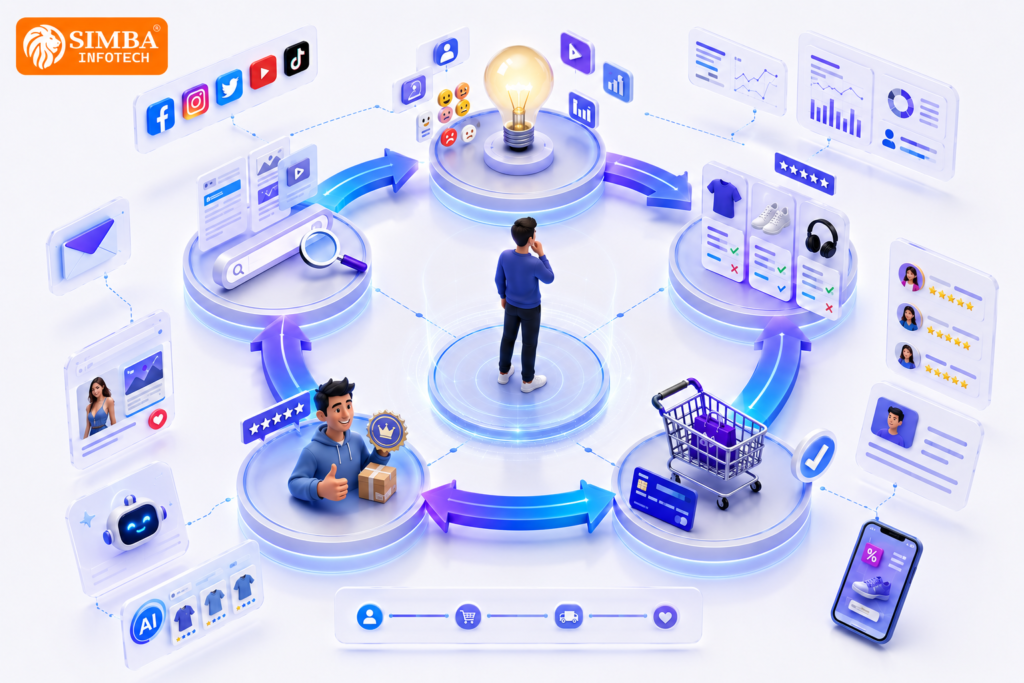
Before making a purchase, customers usually go through a series of steps known as the consumer decision-making process. Understanding this journey helps businesses create more effective marketing strategies and deliver the right message at the right stage. Every customer may follow a slightly different path, but most purchasing decisions involve five key stages.
Stage 1: Problem Recognition
The customer journey begins when a person recognizes a need, desire, or problem that requires a solution. This stage is often triggered by a situation, challenge, or goal that makes the customer realize something is missing.
The problem can be practical, emotional, or business-related. Once the need is recognized, the customer becomes motivated to find a solution.
Example:
- A person wants to improve their fitness.
- A company wants to increase sales.
- A homeowner needs a security system.
- A student needs better learning resources.
At this stage, businesses can attract attention through educational content, social media posts, advertisements, and awareness campaigns. In Digital marketing, this is often called the awareness stage of the customer journey.
Stage 2: Information Search
Once customers recognize a problem, they start searching for information about possible solutions. They want to understand their options and learn more before making a decision.
Today, most consumers begin this research online. They read blogs, watch videos, search on Google, browse social media, and ask for recommendations from friends, colleagues, or trusted sources.
Common Sources of Information:
- Search engines
- Blog articles
- YouTube videos
- Social media content
- Customer reviews
- Online forums
- Industry websites
This is where high-quality Digital marketing content becomes extremely valuable. Informative blogs, guides, case studies, and videos help businesses establish trust and position themselves as potential solutions.
Stage 3: Evaluation of Alternatives
After gathering information, customers begin comparing different products, services, or brands. They evaluate the available options to determine which one best meets their needs and budget. During this stage, customers carefully analyze the advantages and disadvantages of each option.
Factors Customers Often Compare:
- Price
- Features
- Quality
- Brand reputation
- Customer reviews
- Experience and expertise
- Customer support
- Value for money
This is why reviews, case studies, testimonials, and comparison content are so powerful. They help potential customers feel more confident about their decision.
Many successful Digital marketing campaigns focus heavily on supporting customers during this evaluation stage by showcasing social proof, expertise, and real-world results.
Stage 4: Purchase Decision
At this stage, the customer has evaluated different options and is ready to make a final decision. They choose the product, service, or brand that they believe offers the best solution to their problem. Although the customer is close to purchasing, several factors can still influence their final decision.
Factors That Encourage Purchase:
- Positive reviews
- Attractive offers
- Clear pricing
- Trust signals
- Easy checkout process
- Strong customer support
- Limited-time promotions
This stage is where conversion-focused Digital marketing strategies play a crucial role. Well-designed landing pages, compelling calls-to-action, and trust-building elements can help turn interested prospects into paying customers.
Stage 5: Post-Purchase Experience
The customer journey does not end after a purchase is completed. In fact, the post-purchase experience often determines whether a customer becomes a loyal advocate or never returns.
After purchasing, customers evaluate whether the product or service met their expectations. They consider whether they made the right decision and whether the value received matches what was promised.
Positive Post-Purchase Outcomes:
- Customer satisfaction
- Repeat purchases
- Positive reviews
- Brand loyalty
- Referrals and recommendations
Negative Post-Purchase Outcomes:
- Complaints
- Refund requests
- Negative reviews
- Loss of trust
- Customer churn
This stage is particularly important because retaining existing customers is often more cost-effective than acquiring new ones. Strong customer support, follow-up communication, and ongoing value creation can help strengthen long-term relationships.
Many businesses use Digital marketing tools such as email campaigns, customer surveys, loyalty programs, and personalized recommendations to improve the post-purchase experience.
How Colors and Storytelling Influence Consumer Behavior
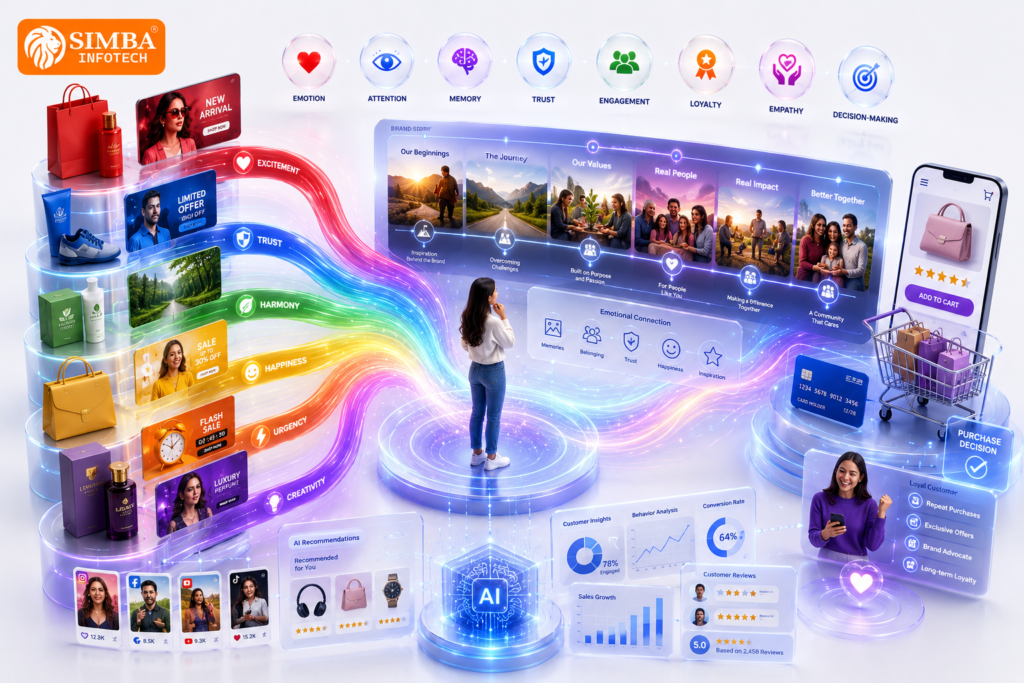
Successful marketing is not just about promoting products; it is about creating emotional connections that influence customer decisions. Two powerful tools used in marketing psychology are color psychology and storytelling. Colors shape first impressions and emotions, while stories help customers connect with a brand on a deeper level. Together, they make marketing campaigns more memorable, engaging, and effective in modern Digital marketing.
1. How Colors Influence Consumer Behavior
Colors can affect how customers perceive a brand and influence their purchasing decisions.
Common Color Associations:
- Blue – Trust, reliability, and professionalism
- Red – Urgency, excitement, and action
- Green – Growth, health, and positivity
- Yellow – Optimism, energy, and happiness
- Black – Luxury, sophistication, and exclusivity
- Orange – Enthusiasm and friendliness
- Purple – Creativity and premium quality
Businesses strategically use colors to create specific emotions and encourage desired actions. For example, banks often use blue to build trust, while online stores use red or orange buttons to drive quick responses. Choosing the right colors can improve engagement, brand recognition, and conversions.
2. The Role of Storytelling in Marketing Psychology
Storytelling helps brands communicate messages in a way that customers can easily understand and remember. Unlike facts or statistics, stories create emotional connections and allow customers to visualize themselves in a situation.
Elements of an Effective Marketing Story:
- A relatable problem
- A challenge or obstacle
- A practical solution
- A positive outcome
A strong story shows how a customer overcame a challenge with the help of a product or service. This approach builds trust, creates authenticity, and makes marketing messages more memorable, which is why storytelling is widely used in Digital marketing campaigns.
Why Colors and Storytelling Work Together
Colors attract attention and create emotions, while storytelling strengthens emotional connections and helps customers remember a brand’s message.
Examples:
- Blue supports stories about trust and reliability.
- Black enhances stories focused on luxury and exclusivity.
- Green complements stories about health, growth, and wellness.
When combined, colors and storytelling create a stronger marketing impact by making campaigns more engaging, persuasive, and memorable.
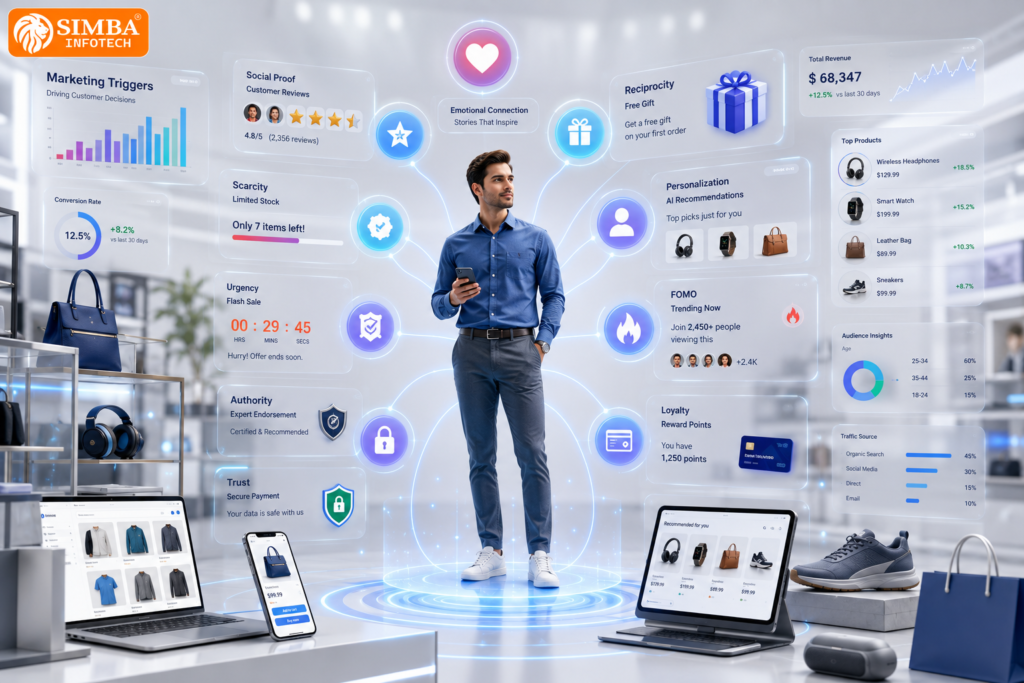
Common Consumer Behavior Triggers Used in Marketing
Consumer behavior is influenced by various psychological factors that affect how people think and make purchasing decisions. Marketers use these triggers to capture attention, build trust, and encourage customers to take action. Understanding these triggers can help businesses create more effective campaigns because they align with natural human emotions and decision-making patterns. In modern Digital marketing, these psychological principles are widely used to improve engagement, conversions, and customer relationships.
1. Fear of Missing Out (FOMO)
Fear of Missing Out, commonly known as FOMO, is a psychological trigger that makes people act quickly when they believe an opportunity may disappear. Customers often do not want to miss discounts, exclusive deals, or limited-time offers.
Common Examples:
- Limited-time discounts
- Flash sales
- Countdown timers
- Seasonal offers
- Limited stock alerts
- Early-bird promotions
When customers feel that an offer is available for only a short period, they are more likely to make a faster decision. This sense of urgency encourages immediate action and reduces hesitation. That is why many Digital marketing campaigns use FOMO-based strategies to increase conversions and sales.
2. Social Validation
People naturally trust the experiences and opinions of others. Before making a purchase, customers often look for proof that other people have already used and approved a product or service.
Common Examples:
- Customer reviews
- Google ratings
- Testimonials
- Case studies
- Social media mentions
- Influencer recommendations
When potential customers see positive feedback from existing users, they feel more confident about their decision. Social validation reduces uncertainty and builds trust, making it one of the most powerful tools used in Digital marketing and online reputation management.
3. Curiosity
Curiosity is a natural human instinct that motivates people to learn more about something interesting or unfamiliar. Marketers often use curiosity to capture attention and encourage users to interact with content.
Common Examples:
- Eye-catching headlines
- Teaser campaigns
- Product previews
- Interactive quizzes
- Behind-the-scenes content
- Mystery offers
When information is partially revealed, people become eager to discover the complete answer. This is why curiosity-driven content often generates higher click-through rates and engagement. In Digital marketing, curiosity is commonly used in blog titles, social media posts, and advertisements to attract more visitors.
4. Exclusivity
People enjoy feeling special and having access to opportunities that are not available to everyone. Exclusivity increases the perceived value of a product, service, or offer.
Common Examples:
- VIP memberships
- Exclusive discounts
- Members-only content
- Private events
- Premium services
- Early access programs
When customers believe they are receiving something unique or limited, they often develop a stronger connection with the brand. Businesses frequently use exclusivity in Digital marketing campaigns to increase customer loyalty and make offers appear more valuable.
5. Consistency
People generally prefer to make decisions that align with their previous actions and commitments. Once customers take a small step toward a brand, they are more likely to continue engaging with it.
Common Examples:
- Newsletter subscriptions
- Free trial registrations
- Downloading free resources
- Webinar sign-ups
- Survey participation
- Social media follows
Small actions often lead to larger commitments over time. For example, a person who downloads a free guide may later become a paying customer. This principle helps businesses build long-term relationships and is commonly used in Digital marketing lead generation and customer nurturing strategies.
Real-Life Example: How You Can Implement Marketing Psychology
Let’s say you own a digital marketing agency.
Instead of simply saying:
“Contact us for SEO services.”
You can apply marketing psychology like this:
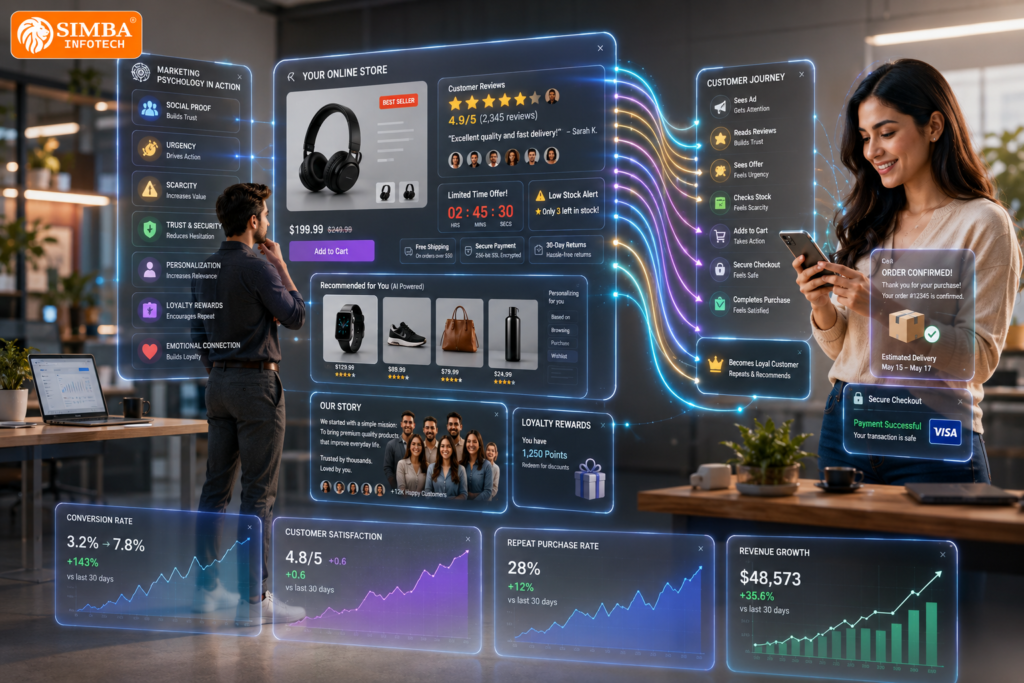
Step 1: Add Social Proof
“Over 500 businesses have improved their online visibility with our services.”
Step 2: Show Authority
Display certifications, awards, and case studies.
Step 3: Create Reciprocity
Offer a free SEO audit.
Step 4: Use Scarcity
“Only 10 free audits available this month.”
Step 5: Add Emotional Benefits
Instead of focusing only on rankings, explain how better visibility can help business growth and increase confidence.
Result
More trust, higher engagement, and improved conversion rates.
This approach works because it aligns with how people naturally make decisions.
Many successful Digital marketing agencies use these principles daily to attract and retain customers.
Conclusion
Marketing psychology helps you understand the hidden factors that influence customer decisions. When you understand what motivates people, what they fear, what they value, and what builds trust, you can create campaigns that truly connect with your audience.
Consumer behavior is not random. People follow patterns influenced by emotions, social interactions, experiences, and psychological triggers. Businesses that understand these patterns can build stronger customer relationships and create more successful marketing campaigns.
Whether you are a business owner, marketer, entrepreneur, or student, learning about marketing psychology can help you make smarter decisions and improve your results. In today’s competitive environment, combining psychology with Digital marketing allows you to create campaigns that are not only seen but also remembered and acted upon.
Key Takeaways
- Consumer behavior is the foundation of successful marketing.
- People often buy based on emotions and justify decisions with logic.
- Social proof builds trust.
- Scarcity creates urgency.
- Reciprocity encourages positive responses.
- Storytelling creates emotional connections.
- Personalization improves customer experience.
- Data helps you understand customer preferences.
- Marketing psychology improves campaign effectiveness.
- Strong Digital marketing strategies are built around understanding human behavior.
Frequently Asked Questions (FAQ)
1. What is marketing psychology?
Marketing psychology is the study of how psychological factors influence customer decisions and buying behavior.
2. Why is consumer behavior important in marketing?
Consumer behavior helps businesses understand customer needs, preferences, and decision-making processes, allowing them to create more effective campaigns.
3. How does social proof affect customers?
Social proof builds trust by showing that other people have already used and approved a product or service.
4. What is scarcity in marketing?
Scarcity creates urgency by making customers believe that a product, offer, or opportunity is limited.
5. How does Digital marketing use psychology?
Digital marketing uses psychology through personalization, social proof, storytelling, color psychology, user experience design, and data-driven targeting.
6. Can small businesses use marketing psychology?
Yes. Even small businesses can apply psychological principles such as trust-building, customer reviews, storytelling, and personalized communication.
7. What is the biggest benefit of understanding consumer behavior?
The biggest benefit is creating marketing campaigns that better connect with customers and increase conversions.