- 07/27/2026
- Simba Infotech
- 0
Introduction
The internet has completely changed the way businesses connect with customers. These days, people use the internet to discover products, compare different services, read customer reviews, and decide what to buy. Because of this shift, digital marketing has become one of the most valuable skills for students, professionals, entrepreneurs, and business owners alike.
The best part is that you don’t need a marketing degree or years of experience to get started. With the right learning approach, practical experience, and consistency, anyone can build a successful career in digital marketing.
In this guide, you’ll learn how to start digital marketing from scratch, what skills you should learn first, the best tools to use, and how to gain real-world experience.
What Is Digital Marketing?
Digital marketing is the process of promoting products, services, or brands using digital platforms such as search engines, social media, websites, email, and online advertisements.
Unlike traditional marketing, digital marketing allows businesses to reach a specific audience, measure campaign performance, and optimize results in real time. As a result, it has become one of the most affordable marketing methods while offering clear, measurable results.
Whether you’re promoting a local business or a global brand, digital marketing helps you reach the right people at the right time.
Why Should You Learn Digital Marketing?
Digital marketing has become one of the world’s fastest-expanding industries. Every company-whether it’s a startup, small business, or multinational corporation-needs an online presence.
Learning digital marketing can help you:
- Build a successful career
- Start freelancing
- Work remotely
- Grow your own business
- Generate passive income
- Help brands increase sales and visibility
As more businesses move online, the demand for skilled digital marketers continues to grow.
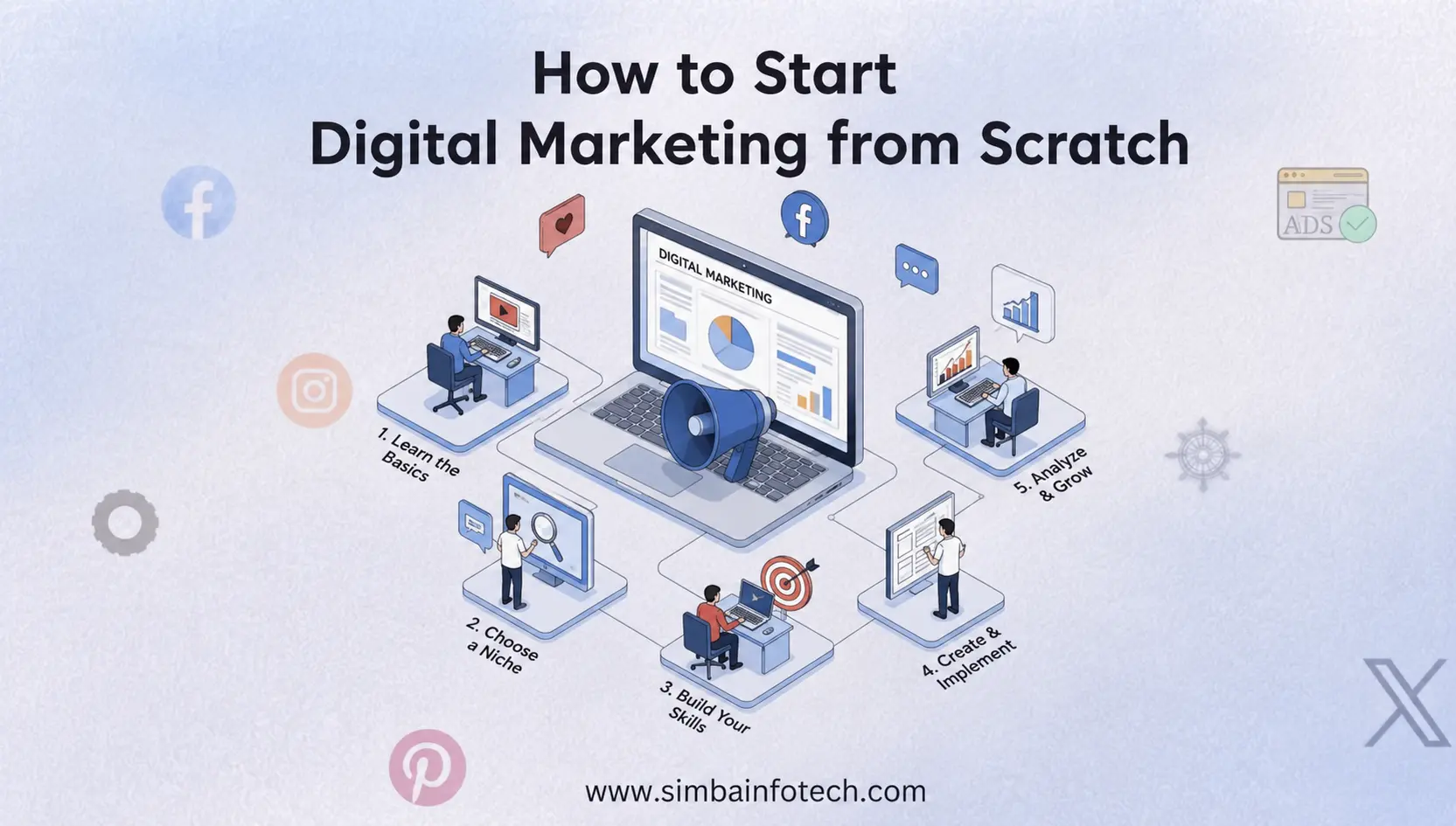
Step 1: Learn the Fundamentals
Before using advanced tools or running paid advertisements, it’s important to understand the basics of digital marketing.
Some of the core areas include:
- Search Engine Optimization (SEO)
- Social Media Marketing (SMM)
- Content Marketing
- Email Marketing
- Google Ads
- Meta Ads
- Affiliate Marketing
- Influencer Marketing
- Analytics
Understanding how these channels work together will help you build effective marketing strategies.
Step 2: Understand Search Engine Optimization (SEO)
SEO is the process of improving a website so that it ranks higher on search engines like Google.
When users search for information, products, or services, websites with good SEO appear at the top of search results.
Important SEO topics include:
- Keyword Research
- On-Page SEO
- Technical SEO
- Link Building
- Local SEO
- Content Optimization
Learning SEO is one of the best long-term investments because it can drive free, organic traffic to a website.
Step 3: Learn Social Media Marketing
In today’s digital world, social media has become a fundamental part of every successful marketing strategy.
Popular platforms include:
- YouTube
- X (Twitter)
Each platform has a different audience and content style. Instead of trying to master every platform at once, focus on one or two and learn how to create engaging content, build a community, and analyze performance.
Remember, consistency is more important than posting occasionally.
Step 4: Master Content Marketing
Content is the foundation of digital marketing.
Businesses build trust by creating valuable content that educates, entertains, or solves customer problems.
Examples of content include:
- Blog posts
- Videos
- Instagram Reels
- Infographics
- Case Studies
- Email Newsletters
- Podcasts
The goal is not just to sell products but to provide value that encourages customers to engage with your brand.
Step 5: Create Your Own Website
One of the best ways to learn digital marketing is by building your own website or blog.
A personal website allows you to practice:
- Writing SEO-friendly content
- Optimizing web pages
- Tracking visitor behavior
- Improving website speed
- Testing marketing strategies
Your website also becomes your portfolio, showcasing your skills to future employers or clients.
Step 6: Learn Google Analytics and Search Console
Effective marketers rely on data-driven insights rather than making decisions based on assumptions.
Two free tools every beginner should learn are:
- Google Analytics
- Google Search Console
These tools help you understand:
- Website traffic
- Visitor behavior
- Top-performing pages
- Search keywords
- Conversion rates
- Technical website issues
Regularly reviewing this data helps improve your marketing performance.
Step 7: Learn Paid Advertising
Organic marketing takes time, while paid advertising delivers faster results.
Start learning:
- Google Ads
- Facebook Ads
- Instagram Ads
Understand concepts like:
- Campaign Objectives
- Audience Targeting
- Budget Management
- Ad Creatives
- Conversion Tracking
- Performance Optimization
Even running small-budget campaigns can provide valuable hands-on experience.
Step 8: Build Practical Experience
Theory alone won’t make you a successful digital marketer.
Practice by:
- Creating your own blog
- Managing a social media page
- Helping a local business
- Running small advertising campaigns
- Writing SEO articles
- Designing marketing creatives
The more you practice, the faster you’ll improve.
Step 9: Build a Strong Portfolio
Employers and clients want to see what you’ve done, not just what you’ve learned.
Include projects such as:
- SEO Audits
- Social Media Campaigns
- Blog Articles
- Meta Ads
- Google Ads
- Website Optimization
- Marketing Reports
A professional portfolio increases your chances of landing clients or securing a marketing job.
Step 10: Keep Learning
Digital marketing changes constantly.
Google updates its search algorithm, social media platforms introduce new features, and advertising strategies evolve every year.
Stay updated by:
- Reading marketing blogs
- Watching YouTube tutorials
- Following industry experts
- Joining marketing communities
- Experimenting with new AI tools
Lifelong learning lays the foundation for lasting success.
Best Digital Marketing Tools for Beginners
Some of the most useful tools include:
- Google Analytics
- Google Search Console
- Google Keyword Planner
- Canva
- ChatGPT
- Meta Business Suite
- Google Ads
- WordPress
- SEMrush
- Ahrefs
- Mailchimp
- Notion
Start with the free versions and gradually explore advanced features as your skills grow.
Common Mistakes Beginners Should Avoid
Many beginners make mistakes that slow down their progress.
Avoid these common errors:
- Trying to learn everything at once
- Ignoring SEO basics
- Posting without a strategy
- Not analyzing campaign data
- Expecting instant success
- Copying competitors blindly
- Giving up too early
Digital marketing is a skill that rewards patience, consistency, and continuous improvement.
Career Opportunities in Digital Marketing
After gaining practical experience, you can explore careers such as:
- Digital Marketing Executive
- SEO Specialist
- PPC Specialist
- Social Media Manager
- Content Writer
- Content Strategist
- Email Marketing Specialist
- Marketing Analyst
- Digital Marketing Consultant
- Freelancer
- Agency Owner
The opportunities are endless because almost every business needs digital marketing.
Key Takeaways
- Learn the fundamentals before using advanced tools.
- Focus on SEO, content marketing, and social media first.
- Build a personal website to gain practical experience.
- Learn analytics to measure your results.
- Create a strong portfolio with real projects.
- Practice consistently because experience matters more than theory.
Frequently Asked Questions (FAQs)
1. What is digital marketing?
Digital marketing is the promotion of products or services using online channels such as search engines, websites, social media, email, and paid advertisements.
2. Is it possible to learn digital marketing with no prior experience?
Yes. Anyone can learn digital marketing from scratch by studying the basics, practicing regularly, and working on real-world projects.
3.How much time is typically needed to learn digital marketing?
You can learn the fundamentals in 2–3 months, while becoming job-ready generally takes 6–12 months of consistent practice.
4. Which digital marketing skill is the best place to begin?
SEO, content marketing, and social media marketing are the best starting points because they provide a solid foundation.
5. Do I need coding knowledge?
No. Basic HTML knowledge is helpful, but most digital marketing tasks can be performed without coding.
6. Is digital marketing a good career in 2026?
Yes. The demand for digital marketers continues to grow, making it one of the best career choices for students, professionals, and entrepreneurs.
7. Can I build a freelance career after mastering digital marketing?
Absolutely. Once you build practical skills and a portfolio, you can offer services like SEO, social media management, content writing, and paid advertising.
8. What are the best free tools for beginners?
Google Analytics, Google Search Console, Google Keyword Planner, Canva, ChatGPT, Google Trends, and Meta Business Suite are excellent free tools.
Conclusion
Starting digital marketing from scratch may seem challenging, but every successful marketer began with the basics. Focus on learning one skill at a time, apply your knowledge through practical projects, and continuously improve by analyzing your results.
Digital marketing is not just about running ads or posting on social media-it’s about understanding your audience, creating value, and building meaningful connections that drive business growth.
Whether your goal is to get a high-paying job, become a freelancer, or grow your own business, digital marketing offers endless opportunities. Start learning today, stay consistent, and take one step closer to becoming a successful digital marketer.