
- 10/23/2026
- Simba Infotech
- 0
Introduction
An online order does not automatically become revenue. When a parcel leaves the warehouse but fails to reach the customer, it may return to the seller through a process called Return to Origin (RTO). The business can lose the expected sale while paying for shipping, handling, and the return journey.
Customers may place orders without completing payment, change their minds, provide incomplete addresses, or remain unavailable when the courier arrives.
Reducing RTO requires more than asking customers to pay online. Sellers need to identify why deliveries fail, improve order verification, communicate clearly, and measure the actual financial consequences.
For businesses working with a best digital marketing agency in surat, this is also a marketing measurement issue: campaigns should be evaluated against orders successfully delivered and retained, not just orders placed.
This guide explains how e-commerce businesses can diagnose RTO, reduce avoidable delivery failures, and improve profitability through practical operational and marketing decisions.

1. What Is RTO in E-commerce?
Return to Origin occurs when a courier cannot successfully deliver an order and returns the parcel to the seller or designated origin facility.
RTO differs from a customer return. A customer return generally happens after delivery, whereas RTO occurs when the order fails to reach the customer in the first place.
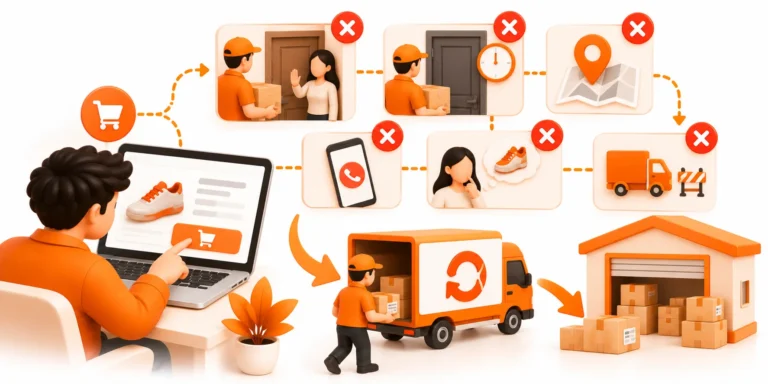
Common causes include:
- The customer refuses to accept the parcel.
- The customer is unavailable during delivery attempts.
- The shipping address or phone number is incorrect.
- The customer no longer wants the product.
- Delivery communication is missed or unclear.
- Courier service limitations prevent successful delivery.
COD orders deserve particular attention because payment is generally collected at delivery. However, prepaid orders can also experience delivery failures, so sellers should not assume that all RTO originates from COD.
A business seeking advice from the best digital marketing agency in surat should ensure that marketing performance is considered alongside delivery outcomes, rather than treating every checkout as a successful sale.
2. Calculate Your RTO Rate Before Changing Anything
The first step is measurement. Without a reliable baseline, a seller cannot determine whether an intervention improves performance.
A common way to calculate RTO rate is:
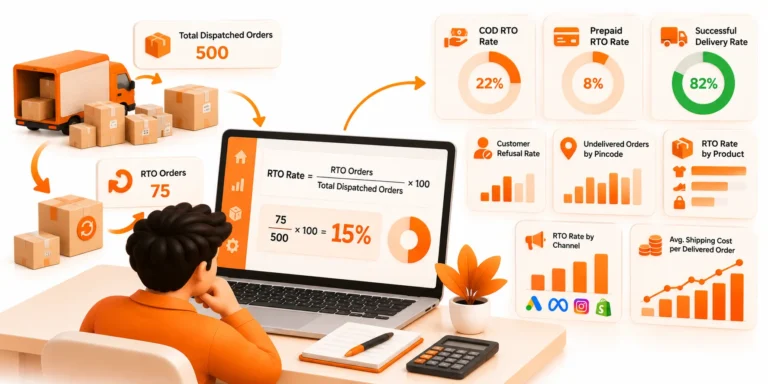
RTORate=RTOOrdersTotalDispatchedOrders100
Use the same denominator consistently when comparing periods. Exclude orders that have not reached a final delivery status, or report them separately as pending shipments.
Illustrative example: A store dispatches 500 orders in a month. Of those, 75 eventually return to origin.
\[ \frac{75}{500}\times100=15\% \]
The store’s RTO rate is 15% under this definition.
Track additional metrics alongside the overall rate:
- COD RTO rate
- Prepaid RTO rate
- Successful delivery rate
- Customer refusal rate
- Undelivered orders by pincode
- RTO rate by product and acquisition channel
- Average shipping cost per delivered order
A best digital marketing agency in surat should be able to discuss how advertising results relate to business outcomes, but delivery-status data must come from the seller’s order management, courier, or fulfilment records.
3. Confirm COD Orders Before Dispatch
Order confirmation can identify mistakes and unintended purchases before a parcel incurs shipping costs.
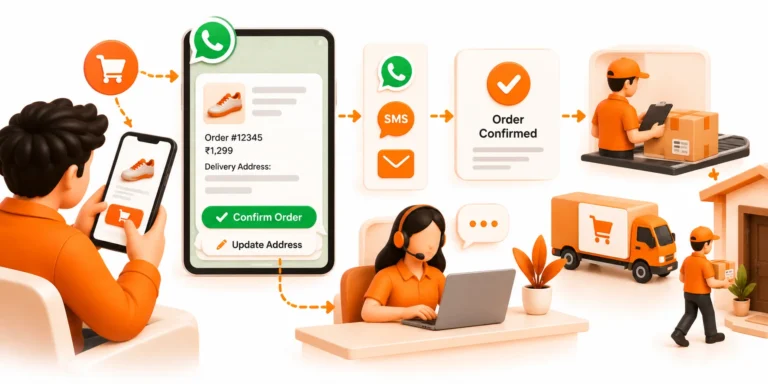
For suitable COD orders, send an order confirmation through WhatsApp, SMS, or a permitted customer communication channel. Include the product, order value, delivery address, and an easy way to confirm or correct the details.
For example, a seller could send:
- Order confirmation immediately after checkout.
- An address-correction option before dispatch.
- A reminder explaining the expected delivery process.
- A clear method for contacting customer support.
Automate routine messages where practical, but make sure the system can handle replies and route problems to a person.
Avoid treating every unconfirmed order as fraudulent. A customer may not see a message promptly, and a delay does not necessarily mean the order is invalid. Establish reasonable confirmation windows and exceptions for repeat customers or time-sensitive orders.
The aim is to reduce preventable failures without introducing so much friction that genuine customers abandon their purchases.
4. Improve Address Quality and Delivery Readiness
Even a genuine customer may receive an unsuccessful-delivery status if the courier cannot locate the destination or reach the recipient.
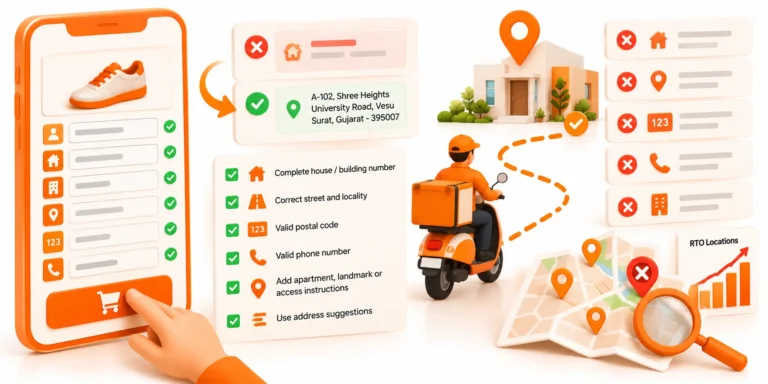
Review your checkout process for common problems:
- Missing house or building numbers.
- Incomplete street or locality details.
- Incorrect postal codes.
- Invalid phone numbers.
- Missing apartment, landmark, or access instructions where relevant.
Use appropriate form validation, clear field labels, and address suggestions where available. Make corrections easy on mobile devices.
For repeat RTO locations, investigate whether the problem is incomplete addresses, poor serviceability, customer availability, or courier performance. Do not automatically block entire areas based on a small number of failed orders.
A best digital marketing agency in surat can help connect acquisition data with conversion quality, but address validation and delivery processes usually require coordination with the store owner, technology team, and logistics partner.
5. Make Prepaid Orders More Attractive Without Forcing Them
Prepaid orders can reduce some payment-related delivery risks, but a blanket policy of removing COD may alienate customers who rely on it.
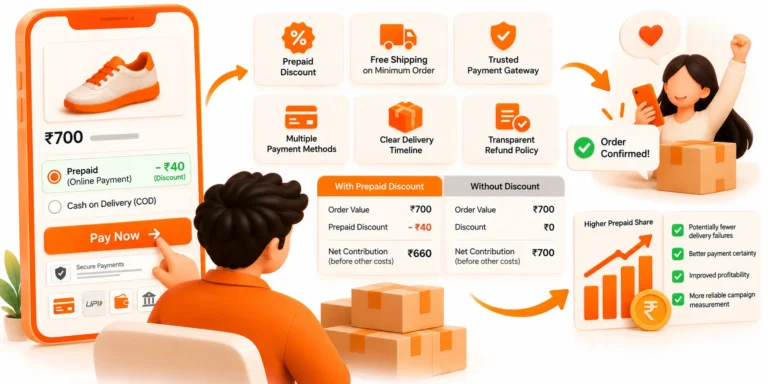
Instead, test whether appropriate incentives encourage more customers to choose prepaid payment.
Possible approaches include:
- A modest prepaid discount that preserves margin.
- Free shipping above a minimum order value.
- Clearly displayed payment options at checkout.
- Trusted payment gateways and familiar payment methods.
- Transparent delivery timelines and refund policies.
Calculate the economics before introducing an incentive.
Illustrative example: A seller offers a ₹40 prepaid discount on an order with a ₹700 selling price. If the discount encourages a customer to pay upfront, it may reduce some delivery-related uncertainty, but it also reduces the order’s contribution margin by ₹40 before accounting for any additional effects.
Compare the discount cost with changes in delivery success, cancellation rates, payment costs, and contribution margin. A rise in prepaid share is not automatically profitable if the discount is too expensive.
When a best digital marketing agency in surat manages paid campaigns for an e-commerce brand, these trade-offs should inform campaign reporting and landing-page experiments.
6. Improve Product Pages and Set Accurate Expectations
Customers are more likely to refuse an order when the delivered product differs materially from what they expected.
Product pages should accurately communicate:
- Product dimensions, materials, colour, and quantity.
- What is included in the package.
- Important compatibility or usage requirements.
- Delivery estimates and applicable shipping charges.
- Return, refund, and replacement policies.
For fashion, jewellery, home décor, and other visually driven products, use accurate photographs from multiple angles. For products with sizing or compatibility requirements, provide clear selection guidance.
Avoid exaggerated claims or misleading product imagery. These may generate more clicks in the short term but can attract poorly matched buyers and increase downstream costs.
Sellers can review the e-commerce website development services offered by Simba Infotech when evaluating whether their storefront, checkout, and product pages need technical improvements.

7. Identify RTO Patterns by Product, Pincode, and Campaign
An overall RTO rate can hide important differences. One product may have frequent customer refusals, while another may suffer from delayed delivery in a particular region.
Segment delivery data by:
Dimension | What to investigate |
Product or SKU | Product expectations, sizing, quality, and pricing |
Pincode | Serviceability, delivery delays, and courier performance |
Payment method | COD versus prepaid outcomes |
Acquisition channel | Differences in delivered-order quality |
Campaign or ad set | Whether certain campaigns attract poorly matched orders |
Customer type | First-time versus repeat-customer delivery outcomes |
Use a sufficiently large sample before changing budgets or excluding audiences. A small number of failed orders may create misleading patterns.
A best digital marketing agency in surat can help interpret campaign-level acquisition data, but the seller must connect advertising records to actual order and delivery statuses. Platform-reported purchases alone may not reveal which orders ultimately reached customers.

8. Respond Quickly to Delivery Exceptions
A failed first delivery attempt does not always have to become an RTO. Some problems can be resolved if the seller or logistics team responds promptly.
Monitor courier updates and identify non-delivery reports (NDRs), such as customer unavailability, address problems, or requests to reschedule delivery.
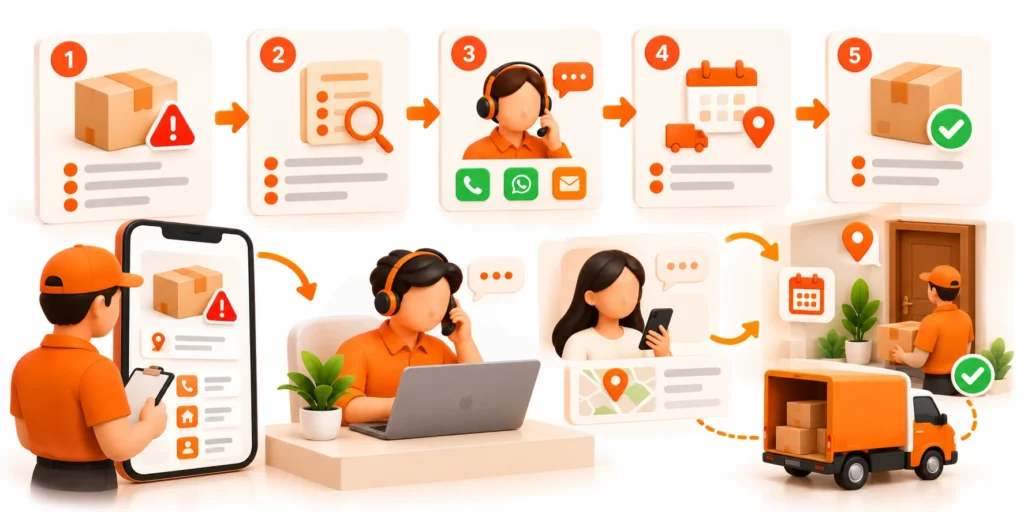
A practical workflow is:
- Receive the courier’s delivery exception.
- Identify the reason for the unsuccessful attempt.
- Contact the customer through an appropriate channel.
- Correct the address or arrange a suitable delivery attempt when possible.
- Record the outcome and the reason for any eventual return.
Set responsibilities and response-time expectations for whoever manages these exceptions. Where volume justifies it, use automated alerts and dashboards to reduce manual monitoring.
Do not promise customers that every shipment can be recovered. Some parcels will remain undeliverable, and interventions should respect courier policies and customer preferences.
9. Measure the Financial Cost of RTO
Reducing the number of returned parcels matters, but sellers also need to understand the financial impact.
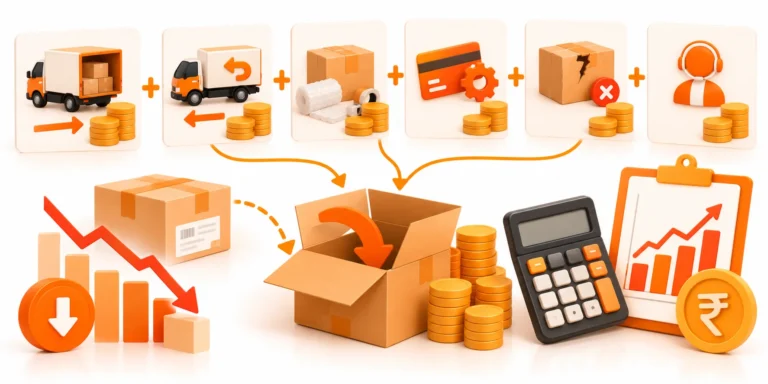
For each RTO order, consider applicable costs such as:
- Forward shipping.
- Return shipping.
- Packaging and handling.
- Payment or operational fees that are not refunded.
- Damaged or unsellable inventory.
- Additional support and processing time.
Avoid double-counting inventory cost or other expenses already included in your margin calculation.
Illustrative example: Suppose a seller incurs ₹70 in forward shipping and ₹70 in return shipping on an RTO order. The direct shipping expense is ₹140, excluding packaging and other applicable costs.
If 75 orders incur that cost, the total direct shipping expense is ₹10,500.
This example does not represent an industry benchmark. Actual costs depend on carrier contracts, shipment weight, service zones, and the seller’s fulfilment arrangement.
The best digital marketing agency in surat should not evaluate campaign efficiency using advertising cost alone when reliable delivery and financial data are available. The business should also examine contribution margin after relevant costs.
10. Build a Repeatable RTO Improvement Process
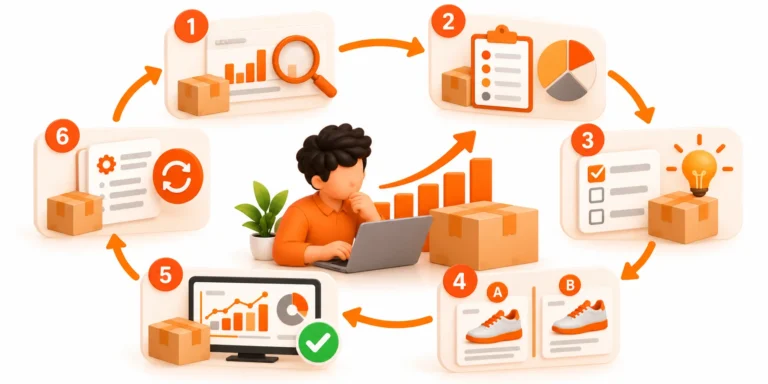
RTO reduction works best as a continuous operational process rather than a one-time campaign.
Use a weekly or monthly review cycle:
- Establish the baseline: Calculate RTO using a consistent definition and completed shipment cohort.
- Find the largest causes: Segment failed deliveries by reason, payment type, product, and region.
- Prioritize interventions: Choose changes that address the most material, evidence-supported causes.
- Test one change at a time where practical: For example, compare a revised confirmation process with the previous process.
- Measure the result: Track RTO, successful delivery, conversion, average order value, and contribution margin.
- Document the decision: Keep what improves business outcomes, revise what does not, and investigate unexpected effects.
A best digital marketing agency in surat can contribute to the acquisition and measurement portions of this process, while the seller’s operations and fulfilment teams manage dispatch and delivery interventions.
Frequently Asked Questions
1. What is a good RTO rate for an Indian e-commerce business?
There is no single rate that is appropriate for every business. Product category, payment method, delivery region, customer base, and fulfilment arrangements all affect results. Establish your baseline and compare equivalent order cohorts over time.
2. Does accepting COD always increase RTO?
No. COD can introduce payment-related risks, but delivery failures also occur on prepaid orders. Compare COD and prepaid outcomes using your own completed shipment data before changing payment policies.
3. Can digital marketing reduce RTO?
Marketing can help by setting accurate expectations, attracting relevant customers, and evaluating campaigns against delivered orders. It cannot independently solve courier delays, poor address quality, or fulfilment failures.
When assessing the best digital marketing agency in surat for e-commerce support, ask how it will connect campaign data with delivery outcomes and actual business profitability.
4. Should I stop delivering to pincodes with high RTO?
Not automatically. First investigate sample size, delivery serviceability, courier performance, customer behaviour, and product demand. Consider restrictions only when reliable evidence supports them and the commercial consequences have been evaluated.
5. Which metrics should an online seller track?
At minimum, monitor RTO rate, successful delivery rate, COD and prepaid performance, delivery exceptions, shipping cost per delivered order, conversion rate, and contribution margin. Keep metric definitions consistent across reporting periods.
6. Can a new e-commerce website reduce RTO?
A well-designed website can improve product information, address capture, payment selection, and checkout clarity. However, website changes alone cannot guarantee lower RTO. Courier operations, customer communication, and fulfilment processes also matter.