- 07/02/2026
- Simba Infotech
- 0
Introduction
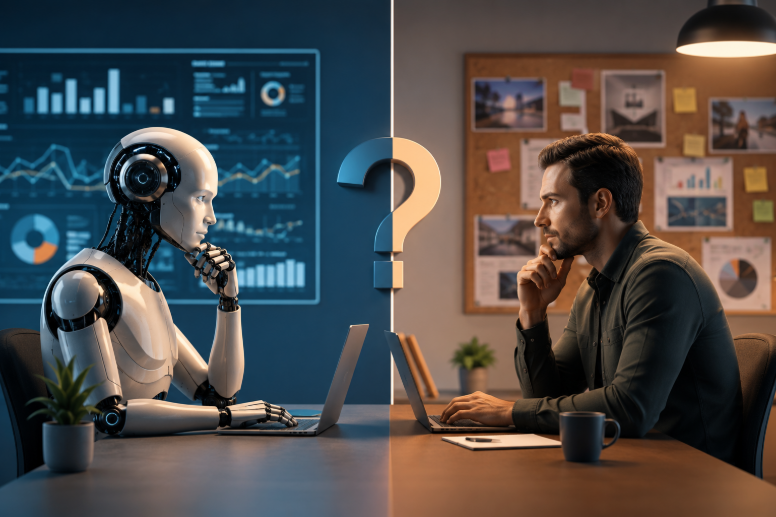
Artificial Intelligence (AI) is transforming almost every industry, and marketing is no exception. Today, AI tools can write content, generate images, analyze customer data, automate emails, create ad copy, and even suggest marketing strategies within seconds. Because of these advancements, many business owners and marketing professionals are asking the same question:
“Can AI replace Digital Marketers?”
If you own a business, manage a brand, or work in the world of Digital marketing, this question is probably on your mind too.
The short answer is:
No, AI cannot completely replace Digital Marketers.
However, AI is changing how Digital marketing works, and marketers who fail to adapt may find themselves left behind. Most experts agree that AI is replacing repetitive tasks, not the strategic thinking, creativity, and human understanding that drive successful marketing campaigns.
In this blog, you will learn:
- What AI can do in marketing
- What AI cannot do
- Why human marketers are still important
- How businesses can use AI effectively
- The future of Digital marketing
- Real-life examples you can implement in your business
Let’s explore the truth.
What Is AI in Marketing?
AI in marketing refers to the use of intelligent software and machine learning technologies to automate, improve, and optimize marketing activities.
Today, AI can help businesses:
- Generate blog content
- Create social media captions
- Analyze customer behavior
- Automate email campaigns
- Manage advertising bids
- Predict buying patterns
- Personalize customer experiences
Modern Digital marketing tools are becoming smarter every year. Businesses can now complete tasks in minutes that once required hours of manual work. AI is especially powerful for automation, personalization, and data analysis.
Why People Think AI Will Replace Digital Marketers
The fear is understandable.
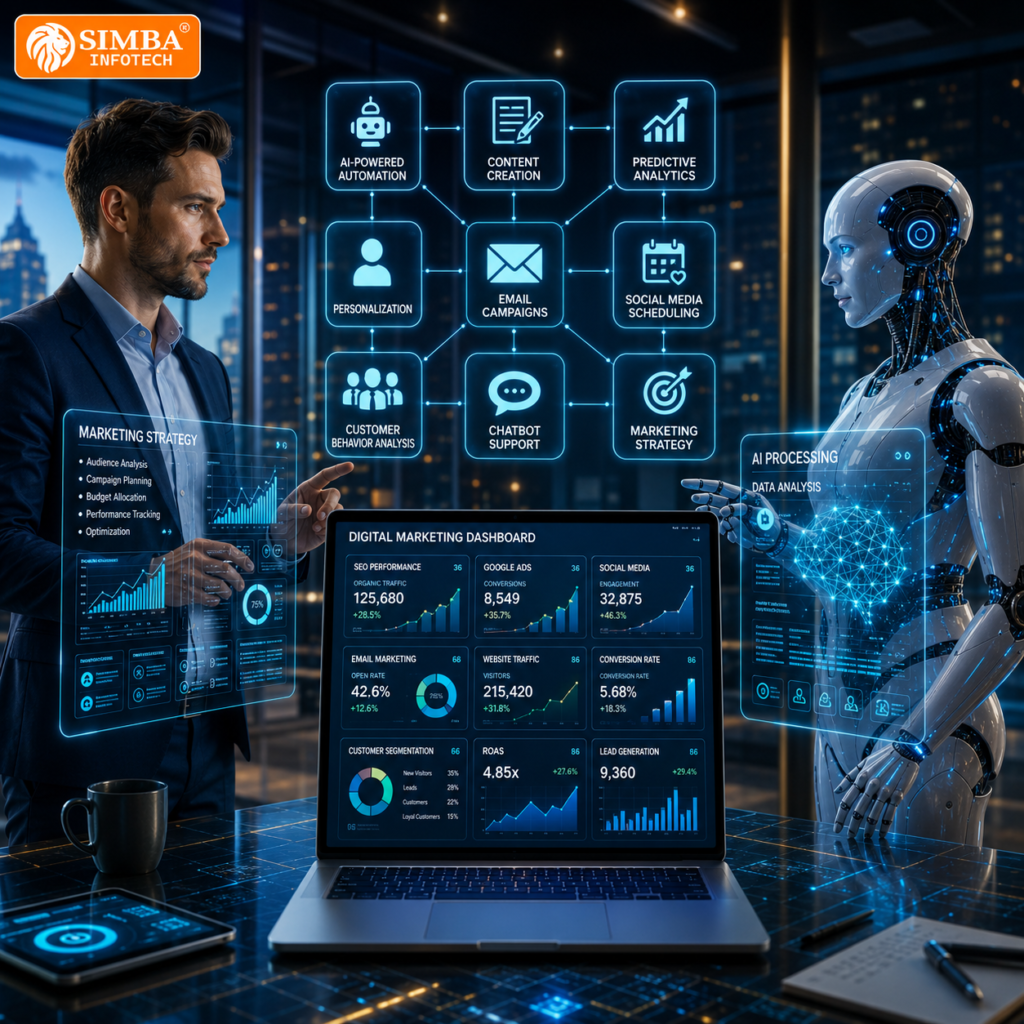
Imagine seeing an AI tool that can:
- Write a 2,000-word article in seconds
- Generate dozens of ad variations instantly
- Create social media posts automatically
- Analyze thousands of customer data points
- Produce marketing reports without human effort
When you see these capabilities, it may seem like AI can do everything a marketer does. Many businesses are already using AI-powered tools to reduce manual work and improve efficiency. As a result, some people believe that traditional Digital marketing roles will disappear completely.
But there is a major difference between:
Doing Marketing Tasks and Creating Marketing Strategy
AI is excellent at completing tasks.
Humans are still better at making decisions.
This difference is the key reason AI cannot fully replace experienced Digital marketing professionals.
What AI Can Do Better Than Humans
Let’s be realistic.
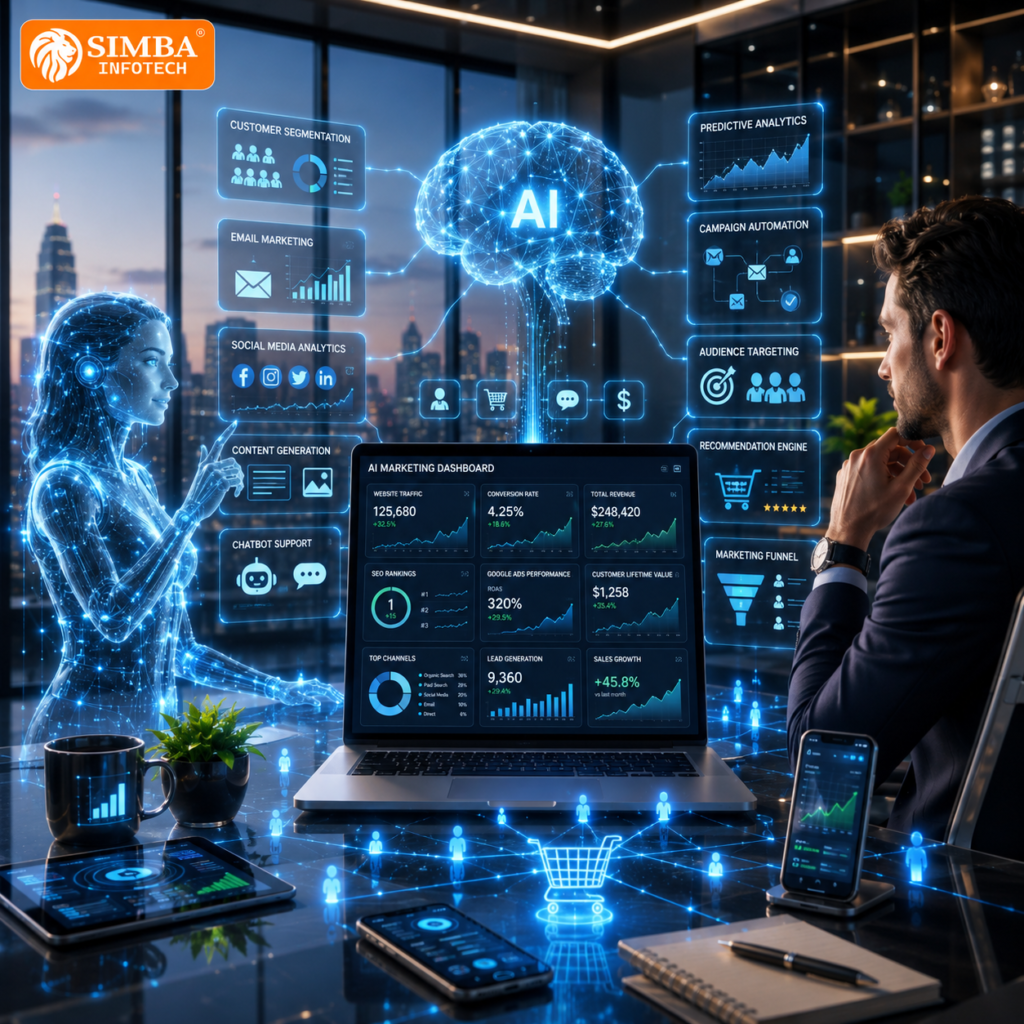
In today’s competitive world of Digital marketing, businesses are using AI to save time, reduce manual work, and improve overall marketing performance. AI can process large amounts of information within seconds, automate repetitive tasks, and provide insights that would take humans hours or even days to discover.
Let’s look at the areas where AI truly excels.
1. Content Drafting
Creating content is one of the most time-consuming parts of Digital marketing. Writing blogs, social media posts, emails, product descriptions, and advertisements requires significant effort and planning. This is where AI can be extremely helpful.
AI-powered tools can generate content drafts within seconds based on a simple prompt. Instead of spending hours creating a first draft from scratch, marketers can use AI to speed up the content creation process and focus more on editing, improving, and personalizing the content.
AI can quickly generate:
- Blog outlines
- Product descriptions
- Social media captions
- Email subject lines
- Marketing emails
- Advertisement copy
- Video script ideas
- Content topic suggestions
For example, if you run an e-commerce store and need descriptions for hundreds of products, writing them manually could take several days. AI can create initial drafts in minutes, allowing your team to work more efficiently.
However, it is important to remember that AI-generated content often requires human review to ensure accuracy, originality, and alignment with your brand voice.
The real advantage is not replacing writers but helping them work faster and more productively.
2. Data Analysis
One of AI’s greatest strengths is its ability to process and analyze large amounts of data. Every day, businesses collect valuable information from websites, social media platforms, advertising campaigns, emails, and customer interactions. Understanding this data manually can be overwhelming. AI can analyze thousands or even millions of data points in a fraction of the time it would take a human.
It can identify:
- Customer behavior trends
- Purchasing patterns
- Popular products and services
- Website visitor activity
- Campaign performance metrics
- Audience interests
- Conversion opportunities
For example, if your website receives thousands of visitors each month, AI can quickly identify which pages attract the most attention, where visitors leave your site, and which content leads to conversions. This information helps businesses make smarter decisions instead of relying on guesswork.
In modern Digital marketing, data-driven decision-making has become essential, and AI makes that process much faster and more accurate.
3. Marketing Automation
Many marketing activities involve repetitive tasks that consume valuable time. Sending follow-up emails, responding to customer inquiries, nurturing leads, and managing customer communication can quickly become overwhelming as a business grows.
AI helps solve this problem through automation. Marketing automation allows businesses to perform routine tasks automatically without constant human involvement.
AI can automate:
- Email sequences
- Welcome email campaigns
- Lead nurturing workflows
- Customer follow-ups
- Appointment reminders
- Chatbot conversations
- Customer support responses
- Social media scheduling
Imagine a potential customer visits your website and downloads a free guide. Instead of manually sending follow-up emails, AI can automatically deliver a series of personalized emails designed to educate the prospect and move them closer to making a purchase. This improves efficiency while ensuring that every customer receives timely communication.
For businesses looking to scale their Digital marketing efforts, automation has become an essential tool for maintaining consistency and improving customer engagement.
4. Ad Optimization
Online advertising platforms have become increasingly dependent on AI.
Whether you are running campaigns on Google Ads, Facebook Ads, Instagram Ads, or other platforms, AI is already working behind the scenes to improve campaign performance. Managing advertising campaigns manually can be complex because there are countless variables to consider, including audience targeting, bidding strategies, ad placement, budget allocation, and conversion tracking.
AI can process these variables much faster than humans.
Modern advertising platforms use AI to:
- Optimize bidding strategies
- Improve audience targeting
- Predict conversion likelihood
- Adjust campaign performance in real time
- Allocate budgets more efficiently
- Identify high-performing ads
- Reduce wasted advertising spend
- Maximize return on investment (ROI)
For example, if your campaign is generating better results from a specific audience segment, AI can automatically shift more budget toward that audience to improve overall performance.
Instead of manually analyzing every campaign adjustment, marketers can focus on strategy while AI handles much of the optimization process. This has made paid advertising more efficient and accessible for businesses of all sizes.
Why Human Creativity Still Matters
One of the biggest misconceptions about Artificial Intelligence is that it is more creative than humans. While AI can generate blog posts, social media captions, advertisements, and marketing ideas within seconds, true creativity goes far beyond simply creating content.
Human creativity is what helps businesses develop unique ideas, tell compelling stories, and build genuine connections with their audience. AI works by analyzing existing data and patterns, but humans can think differently, bring fresh perspectives, and create original concepts that stand out in a crowded market.
In Digital marketing, creativity plays a crucial role in making a brand memorable. Imagine two businesses selling the same product and using the same AI tools. The content they generate may look similar, but the business that adds its own personality, brand voice, and customer understanding will usually achieve better results.
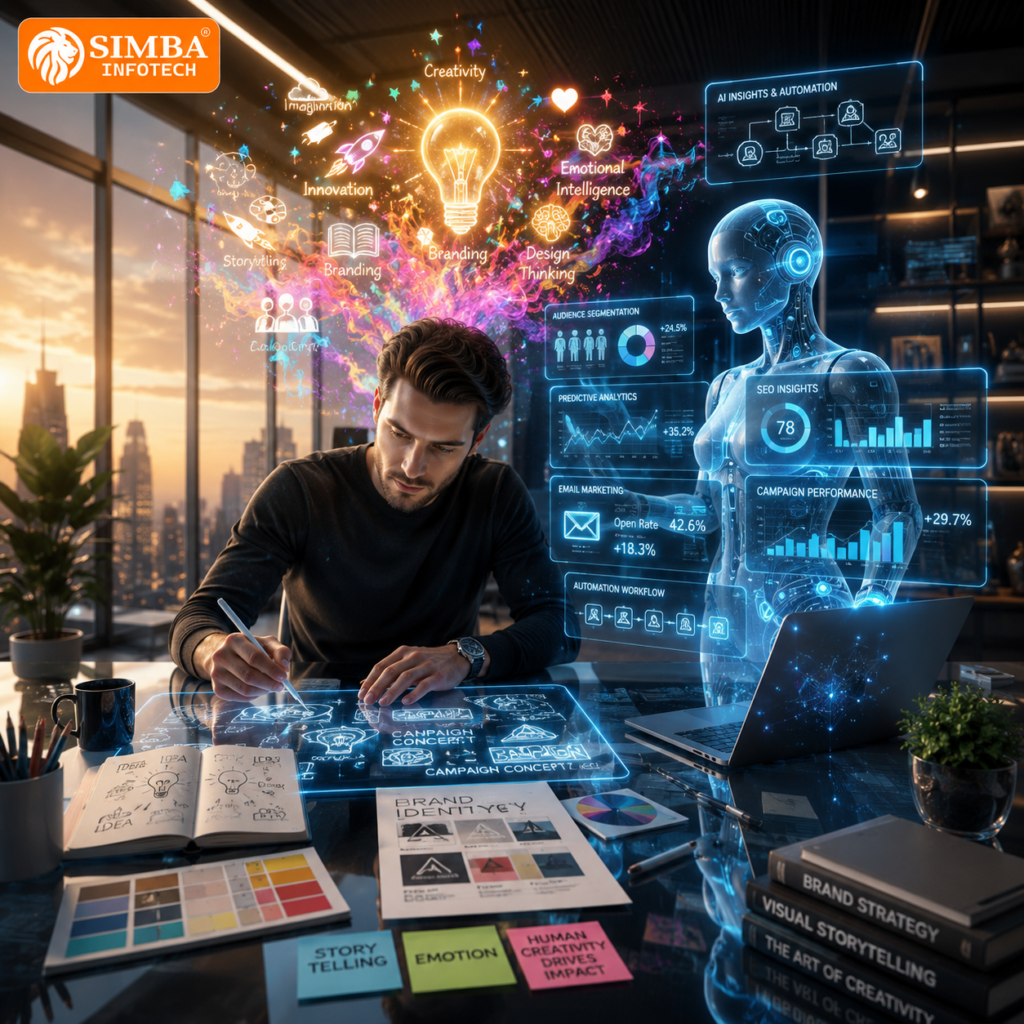
Human creativity helps businesses:
- Create unique and engaging marketing campaigns
- Build stronger emotional connections with customers
- Develop a distinctive brand identity
- Stand out from competitors
- Adapt to changing market trends
- Tell authentic and memorable stories
Customers rarely remember a business because of product features alone. They remember how a brand made them feel and the experience it provided. This emotional connection is something that AI cannot fully replicate.
AI is an excellent tool for generating ideas, speeding up content creation, and improving productivity. However, it still requires human direction to create meaningful and impactful marketing campaigns.
That is why creativity remains one of the most valuable skills in Digital marketing. The businesses that combine AI efficiency with human creativity will be better positioned to attract customers, build trust, and achieve long-term success. AI can assist marketers, but human creativity is what transforms ordinary content into powerful marketing that truly connects with people.
The Real Future of Digital Marketing
When people discuss the future of marketing, many assume it will be a battle between Artificial Intelligence and human marketers. However, the reality is very different.
The future is not:
AI vs Humans The future is: AI + Humans
AI is transforming the way businesses approach Digital marketing, but it is not replacing the need for human expertise. Instead, it is becoming a powerful tool that helps marketers work more efficiently and make smarter decisions.
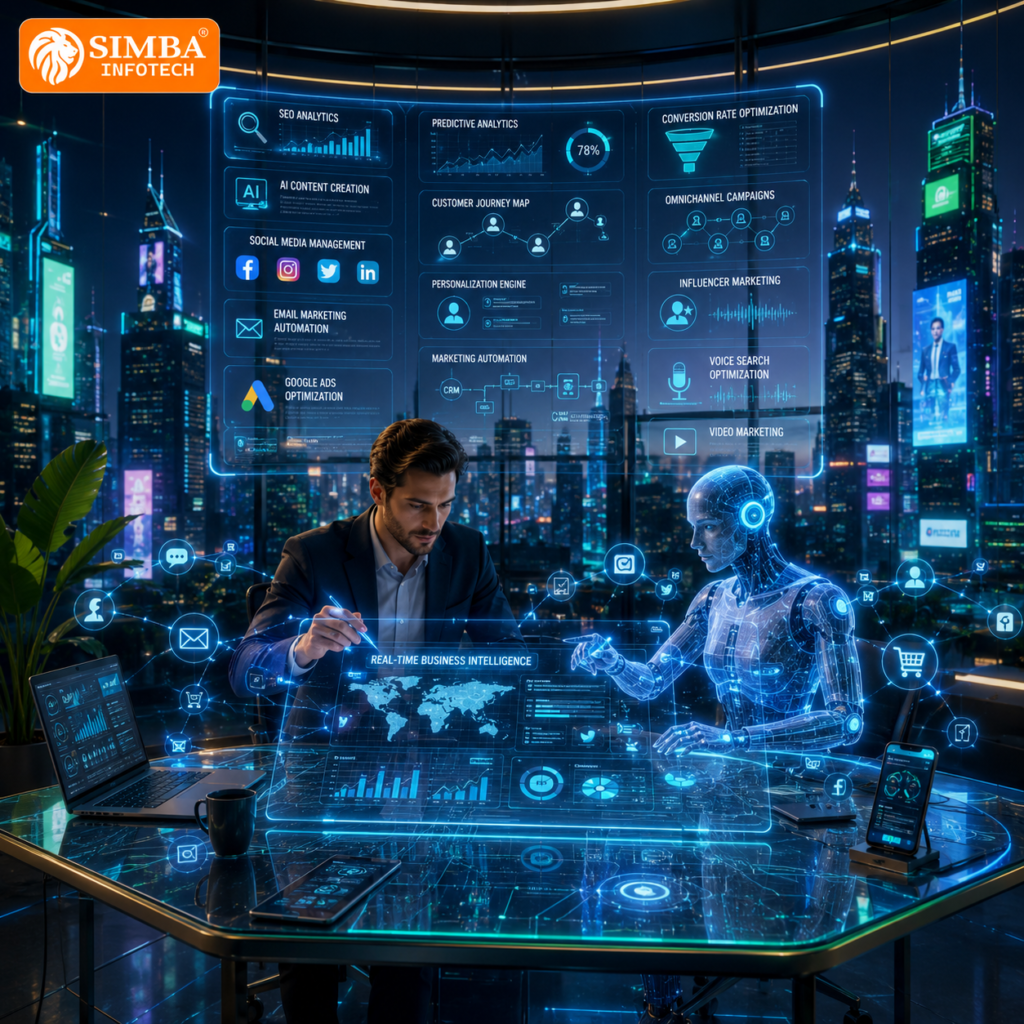
Today, successful marketers use AI to:
- Speed up research and market analysis
- Generate content ideas and topic suggestions
- Create initial content drafts
- Analyze customer data and campaign performance
- Automate repetitive tasks
- Improve productivity and efficiency
By handling these time-consuming activities, AI allows marketers to focus on higher-value work that requires human thinking and creativity.
However, technology alone cannot build a successful marketing strategy. Human marketers still play a critical role by bringing:
- Creative thinking and innovation
- Strategic decision-making
- Unique brand voice and personality
- Deep customer understanding
- Emotional intelligence and storytelling
For example, AI can generate a blog outline or advertising copy in seconds, but it takes a human marketer to ensure that the message aligns with the brand, resonates with the target audience, and supports long-term business goals.
This combination of AI-powered efficiency and human expertise creates stronger results than either could achieve alone. Businesses that embrace both technology and human creativity are often able to produce more effective campaigns, build stronger customer relationships, and achieve better growth.
Many industry experts believe that the future marketer will not be a manual executor of tasks but an AI-powered strategist who uses technology to work smarter. In the future of Digital marketing, the biggest advantage will belong to professionals who know how to combine AI capabilities with human creativity, strategy, and customer-focused thinking.
How Businesses Should Use AI
If you own a business, your goal should not be to replace marketers with AI. Instead, you should focus on using AI to improve efficiency, save time, and support better decision-making. When used correctly, AI can become a powerful assistant that helps your team work smarter while allowing human experts to focus on creativity, strategy, and customer relationships.
Here are smart ways to use AI in your Digital marketing strategy.
Use AI for Repetitive Tasks
Automate:
- Email campaigns
- Customer support
- Reporting
- Content scheduling
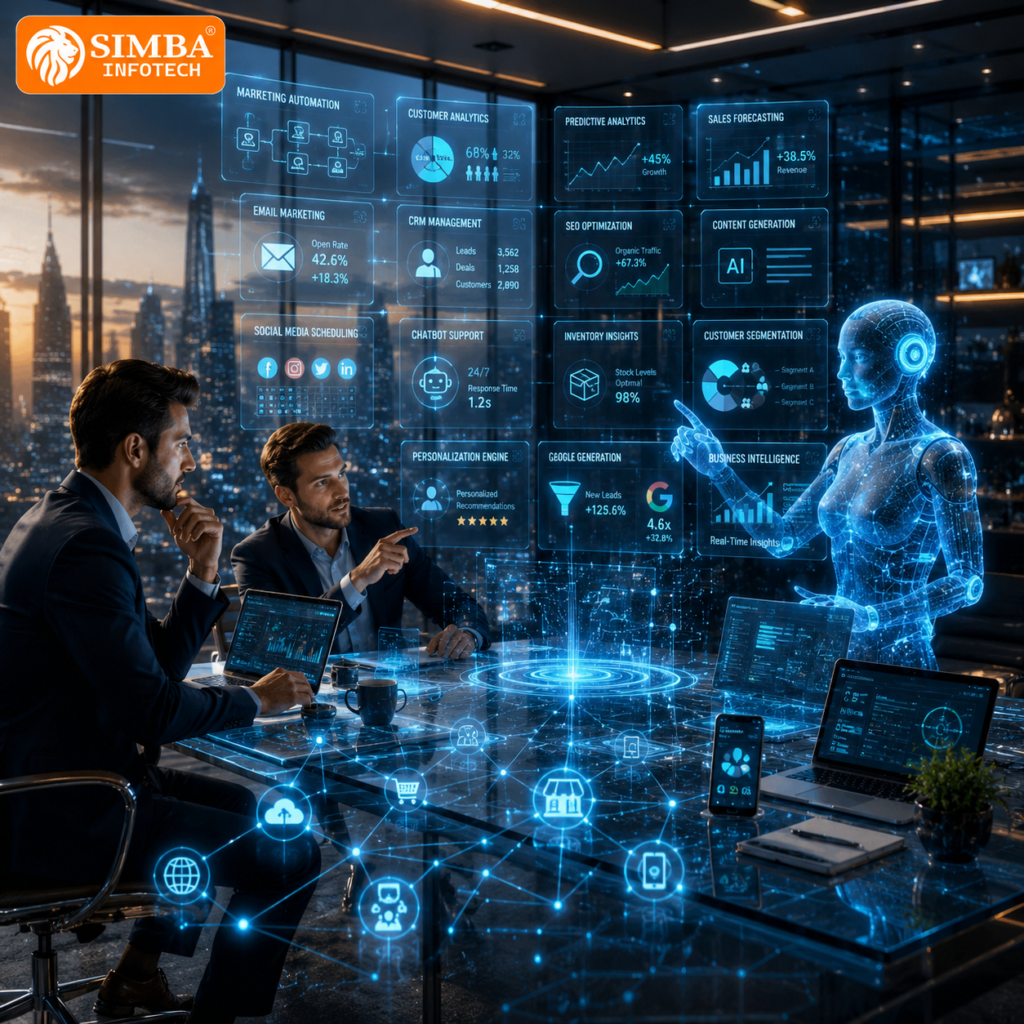
Use Humans for Strategy
Let your team focus on:
- Brand positioning
- Customer research
- Campaign planning
- Creative direction
Combine AI and Human Review
Never publish AI-generated content without human editing.
Human review improves:
- Accuracy
- Tone
- Originality
- Trustworthiness
Focus on Customer Experience
Your customers care about value. They do not care whether AI or humans created the content. What matters is whether the experience helps them solve a problem.
Will AI Reduce Marketing Jobs?
This is a more realistic question than asking whether AI will completely replace marketers.
The answer is:
Some roles may change.
Tasks that are repetitive and predictable are more likely to become automated.
Examples include:
- Basic reporting
- Data entry
- Simple content creation
- Routine campaign management
However, new opportunities are emerging.
Businesses increasingly need professionals who can:
- Use AI effectively
- Interpret data
- Create strategies
- Manage customer experiences
- Build strong brands
The role is evolving rather than disappearing.
Skills You Need to Succeed in the AI Era
Artificial Intelligence is changing the way businesses approach Digital marketing, but it is not replacing the need for skilled professionals. In fact, as AI tools become more common, the value of human expertise is increasing. Businesses still need people who can think strategically, understand customers, and make informed decisions based on data and market trends.
If you want to stay competitive in the future of Digital marketing, developing the following skills will be essential.
1. Strategic Thinking
AI can generate ideas, analyze data, and automate tasks, but it cannot fully understand your business goals, market conditions, or long-term vision. This is where strategic thinking becomes important.
Strategic thinking means looking beyond individual marketing activities and focusing on the bigger picture. Instead of simply creating content or running advertisements, you need to understand why a campaign is being launched, who it is targeting, and how it supports business growth.
For example, AI can suggest hundreds of blog topics for your website. However, it takes strategic thinking to determine which topics will attract your ideal customers, strengthen your brand authority, and generate leads.
A successful marketer doesn’t just ask, “What should I do?” They ask, “Why am I doing this, and what result do I want to achieve?”
2. Customer Psychology
Marketing has always been about understanding people. While AI can analyze customer behavior and identify trends, it cannot fully understand human emotions, motivations, and decision-making processes.
Customer psychology helps you understand:
- Why people buy certain products
- What problems they want to solve
- What fears or concerns they have
- What influences their purchasing decisions
- How emotions impact buying behavior
When you understand your audience on a deeper level, you can create marketing messages that connect with them personally.
For instance, a customer purchasing a security system is not simply buying technology. They are buying peace of mind and protection for their family. Recognizing this emotional motivation allows you to create more effective marketing campaigns.
In the age of AI, businesses that truly understand their customers will always have a competitive advantage.
3. Content Strategy
AI can produce content quickly, but creating content without a clear strategy rarely delivers meaningful results.
Content strategy involves planning, organizing, and creating content that supports specific business objectives. Every blog post, video, email, or social media update should serve a purpose.
A strong content strategy helps you:
- Attract the right audience
- Improve search engine visibility
- Build trust with potential customers
- Generate qualified leads
- Support long-term business growth
For example, instead of publishing random blog articles, a strategic marketer creates content that answers customer questions at different stages of the buying journey.
AI can help generate content ideas and drafts, but the overall direction and planning still require human expertise. This is why content strategy remains one of the most valuable skills in modern Digital marketing.
4. Brand Building
Many products and services offer similar features and pricing. What often makes customers choose one business over another is the brand behind it.
Brand building is about creating a unique identity that customers recognize, trust, and remember. It involves developing consistent messaging, visual elements, values, and customer experiences.
A strong brand helps your business:
- Stand out from competitors
- Build customer loyalty
- Increase trust and credibility
- Create long-term customer relationships
AI can help create content and automate communication, but it cannot define what your brand stands for. It cannot tell your company’s unique story or create authentic emotional connections with your audience.
Successful marketers understand that people often remember how a brand makes them feel more than what it sells. That emotional connection is something only humans can create effectively.
5. Data Interpretation
Modern Digital marketing generates enormous amounts of data. AI tools can collect and organize this information, but understanding what the data actually means requires human judgment.
Data interpretation involves analyzing information and turning it into actionable business decisions.
A skilled marketer can identify:
- Which campaigns generate the highest return on investment
- Which audience segments are most profitable
- Which content types perform best
- Where customers are dropping off in the sales process
- Which marketing channels deserve more investment
For example, AI may show that website traffic has increased by 40%. However, a marketer must determine whether that traffic is generating leads, sales, or meaningful business growth.
Data alone is not enough. The ability to interpret insights and make smart decisions based on those insights is what separates successful marketers from average ones.
6. AI Tool Management
As AI becomes a bigger part of business operations, knowing how to use AI tools effectively will become a critical skill.
AI tool management is not simply about using ChatGPT or other AI platforms. It involves understanding:
- Which AI tools are best for specific tasks
- How to write effective prompts
- How to verify AI-generated information
- How to combine multiple AI tools into efficient workflows
- How to maintain quality and accuracy
The most successful marketers will not be those who rely entirely on AI. Instead, they will be the ones who know how to use AI as a productivity partner.
For example, you might use AI to generate a blog outline, create social media captions, analyze customer feedback, and automate email campaigns. However, you would still review the output, add your expertise, and ensure everything aligns with your brand voice and business goals.
Learning how to manage AI tools effectively can help you save time, improve efficiency, and focus on higher-value marketing activities.
Real-Life Example: How You Can Implement AI in Your Business
Let’s say you own a local service business.
Maybe you run:
- A digital agency
- A coaching business
- A real estate company
- A Shopify store
Step 1: Use AI for Content Ideas
Ask AI to generate:
- Blog topics
- Social media ideas
- Video concepts
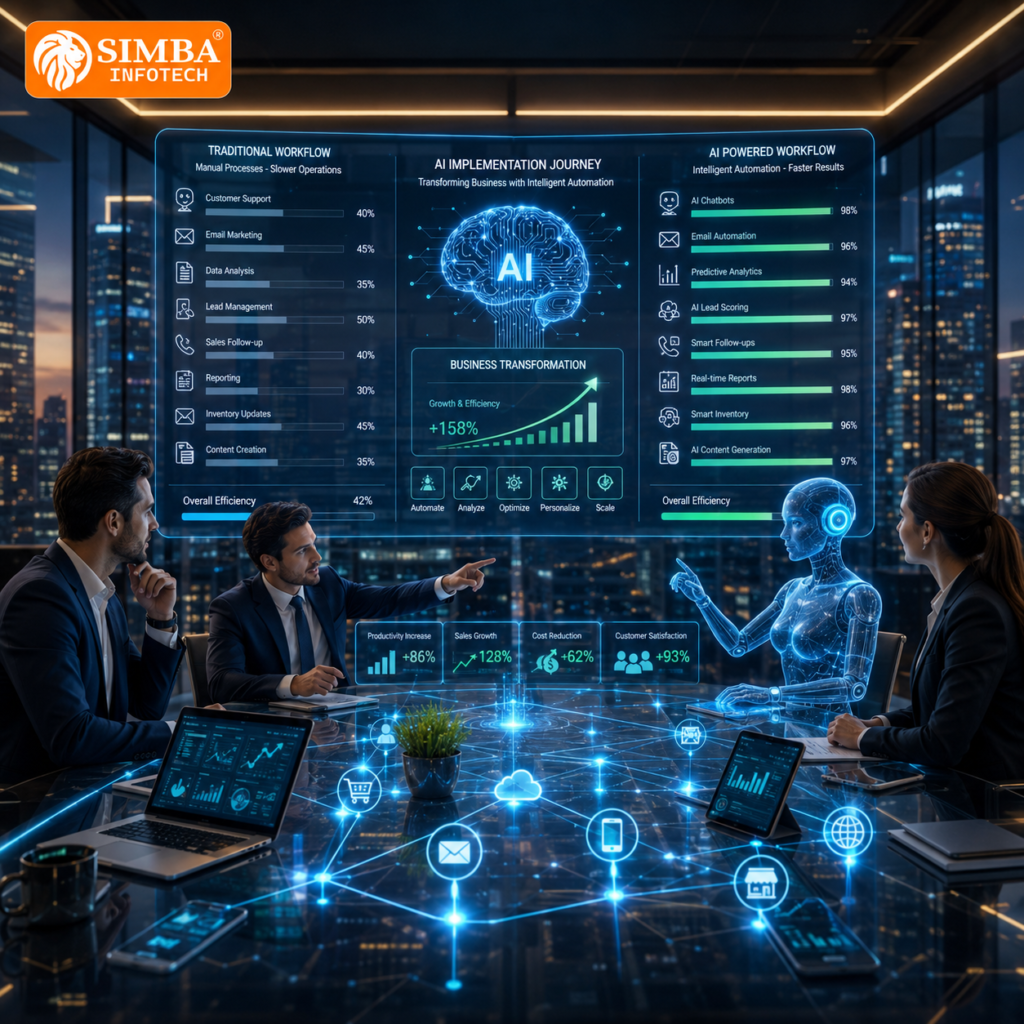
Step 2: Create Draft Content
Use AI to create the first version of:
- Blogs
- Emails
- Ad copy
Step 3: Add Your Expertise
Review the content.
Add:
- Personal experiences
- Customer stories
- Industry insights
- Unique opinions
Step 4: Automate Follow-Ups
Use AI-powered email automation to nurture leads.
Step 5: Analyze Results
Use AI analytics tools to understand:
- Which content performs best
- Which campaigns generate leads
- Which channels produce sales
Result
You save time while maintaining authenticity.
This is the ideal future of Digital marketing.
Instead of replacing people, AI helps people become more productive.
Common Myths About AI and Digital Marketing
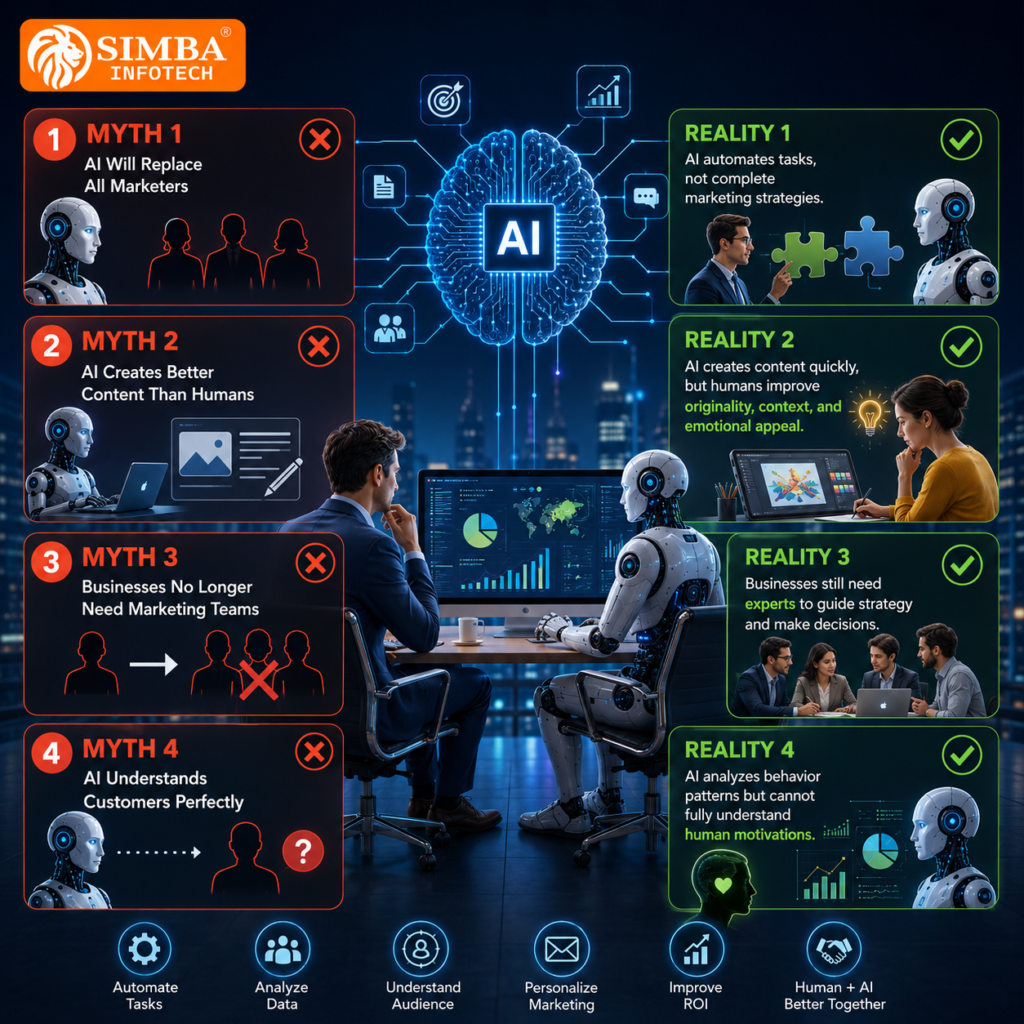
Myth 1: AI Will Replace All Marketers
Reality: AI automates tasks, not complete marketing strategies.
Myth 2: AI Creates Better Content Than Humans
Reality: AI creates content quickly, but humans improve originality, context, and emotional appeal.
Myth 3: Businesses No Longer Need Marketing Teams
Reality: Businesses still need experts to guide strategy and make decisions.
Myth 4: AI Understands Customers Perfectly
Reality: AI analyzes behavior patterns but cannot fully understand human motivations.
Conclusion
So, can AI replace Digital Marketers?
The answer is no.
AI is transforming Digital marketing, making it faster, smarter, and more efficient. It can automate repetitive tasks, analyze large datasets, generate content drafts, and improve campaign performance.
However, AI still lacks the human qualities that make marketing truly effective:
- Creativity
- Emotional intelligence
- Strategic thinking
- Relationship building
- Brand storytelling
The future belongs to businesses and marketers who learn how to combine human expertise with AI technology. If you embrace AI while continuing to focus on understanding your customers, building trust, and creating meaningful experiences, your Digital marketing efforts will become stronger than ever.
The question is no longer:
“Will AI replace marketers?”
The better question is:
“How can you use AI to become a better marketer?”
FAQs
1. Can AI completely replace Digital Marketers?
No. AI can automate tasks but cannot fully replace creativity, strategy, and human understanding.
2. Is AI useful for small businesses?
Yes. AI can help small businesses save time, automate tasks, and improve marketing efficiency.
3. Will AI eliminate marketing jobs?
Some repetitive roles may change, but new opportunities are emerging for professionals who understand both AI and Digital marketing.
4. Should businesses use AI for content creation?
Yes, but always review and edit AI-generated content before publishing.
5. What is the future of Digital marketing?
The future is a combination of AI-powered automation and human creativity, where marketers focus more on strategy, customer experience, and business growth.