- 06/01/2026
- Simba Infotech
- 0
Introduction
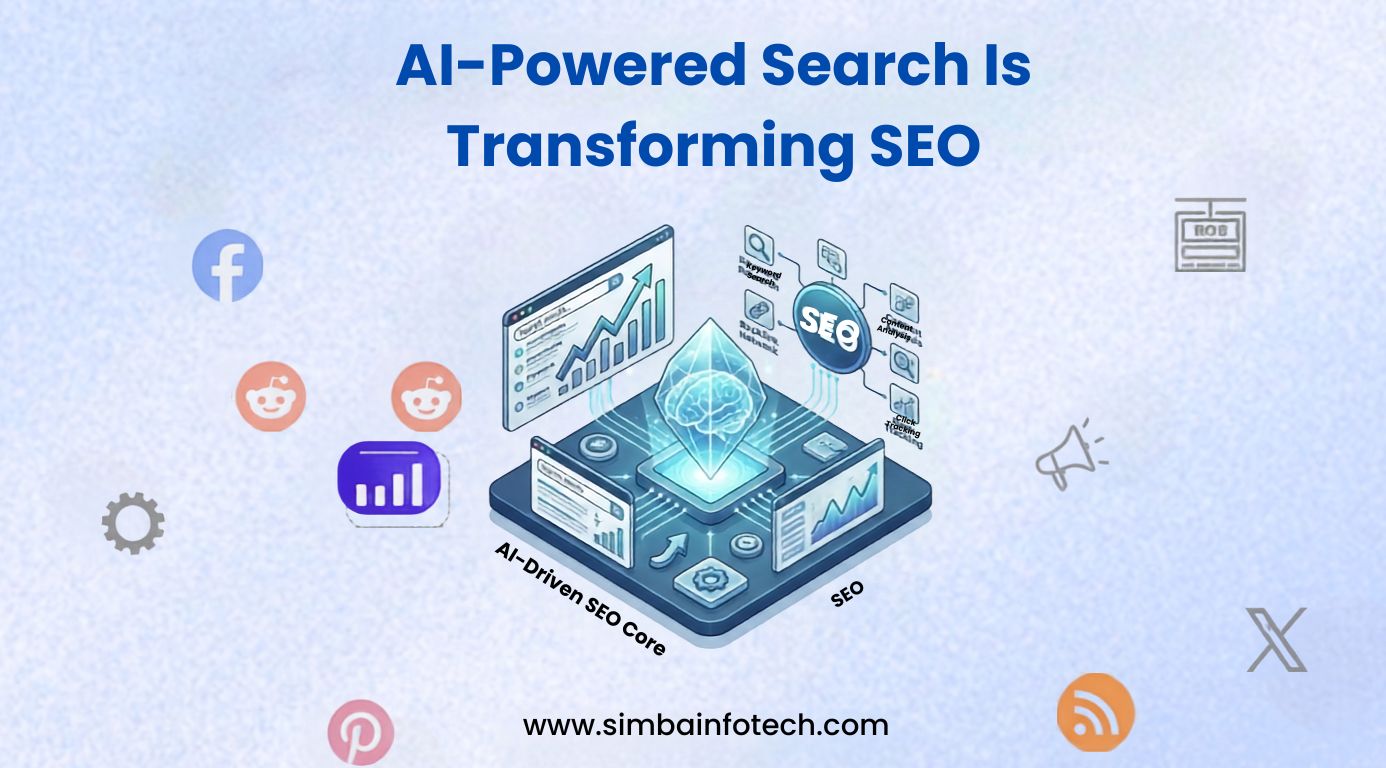
The world of digital marketing is evolving rapidly, and Artificial Intelligence (AI) is playing a major role in that transformation. The way people search for information online has changed significantly over the past few years. Search engines are no longer focused only on matching keywords; they are now capable of understanding user intent, context, and behavior.
As AI technology continues to evolve, businesses and marketers must adapt their SEO strategies to stay competitive and maintain online visibility. Traditional optimization techniques alone are no longer enough to achieve strong search visibility. To stay competitive, websites must focus on providing meaningful, helpful, and user-focused content that aligns with modern search expectations.
What Is AI-Powered Search?
AI-powered search uses Artificial Intelligence (AI), machine learning, and advanced algorithms to enhance the way search engines process and deliver information. Rather than relying solely on keyword matching, AI enables search engines to understand user intent, context, and search behavior. This allows them to provide more accurate, relevant, and personalized search results, helping users find the information they need more quickly and efficiently.
Search engines analyze several factors, including user behavior, search intent, content quality, website performance, contextual meaning, and overall user experience. As a result, users receive more precise and personalized information based on their search intent.
How AI Is Changing SEO
1. Search Intent Matters More Than Keywords
One of the biggest changes introduced by AI is the increased focus on search intent. Search engines now attempt to understand the reason behind a search rather than just matching specific keywords.
There are several types of search intent:
- Informational Intent: Users want to learn something.
- Navigational Intent: This occurs when users want to visit a particular website, brand page, or online resource directly.
- Transactional Intent: This indicates that users are ready to perform an action, such as buying a product, requesting a quote, downloading a resource, or subscribing to a service.
- Commercial Intent: Users are comparing products or services before making a decision.
Because of this shift, businesses should create content that directly addresses the needs and goals of their target audience.
2. Valuable Content Is More Important Than Ever Before
AI-powered algorithms are becoming better at identifying content that provides real value to users. Thin, repetitive, or low-quality content is less likely to perform well in search results.
High-performing content typically has the following characteristics:
- Helpful and informative
- Original and trustworthy
- Well-structured and easy to read
- Relevant to user needs
- Focused on solving problems
Rather than creating content solely for search engines, businesses should focus on creating content that genuinely helps their audience.
3. Voice Search Continues to Grow
Voice search has become increasingly popular due to AI-powered virtual assistants such as Google Assistant, Siri, and Alexa. As people increasingly speak to their devices in a conversational manner, search queries are becoming more natural and detailed.
To adapt, businesses should optimize content for conversational keywords and frequently asked questions. This improves visibility in voice search results and enhances overall user accessibility.
4. Personalized Search Results
AI enables search engines to personalize search results based on individual users. Factors such as location, search history, device type, preferences, and previous online behavior all influence what users see.
For businesses, this means local SEO is becoming more important than ever. Optimizing Google Business Profiles, collecting customer reviews, targeting local keywords, and creating location-specific content can significantly improve local search visibility.
5. Improved Search Understanding with Natural Language Processing (NLP)
Modern search engines leverage Natural Language Processing (NLP) to better understand the context and meaning of content. Instead of focusing on exact keyword matches, AI can identify related topics, contextual relevance, and content depth.
As a result, comprehensive and well-organized content often performs better than content that simply repeats keywords multiple times.
The Rise of AI Search Experiences
Search engines are increasingly providing direct answers within search results through AI-generated summaries, featured snippets, and knowledge panels. Users can often find answers without clicking multiple websites.
Content that is more likely to perform well in these AI-driven search experiences includes:
- Expert-level content
- Structured information
- Clear and concise answers
- Reliable and authoritative resources
Creating content that is easy for both users and search engines to understand can improve visibility in these enhanced search features.
Developing a Smarter SEO Strategy

As AI continues to shape search behavior, businesses should focus on creating a better overall website experience.
Key areas to improve include:
- Website loading speed
- Mobile responsiveness
- Easy navigation
- Readability
- Clear page structure
A positive user experience not only helps visitors but also sends strong quality signals to search engines.
How Businesses Can Adapt to AI-Powered SEO
Companies can maintain a competitive edge by applying up-to-date SEO practices.
Create Helpful Content
Staying ahead of competitors requires companies to apply current SEO strategies.
Use Long-Tail Keywords
Long-tail keywords often reflect specific user intent and can attract highly targeted traffic.
Examples include:
- Best SEO services for small businesses
- How SEO improves Google rankings
- Local SEO strategies for startups
Optimize for Featured Snippets
Structure content using headings, bullet points, and direct answers to common questions.
Build Authority and Trust
Publishing expert content, earning quality backlinks, maintaining updated information, and securing websites with HTTPS can help establish credibility and improve rankings.
Benefits of AI for SEO
AI offers several advantages for businesses and marketers:
- More effective keyword research
- Faster content optimization
- Better audience insights
- Improved user experience
- Smarter, data-driven SEO strategies
These benefits help businesses make informed decisions and achieve stronger search performance.
Challenges of AI-Powered Search
Despite its advantages, AI-powered search also introduces new challenges.
Some common challenges include:
- Increased online competition
- Frequent algorithm updates
- Reduced website clicks from AI-generated answers
- Higher expectations for content quality
- Greater emphasis on expertiseand authority
Businesses that fail to adapt may find it increasingly difficult to maintain strong search visibility.
How AI Is Shaping the Future of SEO
The futureof SEO will continue to revolve around understanding and serving users better. Search engines are becoming smarter, more personalized, and more focused on delivering useful experiences.
Key trends likely to shape the future include:
- User intent optimization
- Helpful and experience-based content
- Topic authority
- Enhanced search experiences
- AI-focused optimization strategies
Businesses that embrace these changes will be better positioned for long-term success.
Conclusion
AI-powered search is transforming SEO in ways that were unimaginable just a few years ago. Search engines now prioritize understanding user intent, delivering personalized experiences, and rewarding websites that provide genuine value. This means businesses can no longer rely solely on traditional SEO techniques and keyword-focused strategies.
To succeed in this new landscape, organizations must create high-quality content, improve website performance, optimize for voice search, and focus on delivering exceptional user experiences. Building trust, authority, and relevance will continue to play a critical role in achieving sustainable search visibility.
While AI-powered search presents new challenges, it also offers exciting opportunities for growth. Businesses that adapt to evolving search trends and focus on helping their audience will be better equipped to attract organic traffic, improve rankings, and maintain a strong online presence in the years ahead.
Frequently Asked Questions (FAQs)
1. What is AI-powered search in SEO?
Ans: AI-powered search uses artificial intelligence to understand user intent and provide more accurate, relevant search results.
2. Is SEO still important in the age of AI?
Ans: Yes. SEO remains essential, but the focus has shifted toward user experience, content quality, and intent-based optimization.
3. How does AI affect search rankings?
Ans: AI helps search engines evaluate content quality, relevance, authority, and user experience when determining rankings.
4. What type of content performs best in AI-powered search?
Ans: Helpful, trustworthy, well-structured, and user-focused content generally performs best.
5. How can businesses improve SEO in the AI era?
Ans: Businesses should focus on creating valuable content, optimizing website performance, targeting user intent, and building authority within their industry.