
- 10/21/2026
- Simba Infotech
- 0
Introduction
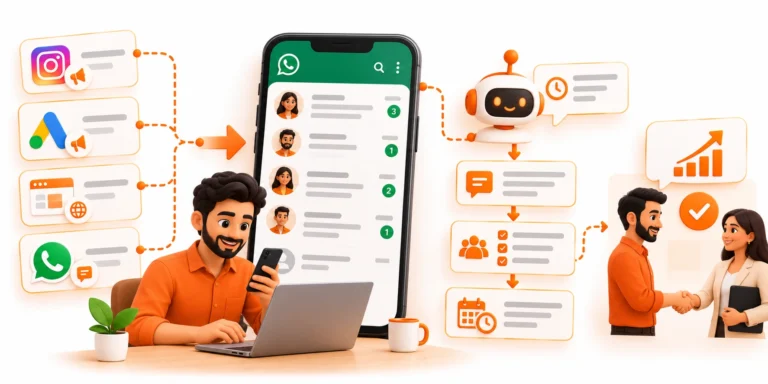
A business can generate enquiries through Instagram ads, Google Ads, its website, and WhatsApp itself, yet still lose potential customers because nobody follows up consistently.
Consider a Surat-based interior design company receiving 30 enquiries in a week. Its team replies to the first few customers promptly, forgets to contact some others, and loses track of people who asked for a quotation but did not respond.
The problem is not necessarily a lack of leads. It is the absence of a reliable process for managing them.
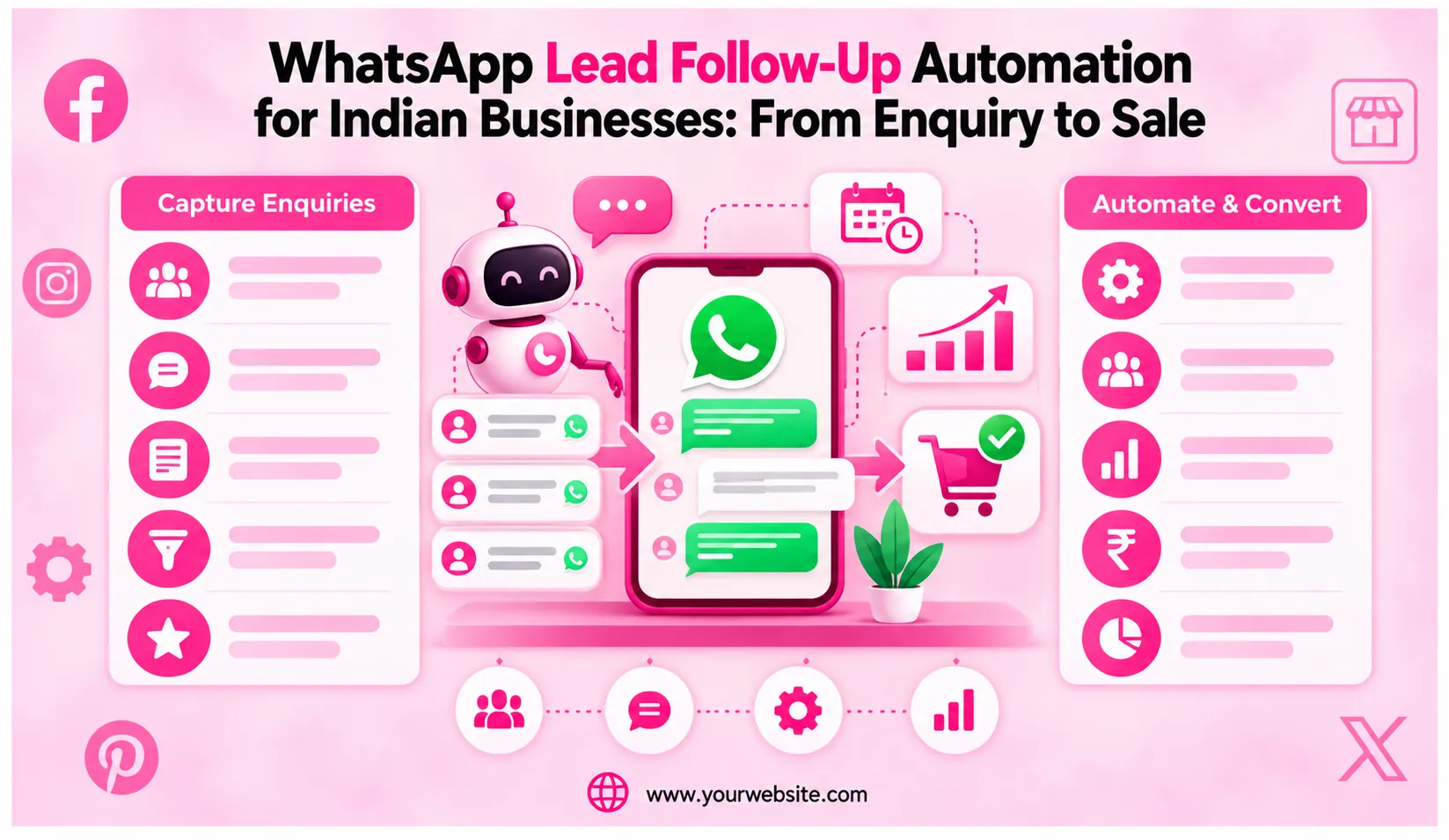
WhatsApp lead follow-up automation helps businesses organise conversations, send timely responses, qualify prospects, and ensure that sales opportunities do not disappear into an unmanaged inbox. When combined with clear sales processes and suitable tools, it can make customer communication more consistent.
Businesses comparing the best digital marketing agency in surat should also consider whether an agency understands what happens after an advertisement generates an enquiry. Traffic and messages are useful only when the business can manage those opportunities and measure their commercial outcomes.
This guide explains how to build a practical WhatsApp follow-up system for Indian businesses, from the first customer message to the final sale.
1. What Is WhatsApp Lead Follow-Up Automation?
WhatsApp lead follow-up automation uses software, predefined workflows, and messaging integrations to manage appropriate customer interactions with less repetitive manual work.
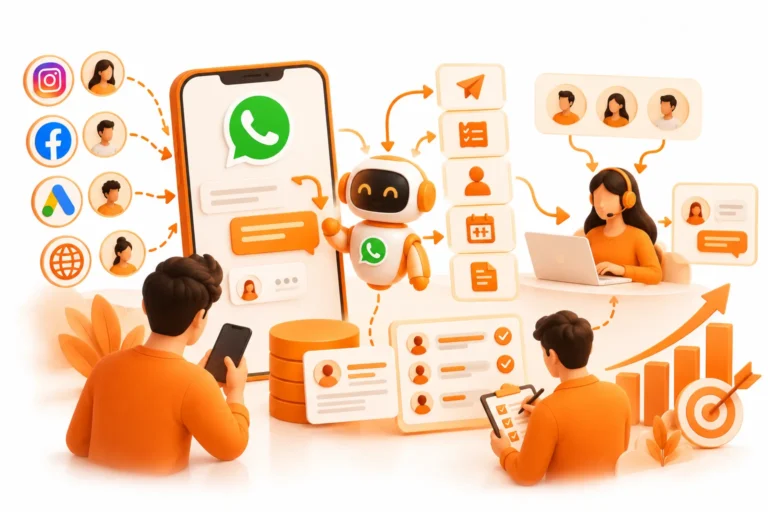
Depending on the setup, a business can automatically acknowledge an enquiry, collect basic information, assign a conversation to a salesperson, schedule reminders, and update a customer record.
For example, a customer enquiring about a website development package could receive an immediate acknowledgement, answer a few qualifying questions, and be connected to the relevant team member.
Automation does not mean removing people from the sales process. It means reducing administrative delays so employees can focus on understanding customer needs, answering complex questions, and closing sales.
Common applications include:
- Responding to new enquiries.
- Collecting product, service, location, or budget requirements.
- Assigning leads to the appropriate employee.
- Reminding sales staff about pending conversations.
- Sending requested quotations or relevant information.
- Recording lead status and follow-up activity.
- Measuring which sources generate qualified enquiries and customers.
The objective is not to send more messages. It is to create a more reliable customer journey.
2. Identify Where Your Business Is Losing Leads
Before purchasing automation software, identify the weaknesses in your existing enquiry process.
Review recent conversations and ask:
- How long does a new enquiry wait for its first response?
- How many enquiries never receive a second follow-up?
- Do multiple employees contact the same customer?
- Can the team identify which enquiries are ready to buy?
- Are quotations and next steps recorded somewhere accessible?
- Can the business connect a completed sale to its original marketing source?
These questions reveal whether the primary problem is response time, lead qualification, ownership, or measurement.
For instance, a coaching institute might receive enquiries from Google Ads, Instagram, and its website. If every enquiry goes to one employee’s phone, other team members may not know which students have been contacted or who needs counselling.
A shared lead register or CRM can establish a single source of truth.
Businesses evaluating the best digital marketing agency in surat should look for a clear process that connects marketing acquisition with lead management, rather than evaluating campaigns exclusively by clicks or enquiry volume.
3. Choose the Right WhatsApp Business Setup
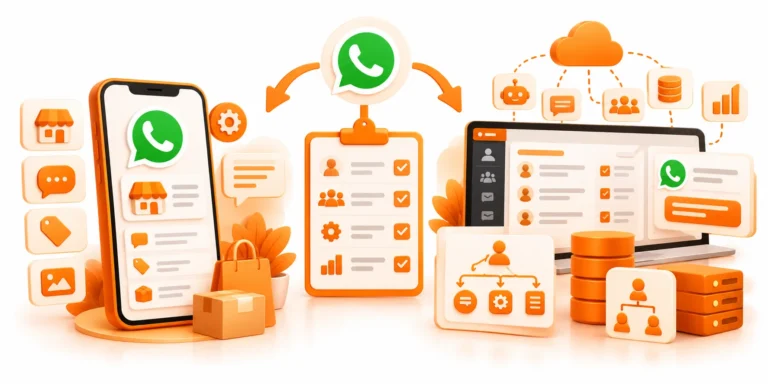
Not every business needs an expensive automation platform. The appropriate solution depends on enquiry volume, team size, workflow complexity, and integration requirements.
WhatsApp Business App
The WhatsApp Business App can suit smaller businesses with manageable enquiry volumes.
Its business profile, greeting and away messages, quick replies, labels, and catalogue features can help organise basic customer communication.
A small boutique, local service provider, or independent consultant may be able to start with these tools and a simple lead register.
WhatsApp Business Platform
The WhatsApp Business Platform provides API-based capabilities for businesses that need more advanced integrations and workflows.
Depending on the implementation, it can support automated messaging, shared inboxes, CRM connections, structured conversational flows, and team-level management.
Businesses should check current platform rules, available features, provider charges, message charges, and implementation costs before choosing a solution.
How to choose
Business requirement | Suitable starting point |
One person handling a manageable number of enquiries | WhatsApp Business App |
Several employees handling shared conversations | A suitable shared inbox or platform integration |
Automated lead routing and CRM updates | WhatsApp Business Platform with appropriate integrations |
Complex qualification, reporting, and multi-stage workflows | Platform integration with a CRM or automation system |
The best choice is the simplest system that solves the actual operational problem.
4. Build a Lead Follow-Up Workflow
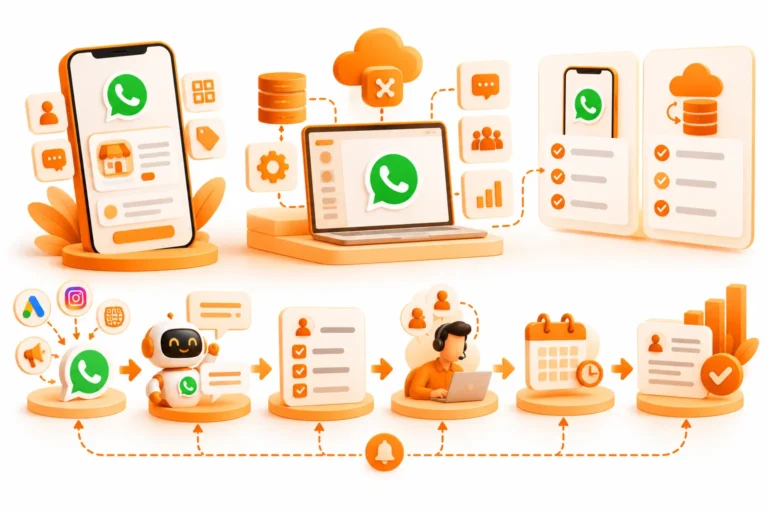
A useful workflow defines what happens at each stage of a customer’s journey.
Step 1: Capture the enquiry source
Record how the customer reached the business: Google Ads, Meta Ads, organic search, a website button, a QR code, or a referral.
Use appropriate campaign tracking and source fields wherever possible.
Step 2: Acknowledge the enquiry
Send a concise acknowledgement when appropriate.
For example:
“Thanks for contacting us about our website development services. We have received your enquiry. Could you share what type of website you need so we can guide you?”
This message confirms receipt and gives the customer a useful next step.
Step 3: Qualify the lead
Ask only the questions needed to determine the next action.
A service business might ask about:
- The service required.
- The customer’s location.
- The expected project timeline.
- The approximate budget, when relevant.
Avoid presenting a long questionnaire before understanding what the customer actually needs.
Step 4: Assign responsibility
Route the enquiry to the appropriate employee or team. Define who owns the conversation and what happens when that person is unavailable.
Step 5: Schedule the next action
If the customer requests a quotation, consultation, or callback, record that commitment and its due date.
Automated reminders can help staff follow through without repeatedly checking every conversation manually.
Step 6: Record the outcome
Update the lead status when the customer becomes qualified, receives a quotation, books an appointment, purchases, or declines.
This makes it possible to distinguish between messages received and business results achieved.
For businesses working with the best digital marketing agency in surat, this workflow can also provide the structure needed to connect advertising performance with sales outcomes.
5. Create a Practical Follow-Up Sequence
A follow-up sequence should respond to the customer’s situation, not operate as an endless stream of reminders.
Consider a prospective customer who requests a quotation for a website but has not yet replied.
An illustrative sequence could be:
Timing | Suggested action |
Immediately after the enquiry | Acknowledge the request and explain the next step |
After the initial discussion | Send the requested details or quotation |
On the agreed follow-up date | Ask whether the customer needs clarification |
After another appropriate interval | Offer a relevant answer or next step, if the customer remains interested |
When the customer declines or opts out | Stop promotional follow-ups as applicable |
These timings are examples, not universal rules. The correct schedule depends on the customer’s expectations, buying cycle, and communication permissions.
A customer requesting an urgent repair may need a faster response than someone comparing several long-term service proposals.
Messages should contain a clear purpose. Instead of repeatedly asking, “Are you interested?”, provide useful information, answer a question, or offer a concrete next step.
The best digital marketing agency in Surat should be able to explain how follow-up timing supports the sales process and how customer preferences are respected.
6. Connect WhatsApp to a CRM or Lead Register
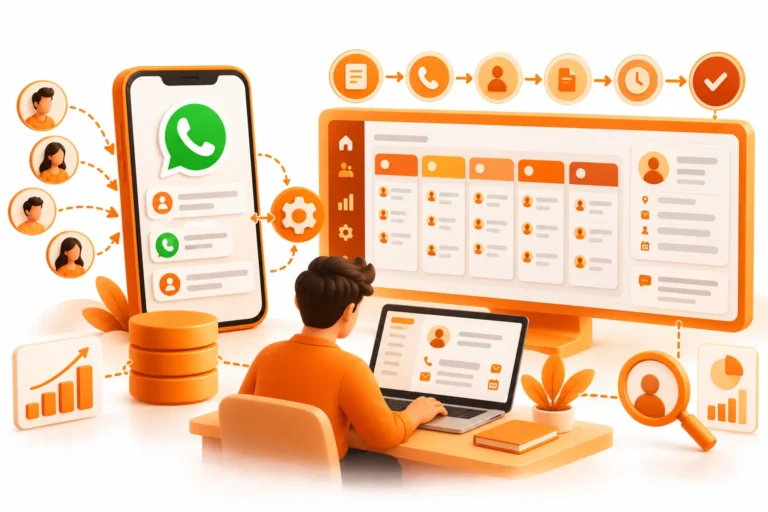
Automation becomes more useful when conversations are linked to structured customer records.
A CRM, or customer relationship management system, helps businesses record interactions, organise prospects, and track opportunities through a sales pipeline.
A simple pipeline might include:
- New enquiry
- Contacted
- Qualified
- Quotation sent
- Follow-up pending
- Won or lost
Each record should include the customer’s contact details, enquiry source, service or product interest, assigned employee, current status, and next action.
A business with limited resources can start with a well-maintained spreadsheet. A growing team may benefit from a CRM with appropriate WhatsApp integration.
Avoid creating unnecessary complexity. If employees do not update the system, even sophisticated software will produce unreliable reports.
When comparing the best digital marketing agency in Surat, ask how lead information is recorded, who owns the data, and whether the reporting process connects enquiries with completed sales.
7. Measure Results That Matter
The number of WhatsApp messages sent is not a reliable measure of business success on its own.
Track operational and commercial metrics that reveal whether the workflow is improving.
First-response time: The elapsed time between an enquiry arriving and the first meaningful response.
Contact rate: The proportion of enquiries that result in a successful conversation.
Qualification rate: The proportion of enquiries that meet the business’s defined criteria for a potential customer.
Lead-to-sale conversion rate: The proportion of leads that become paying customers.
Cost per qualified lead: Marketing expenditure divided by the number of qualified leads attributed to the relevant activity.
Customer acquisition cost: The relevant acquisition expenditure divided by the number of new customers acquired during the defined period.
Illustrative example
Suppose a business receives 100 enquiries from its marketing campaigns.
- 60 enquiries become qualified leads.
- 12 qualified leads become customers.
- The attributable marketing expenditure is ₹30,000.
The qualified-lead rate is 60%, while the overall lead-to-customer conversion rate is 12%.
The cost per qualified lead is ₹500, and the marketing expenditure per acquired customer is ₹2,500.
These figures are illustrative. They exclude other business costs and do not establish profitability.
If automation improves follow-up consistency, compare the results across equivalent periods and lead sources. Account for changes in campaign spending, offer quality, seasonality, and sales-team capacity before attributing improvements to automation.
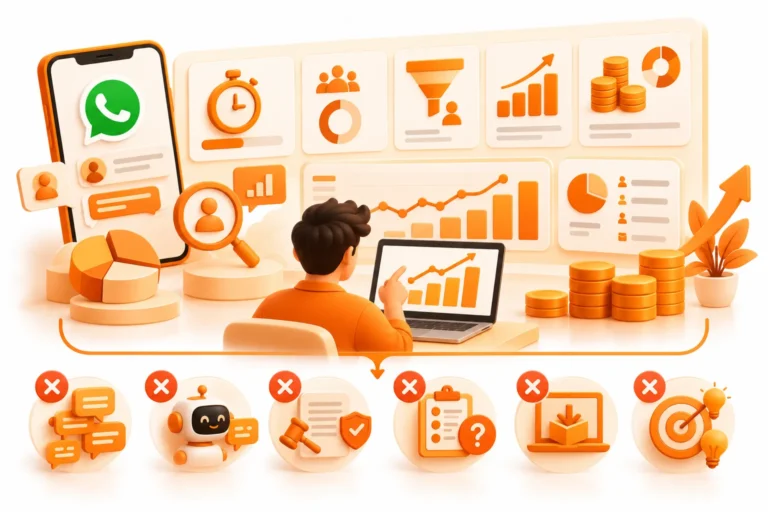
8. Common Mistakes to Avoid
Sending too many messages
Frequent, repetitive messages can frustrate customers and encourage blocks or opt-outs. Use relevant messages at appropriate intervals.
Automating conversations that need human judgement
Complex pricing questions, complaints, negotiations, and sensitive customer situations often require a person. Provide a clear handoff instead of trapping customers in a bot.
Ignoring message permissions and platform policies
Businesses must follow applicable laws and WhatsApp’s current business messaging policies. Make promotional communications expected, identify the business clearly, respect customer preferences, and implement the relevant consent requirements.
For API-based messaging, check the applicable template and messaging-window rules before initiating conversations. Do not assume every message can be sent freely at any time.
Failing to record outcomes
A conversation that ends with “I’ll think about it” should not automatically be counted as a sale. Record the actual outcome and next action.
Buying software before defining the process
A tool cannot compensate for unclear ownership, poor qualification questions, or missing sales procedures. Design the workflow first, then choose software.
Treating automation as a replacement for strategy
Businesses looking for the best digital marketing agency in surat should assess its ability to connect lead generation, customer communication, conversion tracking, and continuous improvement. Automation is a supporting system, not a substitute for a sound marketing strategy.
9. How Professional Digital Marketing Support Can Help
Businesses may benefit from professional support when enquiry volumes increase, multiple advertising channels operate simultaneously, or manual follow-up becomes difficult to manage.
A suitable implementation can involve:
- Reviewing the existing customer journey.
- Identifying gaps in lead capture and assignment.
- Selecting appropriate WhatsApp and CRM tools.
- Connecting website forms and campaign sources to lead records.
- Designing relevant message sequences and human handoffs.
- Setting up conversion measurement and performance reports.
- Reviewing results and improving the process over time.
The required services depend on the business. Some companies only need better procedures and basic tools; others may need custom integrations or a more advanced CRM.
Simba Infotech offers digital marketing and social media marketing services and Google Ads management. These services can be relevant when businesses need help connecting customer acquisition with measurable marketing outcomes.
For businesses exploring the best digital marketing agency in surat, evaluate the proposed workflow, reporting transparency, implementation scope, and ongoing support. Do not select an agency solely because it promises more leads or claims guaranteed results.
10. A Simple Implementation Plan for Indian Businesses
You do not need to automate every conversation on day one.
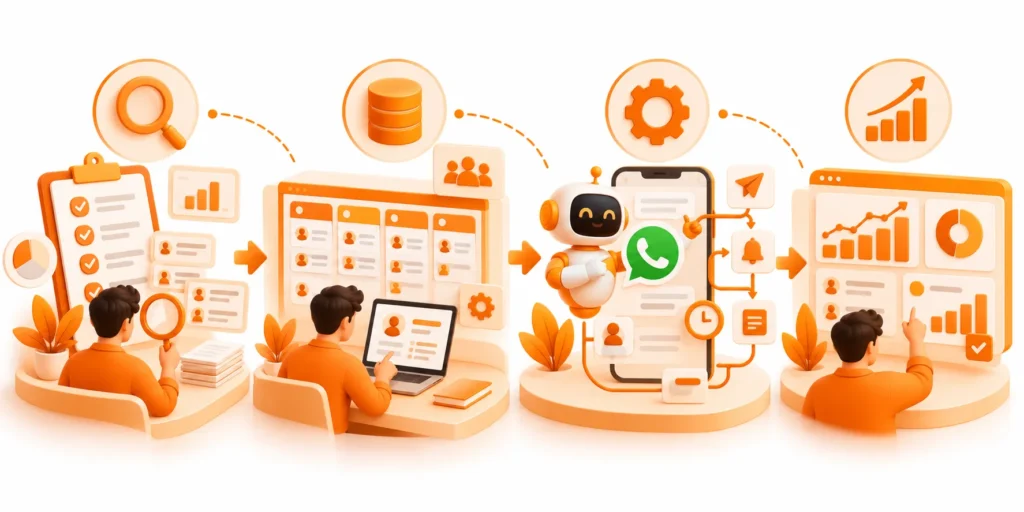
Week 1: Audit the process. Review recent enquiries, identify common delays, and document how leads currently move from first contact to purchase.
Week 2: Standardise lead management. Create a lead register or CRM pipeline, define lead stages, assign ownership, and prepare useful response templates.
Week 3: Automate the repetitive tasks. Start with appropriate acknowledgements, reminders, routing, and record updates. Test each workflow before relying on it.
Week 4: Measure and refine. Review response times, qualified leads, conversion rates, and unresolved enquiries. Remove unnecessary steps and improve the messages that create friction.
The timeline is illustrative. Businesses with complex integrations or large teams may need longer.
Start with one measurable problem, such as missed follow-ups or unassigned enquiries. Establish a baseline, implement a change, and compare results before expanding the system.
Frequently Asked Questions
1. What is WhatsApp lead follow-up automation?
It is the use of messaging workflows and connected software to acknowledge enquiries, organise leads, schedule follow-ups, and support customer conversion. The level of automation depends on the tools and integrations used.
2. Is WhatsApp Business enough for a small business?
It may be sufficient when one person manages a manageable number of enquiries. Businesses that need shared inboxes, advanced routing, CRM integration, or more complex reporting may require additional software or the WhatsApp Business Platform.
3. Can WhatsApp follow-up automation increase sales?
It can help reduce missed follow-ups and improve process consistency. Actual sales results depend on lead quality, customer demand, the offer, sales execution, and the suitability of the automation.
4. How much does WhatsApp automation cost in India?
Costs vary according to the software provider, implementation complexity, integrations, messaging charges, and support requirements. Compare the total cost of ownership rather than considering only the advertised subscription price.
5. Is WhatsApp Business API necessary for automation?
Not always. Basic workflows may be managed using the WhatsApp Business App and manual processes. API-based capabilities become more relevant when businesses need advanced integrations, automated workflows, or coordinated team operations.
6. How should businesses measure WhatsApp lead conversion?
Track enquiries, qualified leads, sales, response time, and attributable acquisition costs. Use consistent definitions and connect the original lead source with the eventual sales outcome wherever possible.
Conclusion
Generating enquiries is only one part of growing a business. The ability to respond consistently, qualify potential customers, assign responsibility, and measure outcomes determines how effectively those opportunities are managed.
WhatsApp lead follow-up automation can help Indian businesses establish a more organised sales process without making every interaction impersonal. Start by identifying where enquiries are being lost, standardise the workflow, automate repetitive tasks, and measure actual business outcomes.
If your business needs help connecting advertising campaigns, lead management, and conversion measurement, explore Simba Infotech’s digital marketing services. Choose a solution based on your operational needs, available resources, and measurable objectives—not on promises of guaranteed results.