
- 07/03/2026
- Simba Infotech
- 0
Introduction
Artificial Intelligence (AI) is changing the way businesses create websites. Today, you can use AI tools to design pages, write content, generate images, improve layouts, and even suggest SEO improvements within minutes. What once required days or weeks of work can now be completed much faster with the help of AI.
But one important question remains:
Can AI really build an SEO-friendly website that ranks well on Google?
The simple answer is yes—but not entirely on its own.
AI has become a valuable assistant for website development and Digital marketing. It can automate many repetitive tasks, recommend keywords, optimize content, improve website structure, and help you launch a professional-looking website quickly. However, achieving long-term SEO success requires much more than simply using AI.
This is especially important if you want your website to attract organic traffic without depending only on paid advertising. A well-optimized website becomes a valuable asset for your Digital marketing strategy because it continues bringing visitors long after it is published. Whether you are a business owner, marketer, freelancer, or beginner, this guide will help you understand how to use AI wisely instead of depending on it completely.
What Does an SEO-Friendly Website Mean?
An SEO-friendly website is a website that is designed and optimized to help search engines like Google understand, crawl, and rank its pages more effectively. At the same time, it provides a smooth and valuable experience for your visitors. The easier it is for both users and search engines to navigate your website, the better your chances of appearing higher in search results.
An SEO-friendly website goes beyond simply adding keywords to your content. It combines high-quality content, fast loading speed, mobile responsiveness, clear navigation, and technical optimization to improve your online visibility. These elements work together to attract more organic traffic and strengthen your overall Digital marketing strategy.
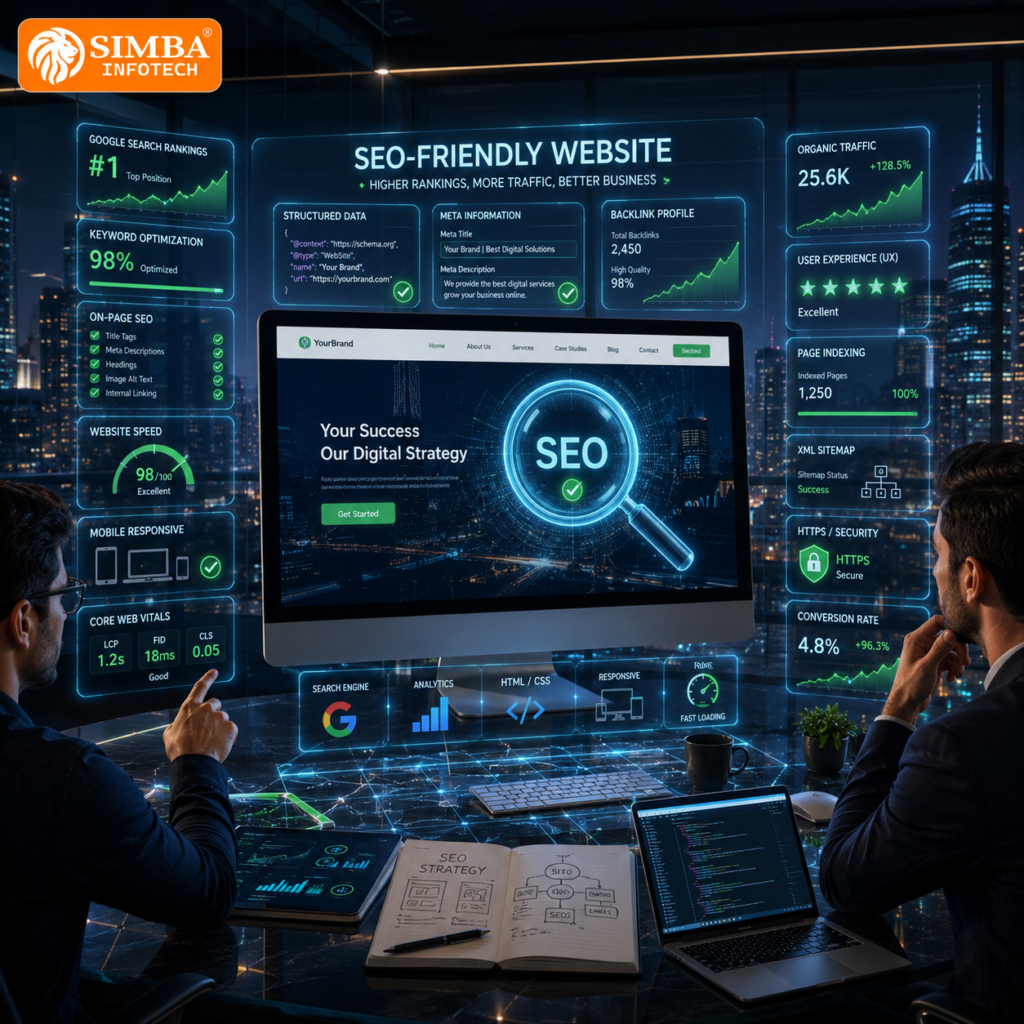
Key Features of an SEO-Friendly Website
High-Quality Content:
Publish original, informative, and engaging content that answers your audience’s questions.Relevant Keywords:
Use target keywords naturally throughout your content, headings, and meta tags without keyword stuffing.Fast Loading Speed:
A quick-loading website improves user experience and reduces bounce rates.Mobile-Friendly Design:
Ensure your website works perfectly on smartphones, tablets, and desktops.Easy Navigation:
Organize your pages with a clear menu and logical internal linking so visitors can easily find information.Optimized Meta Tags:
Create compelling meta titles and meta descriptions that encourage users to click on your website.Technical SEO:
Fix broken links, optimize URLs, use secure HTTPS, and improve Core Web Vitals for better search engine performance.Image Optimization:
Compress images and use descriptive alt text to improve page speed and accessibility.
Why Is an SEO-Friendly Website Important?
An SEO-friendly website helps search engines understand your content while giving visitors a better browsing experience. This can lead to higher search rankings, increased organic traffic, longer visitor engagement, and more potential customers. Whether you build your website using AI or traditional methods, focusing on SEO best practices is essential for achieving long-term success in Digital marketing and growing your online presence.
Can AI Really Build an SEO-Friendly Website?
Yes, AI can help you build an SEO-friendly website, but it should not be your only solution. Modern AI website builders can create website layouts, write basic content, suggest keywords, and improve page structure within minutes. This makes website development faster and more convenient, especially if you are a beginner or a small business owner. By using AI wisely, you can save time and strengthen your Digital marketing efforts without starting from scratch.
However, creating a website that ranks well on Google requires more than automation. Search engines prioritize websites that provide valuable information, excellent user experience, fast loading speed, mobile responsiveness, and original content. While AI can assist with these tasks, it cannot fully understand your audience, brand voice, or business goals like you can.
What AI Can Do Well
- Generate website content and page layouts quickly.
- Suggest SEO-friendly titles, headings, and meta descriptions.
- Recommend relevant keywords for better search visibility.
- Improve website structure and navigation.
- Create a mobile-friendly website design.
Where Human Expertise Is Still Important
- Adding unique insights and real business experience.
- Creating trustworthy and engaging content.
- Understanding customer needs and search intent.
- Building an effective long-term SEO strategy.
- Regularly updating content based on industry trends.
The best results come from combining AI with human expertise. Instead of replacing your creativity, AI should support it. This balanced approach helps you build a website that not only looks professional but also attracts organic traffic and supports your long-term Digital marketing success.
Benefits and Limitations of Using AI to Build an SEO-Friendly Website
Artificial Intelligence has made website creation faster and more accessible than ever before. Whether you are starting a new business or improving an existing website, AI can simplify many tasks that once required technical expertise. From generating content to suggesting SEO improvements, AI helps you save time and supports your Digital marketing efforts. Like any other technology, AI offers many advantages, but it also comes with certain limitations that you should understand before relying on it. Understanding these will help you use AI more effectively and make better decisions for your website.

Benefits of Using AI for Website Development
1. Faster Website Creation
One of the biggest advantages of AI is its ability to create a website in a very short time. Instead of spending several weeks planning layouts, writing content, selecting images, and designing pages, AI can generate a complete website structure within minutes.
Most AI website builders ask you a few simple questions about your business, industry, and goals. Based on your answers, they automatically create website layouts, suggest color combinations, generate page content, and even recommend images that match your business.
2. Beginner-Friendly
You don’t need advanced coding or design skills to build a professional website with AI. Most AI website builders provide user-friendly interfaces, drag-and-drop editors, and automated design suggestions. This makes website creation simple, even if you have never built a website before. You can easily customize colors, fonts, layouts, and content to match your brand.
3. Supports SEO Optimization
A website should not only look attractive but also rank well on search engines. Many AI tools help improve SEO by suggesting relevant keywords, generating SEO-friendly headings, creating meta titles and descriptions, optimizing images, and improving content readability. These features help search engines understand your website better while strengthening your overall Digital marketing strategy.
4. Cost-Effective Solution
Developing a website traditionally often requires hiring designers, developers, and content writers, which can be costly. AI automates many of these tasks, reducing development expenses and making professional website creation more affordable for startups, freelancers, and small businesses.
5. Improves Productivity
AI handles repetitive tasks such as content generation, website structuring, image optimization, and formatting. This allows you to spend more time focusing on business growth, customer engagement, and improving your Digital marketing campaigns instead of managing technical work.
6. Enhances User Experience
User experience is an important ranking factor for search engines. AI helps create responsive website designs, faster loading pages, and better navigation that work smoothly across mobile phones, tablets, and desktops. A positive browsing experience encourages visitors to stay longer and explore more pages.
7. Easy Content Updates
Regular updates are essential for maintaining a successful website. AI can suggest fresh blog topics, improve existing content, identify outdated information, and recommend SEO improvements. This helps you keep your website relevant while supporting your long-term Digital marketing goals.
When combined with human creativity and strategic planning, AI becomes a powerful tool that helps you build a website that is efficient, user-friendly, and better prepared for long-term SEO success.
Limitations of Using AI for Website Development
1. Limited Creativity and Originality
AI generates content by analyzing existing data and patterns available online. As a result, the content may sound generic or similar to what already exists on other websites. To make your website unique, you should add your own ideas, real-life experiences, and brand voice. Original content helps build trust with your audience and strengthens your Digital marketing efforts.
2. Cannot Fully Understand User Intent
AI generates content by analyzing existing data and patterns available online. As a result, the content may sound generic or similar to what already exists on other websites. To make your website unique, you should add your own ideas, real-life experiences, and brand voice. Original content helps build trust with your audience and strengthens your Digital marketing efforts.
3. Requires Human Editing
AI-generated content is not always perfect. It may contain repetitive sentences, outdated information, incorrect facts, or unnatural wording. Before publishing, you should carefully review and edit the content to ensure it is accurate, easy to understand, and aligned with your business goals and Digital marketing strategy.
4. Weak Long-Term SEO Strategy
AI can assist with basic SEO tasks such as keyword suggestions and meta descriptions, but it cannot develop a complete SEO strategy. Activities like competitor analysis, content planning, backlink building, and monitoring search trends require human knowledge and experience for sustainable results.
5. Limited Brand Understanding
Every business has its own personality, values, and communication style. AI cannot fully understand your brand identity or create emotional connections with your audience. Human creativity is necessary to write content that reflects your brand and builds lasting customer relationships.
6. May Overlook Technical SEO Issues
While AI can identify some optimization opportunities, it may miss advanced technical SEO problems such as crawl errors, broken links, structured data issues, duplicate pages, or server performance concerns. Regular technical audits are essential to maintain a healthy website and improve search engine rankings.
7. Risk of Over-Reliance on Automation
Depending entirely on AI can make your website feel repetitive and less authentic. The most successful websites combine AI’s speed and efficiency with human creativity, strategic thinking, and a well-planned Digital marketing approach. This balance helps you create valuable content, improve SEO performance, and build stronger connections with your audience over the long term.
By understanding these limitations, you can use AI more effectively. Instead of replacing your skills, AI should enhance your workflow, helping you create a website that is informative, user-focused, and optimized for sustainable SEO growth.
SEO Factors AI Can Handle
Artificial Intelligence has become a valuable tool for improving many aspects of Search Engine Optimization (SEO). While it cannot replace a complete SEO strategy, it can automate several important tasks that help improve your website’s visibility on search engines. By using AI alongside your Digital marketing efforts, you can save time, increase productivity, and build a stronger foundation for long-term SEO success.
AI Can Effectively Handle These SEO Tasks:
- Keyword Research: AI can identify relevant and high-search-volume keywords based on your topic and audience.
- Content Optimization: It can suggest improvements for headings, readability, keyword placement, and overall content structure.
- Meta Tags: AI generates SEO-friendly meta titles and meta descriptions that encourage users to click on your pages.
- Website Structure: It helps organize pages with proper headings, internal links, and clear navigation for better user experience.

- Image Optimization: AI can generate descriptive alt text and recommend image compression to improve page speed.
Basic Technical SEO:Some AI tools can identify broken links, duplicate content, missing meta tags, and other common SEO issues.
Although AI can automate these tasks, it should not be the only part of your SEO strategy. Regular human review ensures that your content remains accurate, engaging, and aligned with your business goals. Combining AI with expert knowledge helps create an SEO-friendly website that provides real value to your visitors and supports long-term Digital marketing success.
What Still Needs Human Expertise
Although AI can automate many SEO tasks, it cannot replace human expertise. Building a successful website requires creativity, strategic thinking, and a deep understanding of your audience. AI may generate content quickly, but only you can add real experiences, industry knowledge, and a unique brand voice that builds trust with your visitors. This human touch is essential for creating meaningful content and achieving long-term SEO success through Digital marketing.
What Still Needs Human Expertise
- Understanding User Intent: Create content that answers your audience’s real questions and solves their problems.
- Content Quality: Add original insights, real examples, and accurate information that AI cannot provide on its own.
- SEO Strategy: Plan keyword targeting, competitor analysis, internal linking, and content updates based on business goals.
- Brand Voice: Ensure your website reflects your company’s personality and values.
- Technical SEO: Monitor website performance, fix crawl errors, improve Core Web Vitals, and optimize site security.
Best Practices for Using AI
- Use AI as a tool, not a replacement for human creativity.
- Always review and edit AI-generated content before publishing.
- Focus on creating helpful, user-first content instead of keyword stuffing.
- Keep your website updated with fresh and relevant information.
- Regularly analyze your SEO performance and improve your strategy based on data.
By combining AI with human expertise, you can build an SEO-friendly website that delivers a better user experience, earns higher search rankings, and strengthens your overall Digital marketing efforts.
Real-Life Example: How You Can Use AI to Build an SEO-Friendly Website
Suppose you run a small home cleaning business and want more local customers online. You use an AI website builder, and in minutes it creates a homepage, service pages, contact form, and basic SEO settings. It also suggests keywords, drafts content, and writes meta titles and descriptions, giving your Digital marketing a quick start.
To make the site effective, you still add human input:
- Write original service descriptions.
- Upload real photos and customer testimonials.
- Publish helpful blog posts.
- Improve mobile speed and navigation.
- Add internal links and update content regularly.

With these improvements, your website begins attracting more organic traffic and local inquiries. This example shows that AI can save time, but human creativity and SEO strategy are what turn a basic site into a strong business tool. That balance helps you rank better, build trust, and grow sustainably without losing your brand’s unique voice or customer focus online presence.
Common Mistakes to Avoid When Using AI for SEO-Friendly Websites
AI can make website development faster and easier, but depending on it without proper planning can negatively affect your SEO performance. Many businesses assume that AI alone can handle every aspect of website optimization. In reality, the best results come when AI is combined with human expertise and a well-planned Digital marketing strategy. Avoiding these common mistakes will help you build a website that performs better in search engines and provides a great user experience.
Mistake 1. Publishing AI-Generated Content Without Editing
One of the biggest mistakes is publishing AI-generated content exactly as it is. While AI can create content quickly, it may include repetitive phrases, incorrect information, or unnatural wording. Always review, edit, and personalize the content before publishing. Adding your own insights and examples makes your website more trustworthy and supports your Digital marketing efforts.
Mistake 2. Ignoring User Intent
Many website owners focus only on inserting keywords instead of understanding what users are actually searching for. Your content should answer real questions, solve problems, and provide useful information. When you create content that matches user intent, both your visitors and search engines are more likely to value your website.
Mistake 3. Overusing Keywords
Using keywords is important for SEO, but repeating the same keyword too many times can make your content difficult to read and may even harm your rankings. Instead of keyword stuffing, use relevant keywords naturally throughout your content. This creates a better reading experience while strengthening your Digital marketing strategy.
Mistake 4. Skipping Technical SEO
A well-designed website also needs a strong technical foundation. Many people forget to check important SEO elements such as website speed, mobile responsiveness, internal linking, secure HTTPS, and crawl errors. Regular technical SEO audits help ensure your website performs well and remains search engine friendly.
Mistake 5. Using Duplicate or Generic Content
AI sometimes generates content that sounds similar to information already available online. Publishing duplicate or generic content can reduce your website’s credibility and SEO performance. Focus on creating original content that reflects your brand, shares unique insights, and provides real value to your audience.
Mistake 6. Not Updating Your Website
SEO is not a one-time task. Search engines prefer websites that are regularly updated with fresh and relevant content. Review your existing pages, update outdated information, and publish new blogs consistently to keep your website active and competitive.
Mistake 7. Relying Completely on AI
AI is a powerful tool, but it should support—not replace—human creativity and expertise. The best websites combine AI’s speed with strategic planning, original ideas, and a well-executed Digital marketing approach. This balance helps you build an authentic website that attracts visitors, improves SEO, and delivers long-term online success.
By avoiding these mistakes, you can make the most of AI while creating a website that is informative, user-friendly, and optimized for long-term SEO success. Combining AI with smart planning and consistent Digital marketing efforts will help your website attract more organic traffic and build lasting trust with your audience.
Conclusion
Artificial Intelligence has changed the way websites are built by making the process faster, simpler, and more efficient. From generating website layouts and content to suggesting SEO improvements, AI can save valuable time and help you build a strong online presence. However, creating an SEO-friendly website is about much more than automation. It requires original content, a great user experience, technical optimization, and a clear understanding of your audience.
The most successful websites combine the speed of AI with human creativity and expertise. While AI can handle repetitive tasks and provide useful recommendations, you should always review, improve, and personalize your website to match your brand and your customers’ needs. This approach helps you create valuable content that search engines and users both appreciate.
If you want your website to achieve long-term success, use AI as a powerful assistant—not a complete replacement. When combined with a well-planned Digital marketing strategy, regular SEO updates, and high-quality content, AI can help you improve your search rankings, attract more organic traffic, and grow your business with confidence.
Frequently Asked Questions (FAQs)
1. Can AI build a completely SEO-friendly website?
AI can build a strong SEO foundation by creating website layouts, content, and basic SEO elements. However, human expertise is still needed to optimize content, improve user experience, and develop a long-term SEO strategy.
2. Is AI-generated content good for SEO?
Yes, AI-generated content can perform well in search results if it is accurate, original, helpful, and reviewed by a human before publishing.
3. Can AI replace SEO experts?
No. AI is a helpful tool that automates many SEO tasks, but it cannot replace the strategic thinking, creativity, and industry knowledge of SEO professionals.
4. What are the biggest benefits of using AI for website development?
AI helps save time, reduces development costs, improves productivity, generates SEO suggestions, and makes website creation easier, especially for beginners.
5. What is the best way to use AI for SEO?
The best approach is to use AI for tasks like keyword research, content drafts, and SEO recommendations while relying on human expertise to create unique content, improve technical SEO, and deliver a better user experience.