
- 05/25/2026
- Simba Infotech
- 0
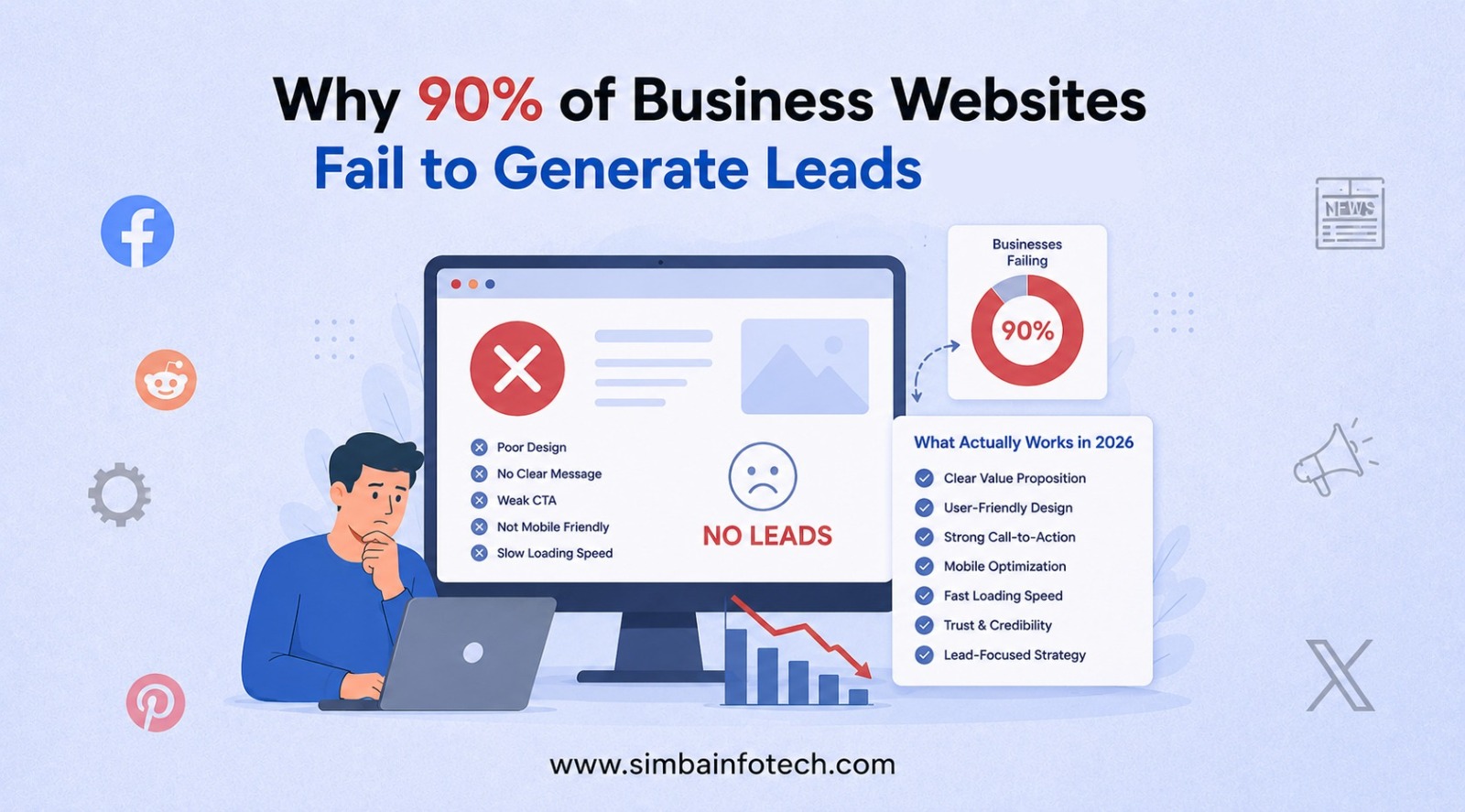
Why business websites fail to generate leads is a question many business owners ask after investing heavily in design and marketing.
Every year, thousands of businesses pour money into sleek designs, custom animations, and premium themes then sit back and wait for the phone to ring. It rarely does. Not because the website looks bad. Often it looks great. It just doesn’t work.
That’s the quiet crisis happening across the internet right now.
The Uncomfortable Truth About Most Business Websites
Walk through any industry real estate, law, consulting, e-commerce, healthcare and you’ll find the same pattern. Professional-looking websites that get decent traffic but generate almost no real business.
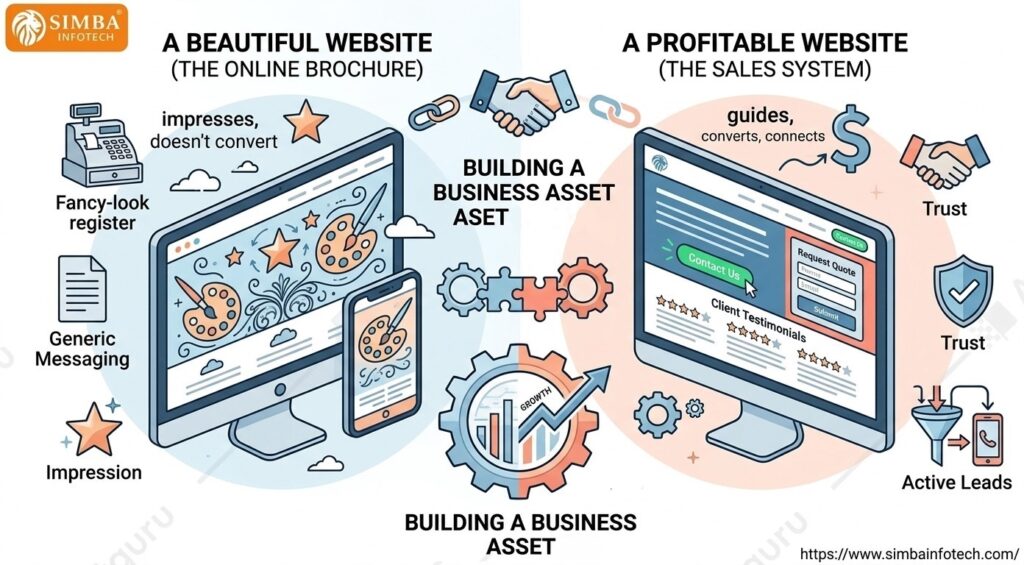
Why? Because most websites are built to impress, not to convert.
There’s a huge difference between a site that makes you think “wow, nice design” and one that makes a visitor think “I need to contact these people right now.” The first is an online brochure. The second is a business asset. If your website isn’t functioning like a sales system , building trust, guiding users, capturing leads, and moving people toward action, it’s essentially a very expensive business card that nobody keeps.
The Myth That’s Killing Small Business Growth
“We have a website, so we should be getting leads.”
This is probably the most expensive belief in digital marketing. Having a website doesn’t mean people will find it, trust it, or do anything on it. That logic would be like opening a store in the middle of a desert and wondering why nobody’s walking through the door.
A website without traffic is invisible. A website without trust is ignored. A website without a clear path to action is just noise.
The businesses winning online treat their website as one piece of a connected system, not the finish line, but the starting point for everything else: SEO, content, automation, follow-ups, ads. Remove any one of those pieces, and the whole thing underperforms
The Six Reasons Websites Fail (And What to Do Instead)
1. No Conversion Funnel
Most websites give people information and then… nothing. No clear next step. No reason to stay. No mechanism to capture interest.
The average visitor spends less than a minute on a website. In that time, they’re subconsciously asking: What is this? Is it for me? What should I do next? If your website doesn’t answer those three questions fast, they’re gone.
High-performing websites guide visitors through a journey from awareness to interest to trust to action. They use lead forms, consultation bookings, WhatsApp integrations, email captures, and smart follow-up sequences. Every page has a job. Every section moves someone forward.
Without this, you’re not running a website. You’re running a waiting room.
2. Slow Website Speed
Speed isn’t a technical detail anymore it’s a business problem.
Research repeatedly proves that users quickly leave websites that fail to load within just a few seconds.And they don’t come back. In a world of instant everything, a slow website signals one thing to users: this business isn’t serious.
The usual culprits are bloated images, cheap hosting, overloaded plugins, and code that was never optimized. These aren’t hard problems to fix but they’re problems most businesses don’t even know they have.
Fast websites don’t just rank better on Google. They convert better, hold attention longer, and feel more trustworthy. Speed is a silent salesperson.
3. Weak Mobile Experience
If you’re still designing for desktop first, you’re designing for a minority of your users.
The majority of web traffic comes from mobile devices. Yet visit most business websites on a phone and you’ll find crowded layouts, text too small to read, buttons impossible to tap, and pages that take forever to load on a cellular connection.
Users don’t complain when this happens. They just leave.
Google noticed this years ago and shifted to mobile-first indexing. Your mobile experience now directly affects your search rankings. Beyond rankings, it affects every first impression you make with potential customers who find you on their phone.
Mobile isn’t a checkbox. It should be the primary design experience.
4. No Trust-Building Elements
Think about the last time you considered hiring someone or buying from a business you’d never heard of. What did you do? You looked them up. You read reviews. You checked for signs that they were legitimate.
Your customers do the same thing and they do it on your website.
When a site has no testimonials, no real photos, no client results, no team page, nothing that signals actual humans run this business and real clients have worked with them visitors get nervous. And nervous visitors don’t convert.
The businesses that win online aren’t always the most skilled. They’re often just the most trusted. Social proof, case studies, Google reviews, certifications, even a behind-the-scenes photo of your team these things do more for conversion rates than any design trend.
People don’t buy services. They buy confidence.
5. Poor SEO Structure
SEO is nothing like SEO in 2015. Stuffing keywords into a page and hoping for rankings stopped working a long time ago.
Modern search optimization is about understanding what your audience is actually searching for, creating content that genuinely answers their questions, building a site structure that search engines can navigate clearly, and demonstrating real expertise on the topics that matter to your business.
The businesses that ignore this or rely on outdated tactics are invisible to people actively looking for what they sell. That’s not a traffic problem. That’s a revenue problem.
Strong SEO isn’t just about rankings. It builds long-term credibility, attracts better-qualified visitors, and creates a lead generation system that works while you sleep.
6. No Retargeting or Automation
Here’s a reality most businesses don’t want to accept: most visitors won’t buy or inquire on their first visit. They’re researching. Comparing. Not quite ready.
If your website has no way to re-engage those visitors, you’ve already lost them.
The businesses outpacing their competitors right now are using retargeting ads to stay visible after someone leaves their site. They’re using email sequences to nurture cold leads. They’re automating WhatsApp follow-ups, deploying AI chatbots to answer questions at midnight, and running CRM workflows so no lead falls through the cracks.
Automation isn’t about replacing the human element. It’s about making sure you show up consistently for every potential customer not just the ones who happen to catch you at the right moment.
What High-Converting Websites Do Differently
The websites that consistently generate leads share a few things in common, and fancy design isn’t one of them.
They have clear, specific messaging. They load fast on every device. They make the next step obvious. They show proof that they can be trusted. They’re structured for search engines to find and understand. And they have systems in place to capture and follow up with leads automatically.
None of these things is glamorous. They don’t win design awards. But they generate business, which is the whole point.
FAQ
1. Why is my business website getting traffic but no leads?
A website can attract visitors and still fail to generate leads if it lacks a clear conversion strategy. Common reasons include weak call-to-actions, poor mobile experience, low trust signals, slow loading speed, or no proper lead capture system. Traffic alone doesn’t create business growthyour website must guide visitors toward taking action.
2. How can I improve website conversion rates ?
Website conversion optimization focuses on: Faster loading speed,Mobile-first design,Clear and visible CTAs,Strong trust-building sections,SEO-friendly structure,Easy contact or inquiry forms,Retargeting and follow-up automation.Small improvements in user experience and lead capture often create a big difference in conversions.
3. Does website speed really affect lead generation?
Yes. Website speed directly impacts user experience and conversions. If a website loads slowly, visitors often leave before exploring services or contacting the business. A faster website improves SEO rankings, reduces bounce rate, and increases the chances of converting visitors into leads.
4. Why is mobile-friendly website design important for business growth?
Most users now visit business websites from smartphones. If your website is difficult to browse on mobile, visitors leave quickly. A mobile-friendly website improves user experience, builds trust, helps SEO rankings, and increases lead generation from mobile traffic.
5. What makes a high-converting business website successful?
A high converting website usually includes: Clear messaging,Fast loading performance,Professional UI/UX,Strong trust signals,SEO optimization,Easy contact options,Lead generation funnel,Retargeting and automation systems.The most successful websites are built around business goals not just design.
Final Thought
If your website isn’t generating leads, it’s not doing its job. That doesn’t necessarily mean it needs a redesign. It might just need a strategy.
The businesses that will win aren’t always the ones with the biggest budgets or the flashiest sites. They’re the ones that understand what their website is actually for and have built it to do that job well.
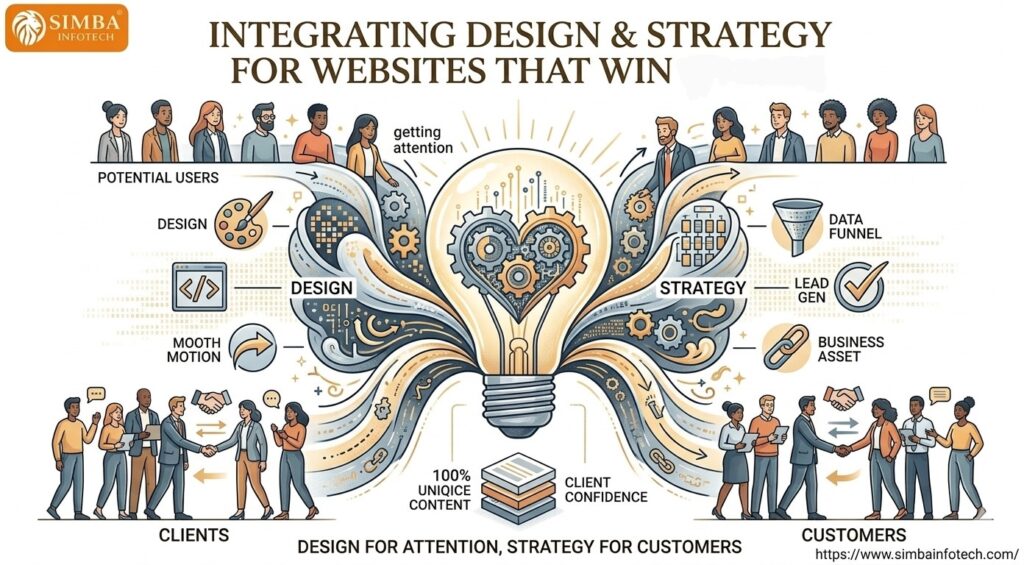
Design gets attention. Strategy gets customers. The best websites do both.